Bergamot scent: where it comes from and how it smells
Bergamot scent pairs bright citrus with a soft floral edge; see how its oil is made and which perfumes make the most of that fresh lift in fragrance.

Remember the first bright whiff when you peel an orange and the air suddenly feels awake? That’s the lift bergamot brings to a fragrance.
Bergamot is a citrus fruit, and its scent is fresh and sunny with a soft floral edge that keeps it from feeling sharp.
In this guide, we’ll cover where the scent comes from, what scent family it belongs to, how its oil is made, how perfumers use it, which perfumes are worth trying, and how to wear it as a light layer that stays close to your skin.
Where the Bergamot Scent Comes From
Before you decide whether bergamot suits you, it helps to know where its scent starts. Here’s the short tour we’ll take, from the fruit to the hillside.
What the fruit looks and tastes like
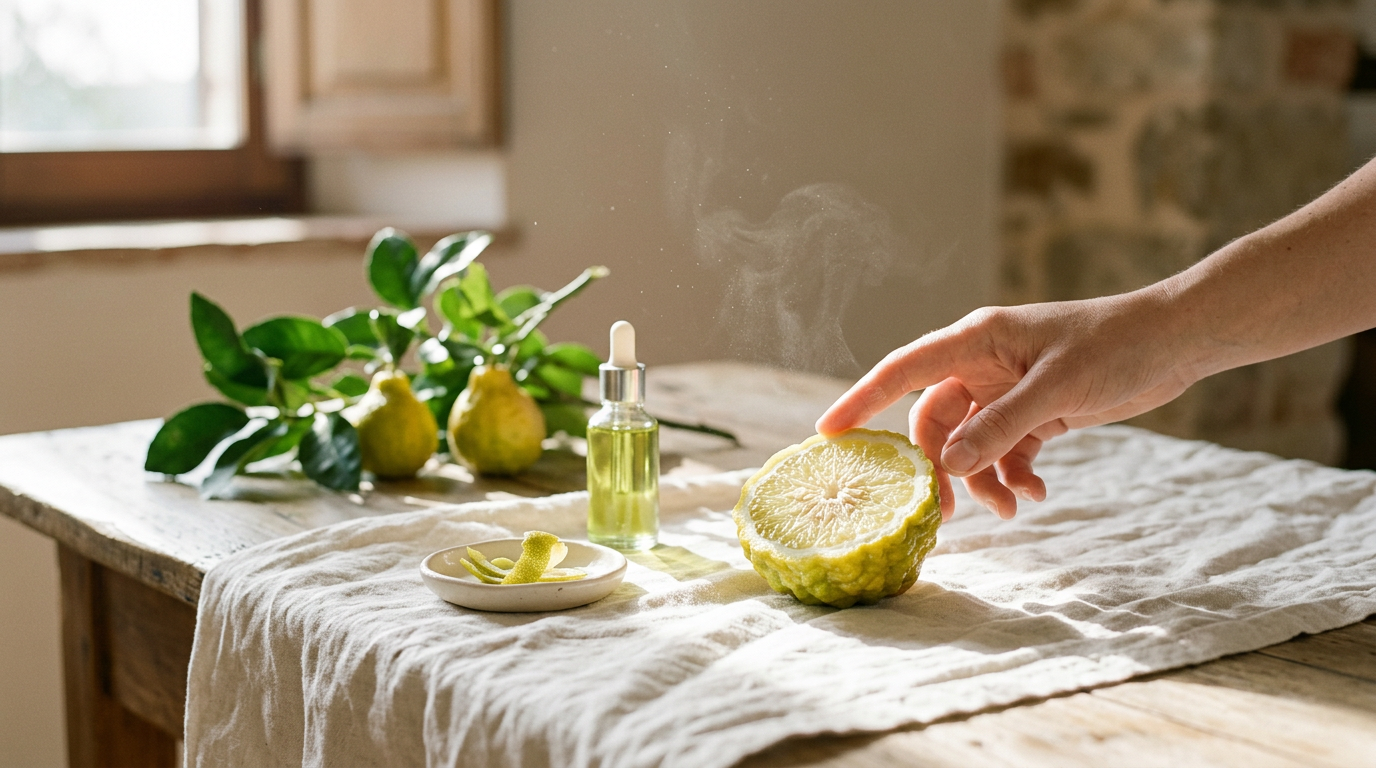
Bergamot is a citrus fruit, Citrus bergamia, that looks like a knobbly lime. It’s bitter and intense rather than sweet, so you’d admire it more than eat it. Some accounts describe it as a possible cross between a bitter orange and a lime.
Think of a bride who wants a scent with a little bite for her morning of getting ready. Knowing the fruit is sharp means the first whiff won’t catch her off guard.
Where the name came from and early uses
The name is traced to Turkish, where it means “lord’s pear.” Greek and Roman cultures used bergamot medicinally. Later, it perfumed gloves as a luxury and became popular in 19th-century perfumes.
Perfume 4711 is one name tied to bergamot, and the review Bergamot Oil: Botany, Production, Pharmacology notes that Paolo Feminis, in Cologne in 1676, created the famous Cologne water.
Where bergamot is grown
According to a paper on bergamot from the Province of Reggio Calabria, more than 90% of the world’s bergamot comes from one region: Calabria, in southern Italy. Calabria is the heart of the story.
Bergamot is grown in a warm coastal climate around the Mediterranean. Some sources point to Southeast Asia as a possible origin.
A genomics study of citrus in Nature notes that the region has generally been considered the origin of citrus, a biodiversity hotspot with a climate influenced by east and south Asian monsoons.
How bergamot trees are grown and picked
Trees grow in terraced hillside orchards, in well-drained, fertile soil. They bloom in February and March, and the fruit is handpicked from November to March, so harvest runs through the winter months. New trees start by grafting or from cuttings.
What Scent Category Is Bergamot?
Bergamot is a citrus scent with more layers than a plain lemon or orange, and we’ll look at what that means for you.
Fresh citrus with floral and tea notes
It’s fresh and bright, with a sparkle that feels uplifting. Its character sits between lemon and bitter orange, zesty but rounded. Floral and slightly spicy notes add warmth, and a tea-like, herbal undertone keeps it from tasting like a candy spritz.
Bergamot reads as sunny rather than sour. Consider a bridesmaid who wants something cheerful for the ceremony without competing with the bouquet. One light layer on her pulse points gives her a bright lift on the walk down the aisle.
How the scent changes over time
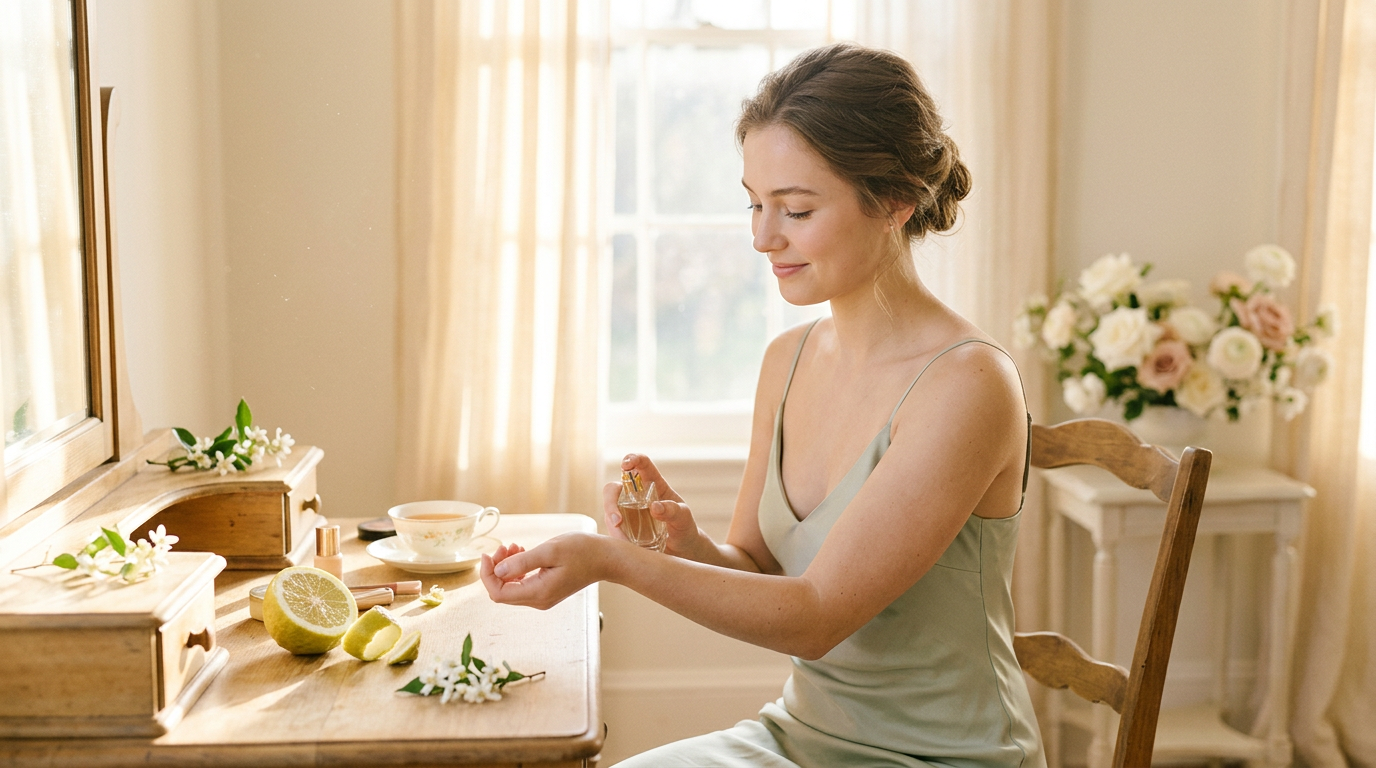
Bergamot changes as it wears, and that’s part of its charm. The dry-down is the scent left once the first minutes fade:
- Opening: a sparkling, fizzy burst.
- Middle: it mellows into a fruity floral.
- Dry-down: it turns greener and herbal.
Bergamot also links the opening to the base, the longer-lasting notes that stay behind, so the start and finish feel like one scent. Think of an office worker who spritzes once at 8am.
By mid-afternoon, the sparkle has softened into something that feels more like her own skin than a perfume.
What gives bergamot its scent
Its bright character starts with limonene, a fragrant compound found in the oil of the fruit’s rind. Floral and spicy undertones add depth, so the scent feels layered rather than one-note.
The result is complex, not cloying: sweet enough to feel friendly, never heavy or syrupy. Fresh, not flat.
How Bergamot Oil Is Made
Before bergamot reaches your wrist, it’s a peel that has to give up its oil. Here’s how that happens and why the result costs what it does.
How the oil is pressed from peel
The oil comes from the fruit’s peel, and the way it’s pulled out shapes the scent. Today the standard is cold pressing, which squeezes the oil out of the peel without heat.
That’s a step up from the older water-soaked method, and it’s what preserves the bright aroma you’re after.
Why bergamot oil costs so much
It takes around 100 fruits to make 3 ounces of oil, and that labor shows up on the price tag. Bergamot oil is a precious, prized commodity.
A review on the history of bergamot calls the fruit the “prince of citrus” for its historical role in the perfume industry, thanks to its essential oil.
That price also adds to the luxurious feel. Think of a bride who keeps a small bottle in her clutch and dabs a little on her wrists before the ceremony and again before the first dance.
She gets the luxe touch without carrying anything bulky. Small bottle, big effort.
How Perfumers Use Bergamot Scent
Bergamot shows up in more perfumes than you might expect. Here’s how perfumers use it, and how we’d wear it.
Why bergamot leads a perfume’s opening
Bergamot has a fresh, sparkling first impression, so it’s often the first thing you smell. Perfumers call that opening layer the top notes, and bergamot brings lightness and energy to it.
Picture a zesty spritz on a Monday morning that wakes you up before coffee.
Bergamot doesn’t always stay on top. Perfumers also place it in the heart (the middle layer) or the base, where it adds a softer brightness. It’s less a starting point than a thread running through the fragrance.
Many perfumers call it the ‘prince of citrus.’
What bergamot pairs well with
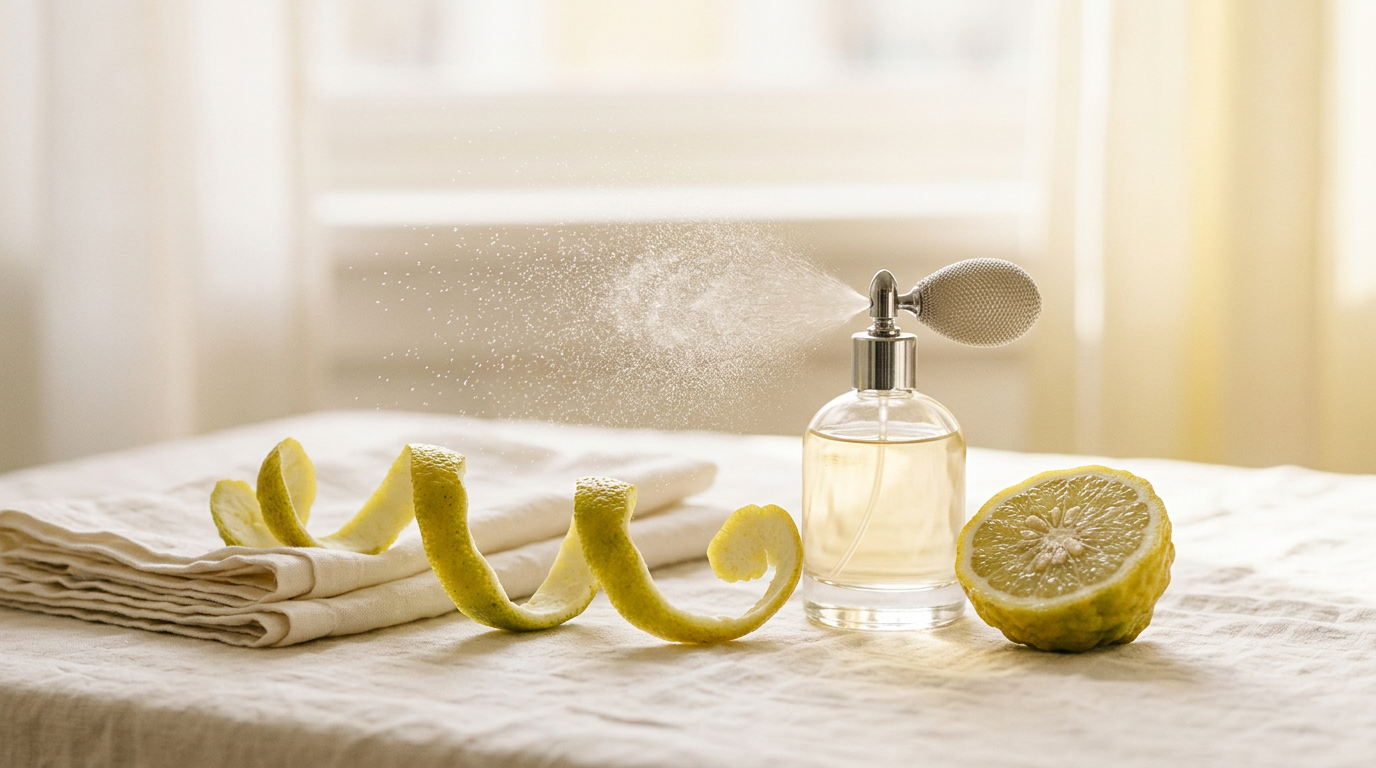
Bergamot plays well with many partners:
- Lavender, jasmine, and neroli: Bergamot brightens lavender’s calm and lifts jasmine and neroli.
- Rose and other florals: It keeps rich blooms from feeling heavy.
- Lemon and orange: Citrus layered with citrus adds zest.
- Woods, amber, and vanilla: Bergamot sparkles over warmth.
- Musk and vetiver: Soft, clean, and grounded.
- Bergamot with cedarwood: Bergamot smells bright, tangy, and slightly floral. Cedarwood smells dry, warm, and woody, like freshly sharpened pencil shavings. Together, the sparkle softens into polished warmth.
Bergamot works for men and women
Bergamot is a unisex note, so its brightness isn’t tied to one gender. It turns up in men’s cologne and women’s perfume, in classic colognes and niche scents.
Picture a bride and her partner sharing one bright bottle on the wedding morning, each adding a light spritz. One bottle, two people, nothing extra to pack.
When to wear bergamot
- Daytime and warm weather: Bright, airy scents suit sunny days.
- Supporting role at night: Use a lighter touch after dark, letting bergamot play backup.
- Layering under richer scents: Wear bergamot first, close to the skin, then add a richer scent on top.
- Reapplying through the day: Bergamot’s brightness can fade, so a lunchtime touch-up keeps the sparkle going.
An office worker might dab bergamot on her wrist before work, then refresh it at her desk after lunch. She gets an afternoon lift without a full bottle in her bag. That’s the Veils way: a light layer close to the skin.
Bergamot Perfumes and Products Worth Trying
Bergamot shows up in more places than you might expect. Here’s where to start.
Famous bergamot perfumes and what they cost
These are the bottles to know:
- Cartier Rivières Allégresse
- Le Labo Bergamote 22
- Acqua di Parma Bergamotto
- Atelier Cologne Bergamote Soleil
- Bon Parfumeur 001 and 601
Prices change, so check the current figure before you buy. Group your shortlist into price tiers, a splurge and a save, and try a sample first if one’s available.
Bergamot in lotions and home fragrances
Bergamot isn’t limited to perfume. You’ll find it in lotions and shower gels, and home fragrances carry the same freshness across the room.
For energizing morning freshness, start with a bergamot shower gel, then add a lotion if you want the scent to linger a little longer.
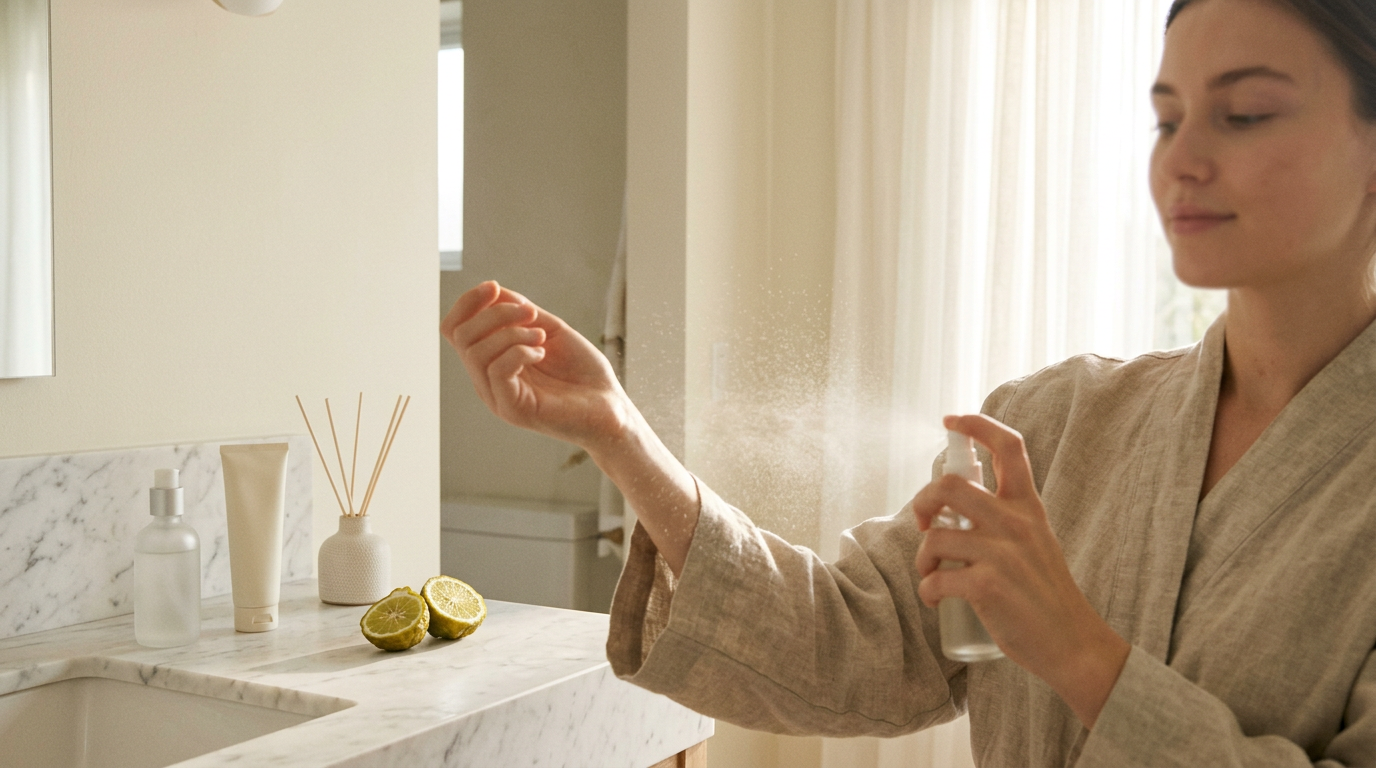
A mist is a simple way to wear bergamot as a light layer. Consider a bridesmaid who spritzes one on her wrists before the rehearsal dinner. It stays close to her skin, so it won’t drift over the people beside her. Start small.
How to test bergamot on your skin
Test on pulse points, like your inner wrists and the side of your neck.
The first spritz is the loudest part, so judge it once it has settled, not in the first minute.
Try it in different moods. A bright scent may feel different on a rushed weekday than on a slow Sunday.
If you already love Earl Grey or the smell of citrus peel, you’ll likely find bergamot familiar.
Citrus notes fade fast, so bergamot can seem to disappear quickly. That’s normal. Reapply lightly instead of doubling up on your first spray.
Other Ways People Use Bergamot
Bergamot doesn’t stop at perfume. It also shows up in your teacup, your desserts, and some calming routines.
Bergamot in tea, desserts and liqueur
Here, bergamot works as a flavor rather than a fragrance:
- Earl Grey tea. It gives the classic blend its signature citrus taste.
- Desserts. It adds a bright, floral lift to sweets.
- Bergamotto liqueur. This sweet liqueur puts bergamot front and center.
Picture a bride sipping Earl Grey while her hair is pinned, using those quiet minutes to slow down before the photos. Same citrus, different job.
How bergamot may ease stress and digestion
Bergamot aromatherapy is used for calming and stress relief, and a randomized controlled trial on aroma stones tested it on university students before exams.
It’s also used to ease anxiety and low mood, and the trial’s authors suggest it may reduce pre-exam anxiety.
For digestion, a plant profile from a botanical garden resource calls bergamot a bitter, aromatic herb that relieves tension, relaxes spasms and improves digestion. Whether it lifts your mood is a personal call.
The trial’s wording leans toward relaxation and well-being, so that’s where we’d start.
Before you put bergamot oil on your skin, know this: it can cause phototoxic reactions (skin reactions triggered by sunlight) after sun exposure. A study of oil of bergamot as a phototoxic agent backs this up. So who should skip it?
Anyone heading into the sun soon after applying it, and if you’re unsure, ask a pharmacist first.
Bergamot works best as a light layer, not a loud announcement. A small amount, placed where it stays close to your skin, gives you that clean citrus lift without asking for much of your time.
Whether you’re choosing a first bottle or rethinking the one you already own, keep it simple: a little, worn close, and easy to live with. A fragrance should feel like part of your routine, not another step you dread.
A little bergamot, worn close, is all it takes to start your day feeling bright.
References
- Evaluation of the Anxiety-Reducing Effects of Aroma Stones with Bergamot Essential Oil before Examinations: A Randomized Controlled Trial — ncbi.nlm.nih.gov (2026)
- Bergamot Oil: Botany, Production, Pharmacology — mdpi.com (2021)
- BERGAMOT - A Green and Multifunctional Asset Exclusive from the Province of Reggio Calabria — doi.org (2014)
- Genomics of the origin and evolution of Citrus — nature.com (2018)
- The Fascinating History of Bergamot (Citrus Bergamia Risso & Poiteau), the Exclusive Essence of Calabria: A Review — doi.org (2017)
- A study of oil of bergamot and its importance as a phototoxic agent. I. Characterization and quantification of the photoactive component — pubmed.ncbi.nlm.nih.gov (1977)
- Bergamot orange — botanischetuinen.nl
Questions
What are the benefits of using bergamot essential oil?
Bergamot essential oil has a bright citrus aroma that many people find uplifting, and it is used in aromatherapy for relaxation and stress relief. It has also traditionally been used to support digestion, though those effects should not be treated as a substitute for medical care.
Who shouldn't use bergamot essential oil?
Avoid applying bergamot oil to skin before sun exposure, because it can cause a phototoxic reaction. If you have sensitive skin or are unsure whether it is safe for you, ask a pharmacist or clinician before using it.
Where does bergamot oil come from?
Bergamot oil comes from the rind of the bergamot citrus fruit, Citrus bergamia. Most of the world's bergamot is grown in Calabria, in southern Italy.
Can you describe the smell of bergamot?
Bergamot smells fresh, bright, and zesty, with a soft floral edge. Its aroma can also have slightly spicy, tea-like, and herbal notes, making it rounder than a simple lemon scent.
What do bergamot and cedarwood smell like?
Bergamot smells bright, tangy, and slightly floral. Cedarwood is dry, warm, and woody, with an aroma reminiscent of freshly sharpened pencil shavings; together, they balance citrus sparkle with polished warmth.
What does the scent of bergamot do?
Bergamot's bright citrus scent can feel energizing and uplifting, especially when first smelled. In aromatherapy it is also used to encourage relaxation and ease stress, though individual responses vary.
Sources
- Bergamot Oil: Botany, Production, Pharmacology, mdpi.com,
- BERGAMOT - A Green and Multifunctional Asset Exclusive from the Province of Reggio Calabria, doi.org,
- Genomics of the origin and evolution of Citrus | Nature, nature.com,
- The Fascinating History of Bergamot (Citrus Bergamia Risso & Poiteau), the Exclusive Essence of Calabria: A Review, doi.org,
- Evaluation of the Anxiety-Reducing Effects of Aroma Stones with Bergamot Essential Oil before Examinations: A Randomized Controlled Trial - PubMed, ncbi.nlm.nih.gov,
- Bergamot orange | NVBT, botanischetuinen.nl
- A study of oil of bergamot and its importance as a phototoxic agent. I. Characterization and quantification of the photoactive component, pubmed.ncbi.nlm.nih.gov,