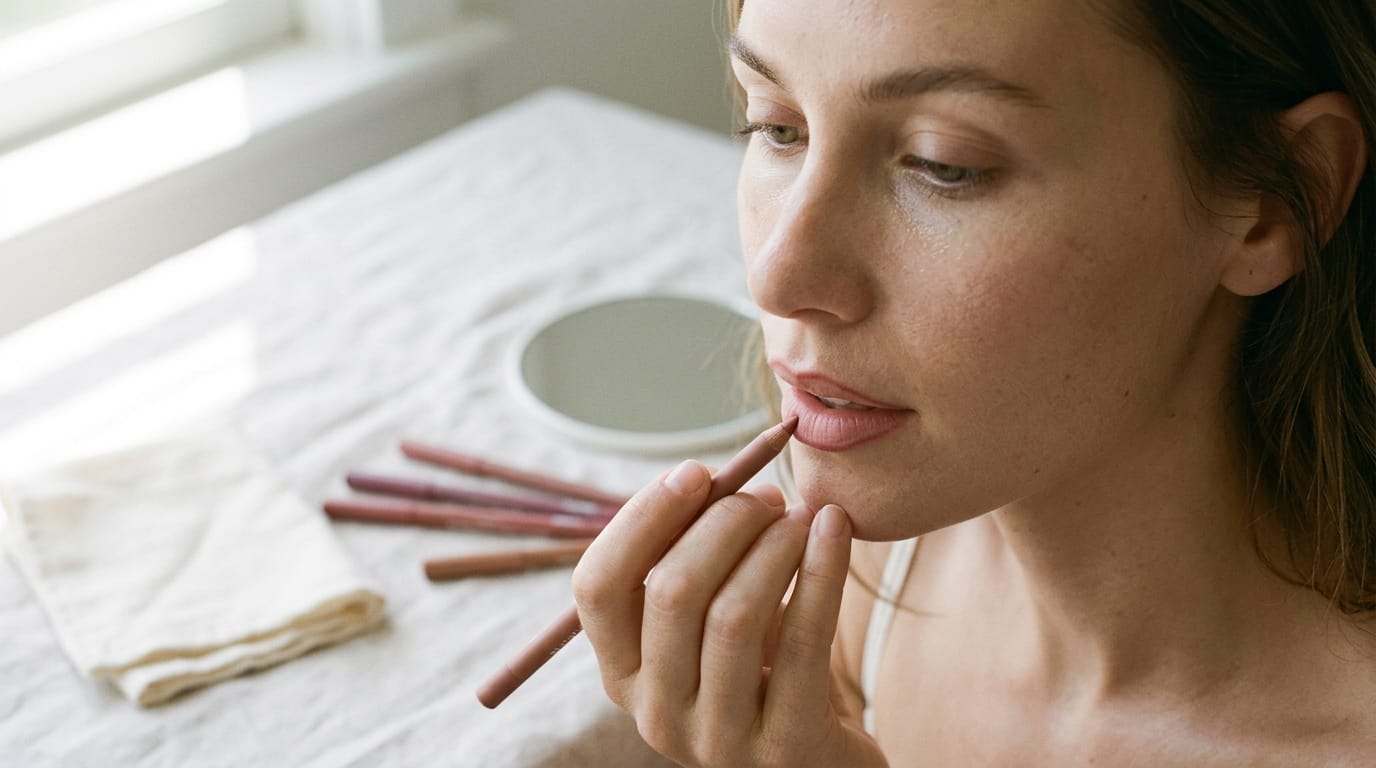
Lip Liner on Thin Lips: A Complete Guide to Shape
Lip liner on thin lips looks more natural with the right prep, shade, and precise lining; see how to add shape without an overdrawn finish at home.

Think of lip liner like the frame around a painting: it doesn’t steal the show, but it keeps color from wandering. On thin lips, that frame matters more, because small slips show up fast.
A lip liner is a pencil that outlines the edge of your lips before you fill them in. On thin lips, the goal is a precise line that adds shape without looking overdrawn.
In this post, we’ll cover prep, shade and finish for thin lips, how to line them differently than fuller ones, and a lighter way to wear liner so your lips still look like skin.
Prep Thin Lips for Lip Liner
Liner glides on best when your lips are smooth and comfortable, so a quick prep routine pays off before you ever pick up a pencil. Here’s how to get there in a few minutes.
Exfoliate and hydrate your lips
Start with a sugar lip scrub. Take a small amount on your fingertip and work it over your lips in small circular motions, using just enough pressure to lift dry flakes. The goal is smooth lips, not raw ones.
Picture a bridesmaid at 6:30 on the morning of the wedding, with the hair team due at seven. She buffs her lips in small circles while the coffee brews, and by the time the photographer arrives her liner goes on in one clean pass.
Once the scrub is done, wipe away the residue with a gentle makeup remover on a cotton pad. You want nothing left behind before any color goes on. Then finish with a hydrating balm so your lips stay soft and comfortable under liner.
Fewer steps, smoother lips.
Picking the Right Lip Liner Shade
Shade does more of the work than the pencil on thin lips. What lip color is best for thin lips? Usually one close to your natural tone, because the goal is an edge you can barely see.
Everyday nude and brown shades
Start with a liner that’s slightly darker than your natural lip. That gives you a defined edge without an outline anyone can spot. Nude, light brown, and peachy nude are the shades to reach for first.
Which color lip liner suits brown skin? A warm light brown or deep nude usually does, set a touch deeper than your lip so it defines without fighting your skin tone.
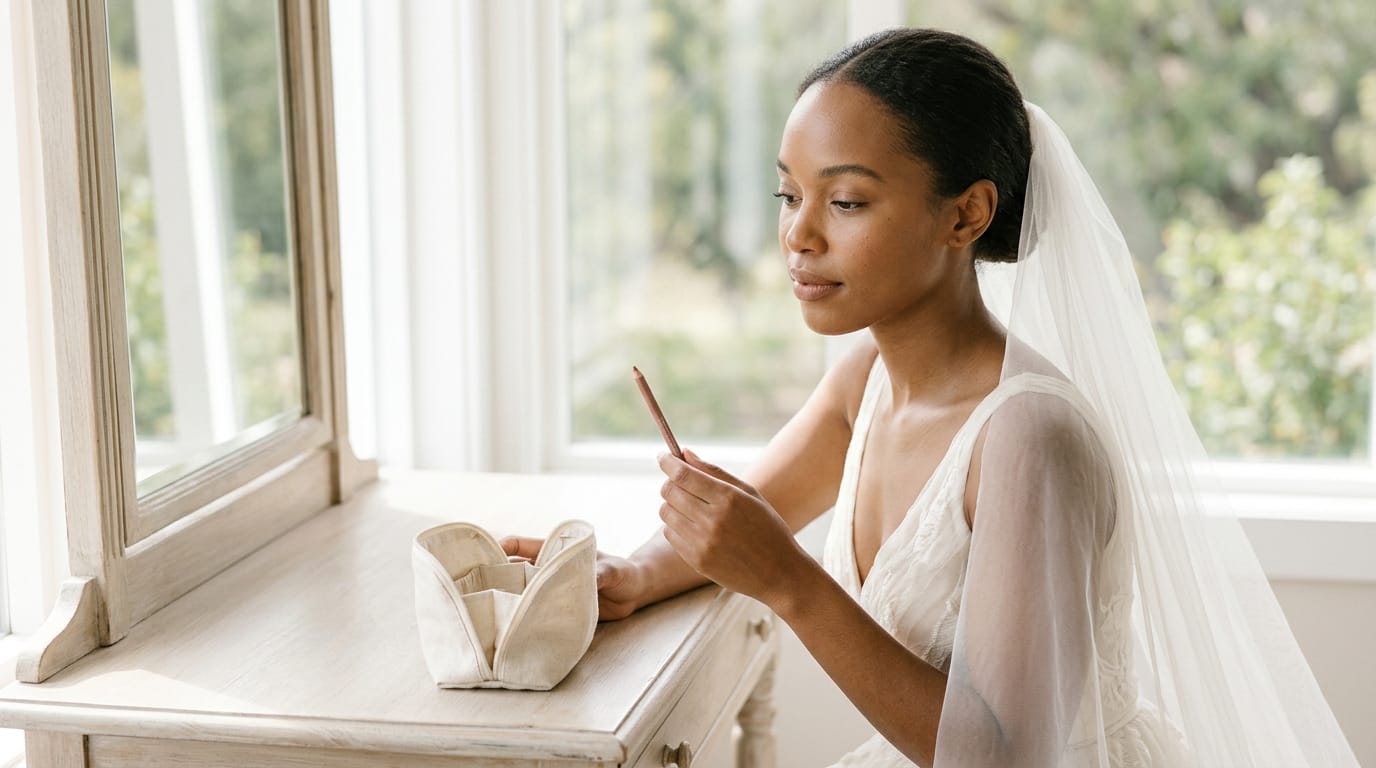
Keep the contrast subtle, not stark. A barely-there edge reads polished, while a sharp line can look drawn on. Think of a bride who wants her lips defined in photos but doesn’t want a visible outline.
One soft brown liner keeps her edge in place, and she packs one pencil instead of three.
Should liner be darker than lipstick?
Your liner should match your lipstick or sit one shade deeper. Same color keeps the look seamless, and a slightly darker liner adds depth to the lip line. It also helps prevent lipstick bleeding, where pigment creeps into the fine lines around your mouth.
So should my lip liner be darker than my lip color? It can be a little darker, but matching works too. Consider a bridesmaid in soft rose lipstick who wants it to last through dinner.
A rose liner one shade deeper keeps her edge crisp, so the color stays where she put it. Close enough to blend, deep enough to hold.
Lining Thin Versus Full Lips Differently
Having thin lips is completely normal, and there’s nothing to fix. Full and thin lips simply call for different liner moves, so we’ll start with reading your shape.
Reading your natural lip shape
Lips usually fall into a few patterns, so name yours before you pick up a pencil:
- Full lips have a clear, rounded body that already holds its shape.
- Thin lips have less visible volume, so the edge and color can blur together.
- Asymmetrical lips have one side that’s fuller or sits a bit higher.
Whatever your shape, the goal is to enhance what’s already there rather than redraw it. A bride who wants her lipstick to look like her own lips, just more defined in photos, gets there with one soft pass along her natural edge.
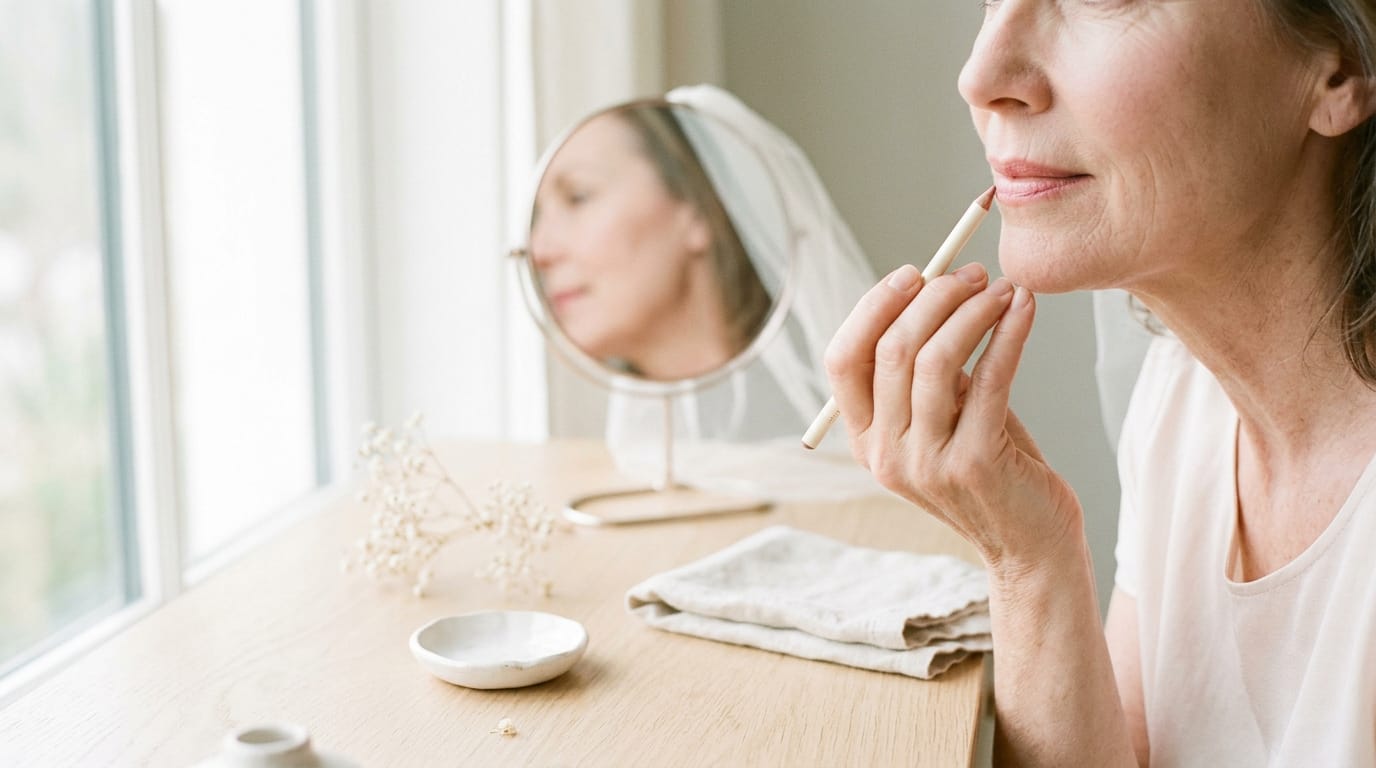
For older lips, the best choice is usually a creamy, slightly softer liner in a shade close to your lip tone, since stiff, drying formulas can look harsher.
Overlining thin lips for a fuller look
Overlining means drawing your liner slightly outside your natural lip line. On thin lips, that small step outward helps create a fuller appearance. It’s best kept almost invisible, aiming for a soft edge rather than a visible outline.
Full lips get defined with a trace right on the natural edge, while thin lips often need that line to sit just outside it.
To overline safely, add only a little beyond your natural edge, then check in good light before going any further. Start smaller than you think. Build up only if the color still looks uneven or too thin.
Apply Your Liner One Step at a Time
Liner goes on in a sequence, not one sweep. Here’s the order that keeps lines soft and balanced, even on thin lips.
Start at the center and work outward
Start at the top lip center, then move toward the outer corners one side at a time. Use short, light strokes rather than one long pull, since a long stroke tends to drag and wobble.
As you go, trace your natural lip line so the liner follows your own edge.
Think of a bridesmaid touching up before the toast. She starts at center, works out in quick strokes, and is done in about a minute with no smudged corners to fix in the restroom.
Shaping the peak of your Cupid’s bow
Draw a small X at the peak of your Cupid’s bow to mark the point. Then connect the lines with gentle strokes, so the bow looks soft rather than sharp.
Make lips look fuller with darker liner
Darker liner creates a depth illusion, because the outline reads as shadow and lets the center look like it sits forward. Add a little volume to the lip center by layering liner there, pressing gently rather than drawing hard.
Then finish with a lighter lipstick or gloss in the center so the middle catches the light.
Fuller-looking lips come from placement rather than product. Watch for the common mistake that shrinks lips: a shade lighter than your lipstick on the outer edge, or liner drawn inside your natural lip line.
Both make lips look smaller, so you’ll want to skip them. Placement does the work.
Finish with Lipstick, Blending and Extras
Your liner sets the outline, but the finish decides whether it looks like a line at all.
Blend the edges so no line shows
A hard-edged liner can look drawn on, and thin lips leave little room to hide it. Soften the edge with a fingertip or a clean brush, pressing color inward so it melts into your lip.
The goal is a seamless transition: the eye lands on color, not on a border. You want to blend the edge rather than outline it again.
Add buildable color, plumper or gloss
Once the edges are soft, add one of these:
- Buildable lipstick: a sheer or medium shade you layer until it matches your liner, so you’re not stuck with one heavy coat.
- Plumping pen or lip oil: a clear or lightly tinted option that adds softness and a little fullness without another shade to match.
- Gloss for shine and fullness: a dab on the center of the lower lip catches the light and can make thin lips look fuller.
Wearing liner alone for a soft look
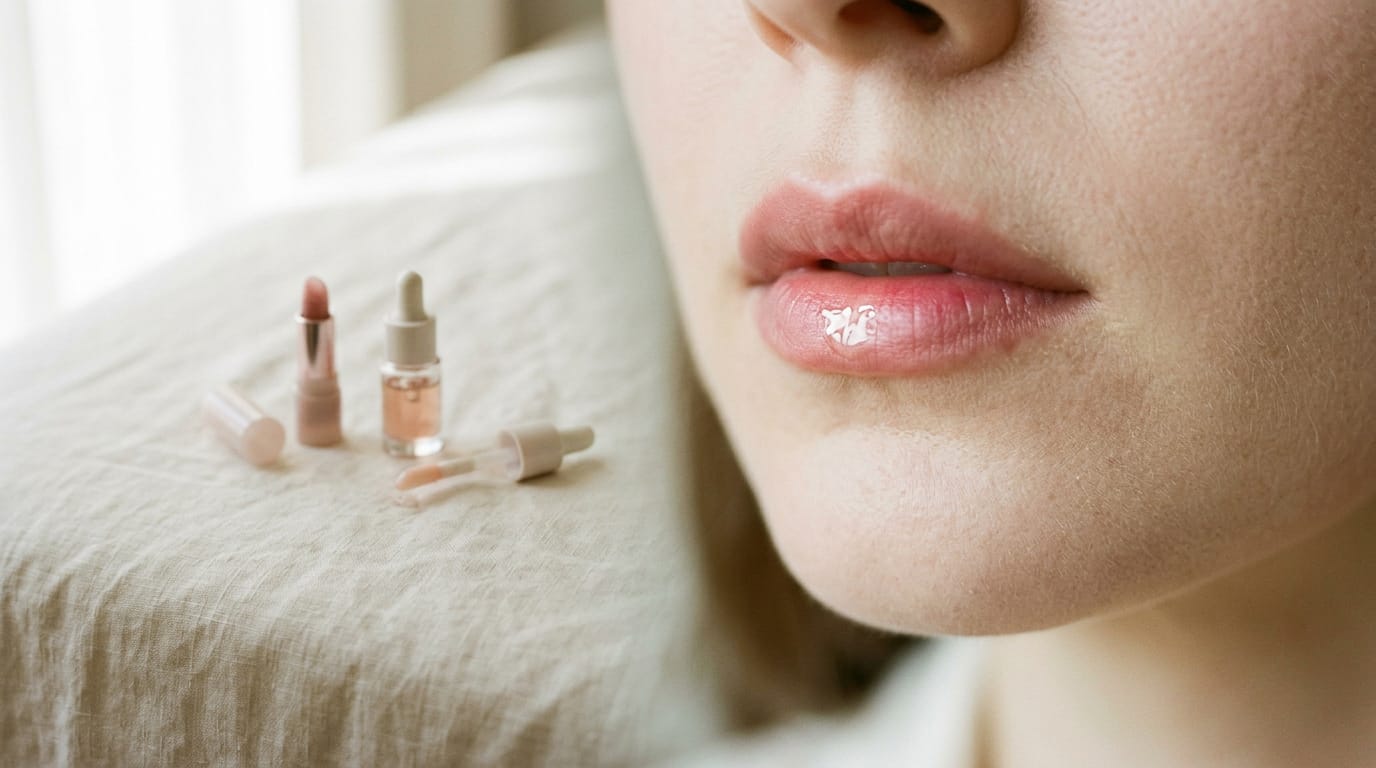
Some days you want lips that look like skin, just a bit more defined. Liner can do that on its own if you keep it simple:
- Neutral shade in a natural matte finish, close to your own lip color.
- Clear balm over the top for polish without added color.
- Soft liner smudged in so it reads as tint, not line.
Picture an office worker with five minutes before her train. One neutral smudge and a swipe of clear balm, and she’s out the door looking finished. That’s the whole routine.
Your Lip Liner Questions, Answered
Most lip liner questions come down to order, edges, color, and shape. You’ll find the quick answers below, so you can get back to your day.
Quick answers to everyday questions
- Liner before lipstick. Liner goes on first, not last, so you can still fix the edge before any color goes on.
- Feathering and bleeding. Feathering is color creeping into the fine lines around your lips, and bleeding is color running past the edge. A defined liner gives color a boundary to stay inside, and that’s what keeps it where you put it.
- Double lip line. It’s the two-tone ring you get when your liner is a noticeably different shade from your lipstick, so the edge reads as a second outline. Choosing a shade close to your lipstick softens it.
- Liner and length. A liner that traces your natural corners cleanly makes lips look longer and more defined.
Consider a bridesmaid with five minutes before the photos and one liner, one lipstick, and no room in her clutch for a third tube. She lines first, fills in with the shade she already loves, and blots once.
Her edge is still sharp through the toasts, and she skips the touch-up at the reception. Five minutes, one bag.
Lining thin lips comes down to a handful of small choices: prep the skin, pick a shade that flatters, and stay close to your natural edge. Once those are in place, the rest is practice, and it gets easier with every try.
Keep the liner soft, blend where it needs blending, and let your lips look like skin rather than a drawn line. The best liner is the one nobody notices, and that’s exactly the look you’re going for.
Questions
What is the best lip liner for older lips?
For older lips, choose a creamy, comfortable liner in a shade close to your natural lip tone. A softer formula is less likely to look harsh or emphasize dryness.
How do I thin my lower lip?
To make your lower lip look thinner, trace just inside its natural edge with a matching liner, then blend the line inward. Keep the adjustment subtle, since lining too far inside can make the lip look smaller than intended.
What lip color is best for thin lips?
A shade close to your natural lip color, such as nude, light brown, or peachy nude, works well for thin lips. Subtle contrast defines the lips without making the outline look stark.
Is it okay to have thin lips?
Yes. Thin lips are a normal lip shape, and there is nothing you need to change about them. Lip liner can enhance their natural shape if you want more definition or a fuller-looking effect.
Which color lip liner suits brown skin?
Warm light brown or deep nude liner often suits brown skin. Choose a shade slightly deeper than your natural lip tone for definition, while keeping the contrast subtle.
Should my lip liner be darker than my lip color?
Your liner can match your lipstick or be about one shade darker. A close match creates a seamless look, while a slightly deeper shade adds definition and can help keep lipstick from bleeding.
What color lipstick is best for dark lips?
Rich shades such as berry, plum, deep red, and warm brown can complement dark lips. The best choice depends on your undertone and the finish you prefer, so try shades that feel comfortable and flattering on you.
What genre is the ilia lip liner?
ILIA lip liner is a makeup product, specifically a cosmetic lip pencil used to define the lips or add color. It is part of the beauty and cosmetics category, not a literary or music genre.