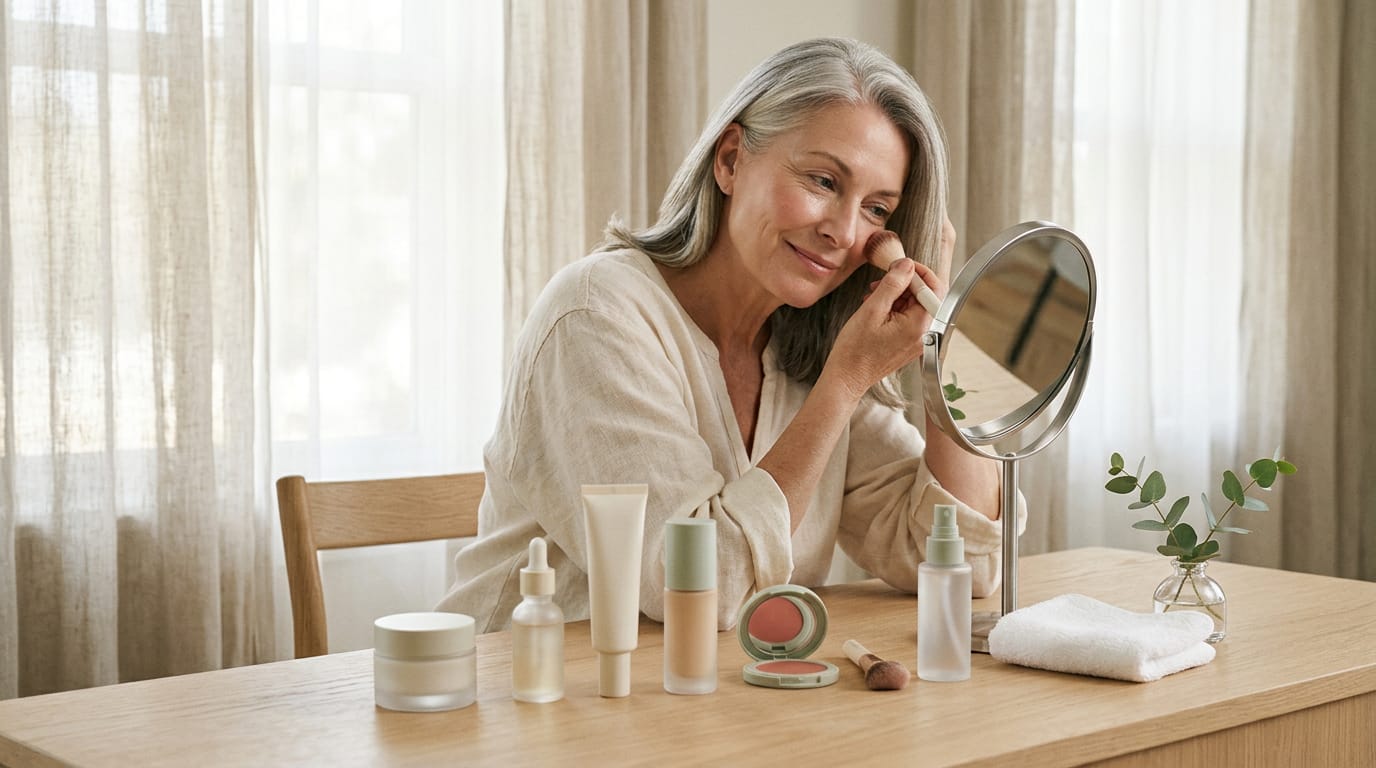
Makeup for Mature Skin, Step by Step From Prep to Finish
Makeup for mature skin starts with prep. Build a light-layer routine from skin care and primer through base, color, eyes, and lips for a fresh finish.

Picture yourself at the bathroom counter at 6:30 on a workday, foundation in one hand and a sponge in the other. Makeup on mature skin can look fresh one morning and cakey the next, and the difference usually starts before the first dab of base.
That starting layer is prep: the simple skin care and primer work that helps everything above it sit smoothly.
In this guide, we’ll cover each step from prep through base, color, eyes and lips, plus fixes for common problems and a light-layer approach that keeps your routine short.
Why Makeup for Mature Skin Needs Prep
Makeup sits best on skin that’s ready for it. Here’s what changes with age, the prep that helps, and the simple order we suggest.
How skin changes as you age
Skin tends to get drier, thinner, and more fragile over time, and it can lose some of its plumpness and elasticity. A moisturizer you loved in your twenties may not keep up now. That’s not a sign you did something wrong. It’s a sign your skin has changed.
What is the best prep routine before makeup?
The best makeup routine for mature skin starts with prep, and the order matters. The goal is support rather than cover-up, so the thinnest layers go on first.
Picture a bride who preps this way on her wedding morning. Her foundation still looks fresh at the ceremony, and she doesn’t need to touch up at the reception.
Here’s the simple order:
- Moisturizer first. Give skin a comfortable base.
- Hyaluronic acid serum. Hyaluronic acid is a hydrating ingredient that helps skin hold water.
- Daily SPF. Add sun protection factor (SPF) every day before makeup.
- Hydrating or glowy primer. Pick one that adds moisture or a soft glow, so your base looks like skin.
- Eye primer for creasing zones. Dab it on your lids and under your eyes, where makeup creases first.
- Skin-first light layer. Keep coverage sheer so your skin still shows through.
Gently exfoliate for smoother makeup
Exfoliating lifts away dry, flaky skin so makeup goes on evenly. Use a gentle scrub or wash and keep the pressure light, since rough rubbing can irritate skin. The aim is smooth rather than scrubbed.
A smoother surface gives makeup an even place to sit. Smoother skin, smoother makeup.
Simple Rules and Mistakes to Avoid
A few simple rules keep makeup fresh instead of heavy. Here’s what to follow and what to avoid:
How can I make my skin look younger?
Makeup can’t turn back the clock, but it can make skin look fresher. Start with three ideas:
- Light hand. A thin layer of foundation or concealer looks more natural and lets your skin show through.
- Enhance, don’t mask. Aim to brighten and define what’s already there, not cover every line.
- Creamy, dewy over matte. Matte powder can settle into fine lines and look flat. A cream blush or dewy highlight reads as healthy glow.
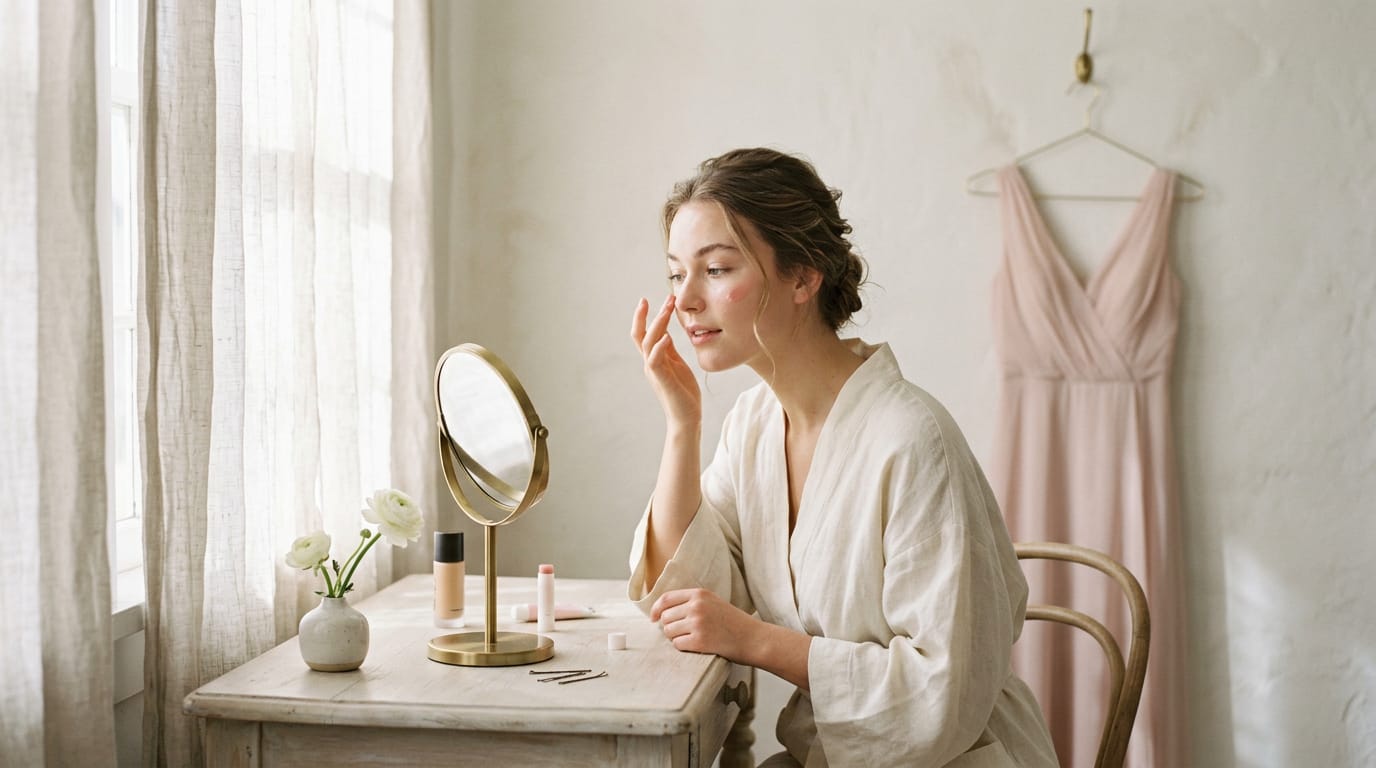
Picture a bridesmaid heading into an early photo call. She sweeps on sheer tinted moisturizer, dabs cream blush on her cheeks, and swipes clear balm on her lips. She looks rested. Nothing needs touching up.
Common mistakes and quick checks
- Thick foundation everywhere. Use full coverage only where you need it, and keep the rest sheer.
- Heavy powder under eyes. Powder settles into fine lines, so press on a light dusting only where creasing shows up.
- Shimmer on textured areas. Shimmer catches every bump, so save it for smooth spots like the tops of your cheekbones.
- Smile test before leaving. Smile big in the mirror. If foundation creases or powder sinks into lines, fix it now.
- Rough removal. Scrubbing wears on delicate skin. Use a gentle cleanser or balm at night and moisturize afterward.
Advice from makeup artists
Take a cue from the pros and work one area at a time. Pick your problem area, such as under-eye lines or dull lips, and let it set your priorities.
Foundation, Concealer and Setting Basics
Good base makeup should look like your skin, only more even.
Which foundation is best for aging skin?
A sheer to medium foundation suits most mature skin, and a tinted moisturizer is lighter still. Skip heavy full coverage, which can look cakey. Look for liquid, whipped or serum-style textures that let your skin show through.
Test the shade on your jaw and neck, not your hand, or a line will show in daylight.
BB cream is the sheerer cousin of foundation: it’s usually lighter, with some skincare-style ingredients, while foundation is built for more coverage.
The best tinted moisturizer for mature skin is sheer, hydrating and matched to your neck:
- Shade: matched to your neck.
- Texture: hydrating and soft, never dry.
Placing and choosing concealer well
Reach for a cream concealer with a hydrating formula, since dry, chalky formulas cling to fine lines. Start small: you can always add more.
Pat it on with a fingertip or sponge. For under the eyes, try triangle placement: dot a small triangle with its point at the inner corner, then pat it outward.
Spot-conceal discoloration only, and skip blanket coverage.
Consider a new mom with twenty minutes before school drop-off. She dabs concealer only under her eyes, then heads out looking rested, not overdone.
Set makeup with less powder
You want less powder, not none. Dust only where you shine, like your forehead and nose, with a finely milled powder that blends in.
Prefer none? A setting spray is a fine mist that helps makeup stay put. A blurring balm softens texture as you press it on.
Avoid baking, which means piling on loose powder and letting it sit. The heavy layer can settle into lines.
Press thin layers in, don’t drag
Build coverage with thin layers, not one heavy coat. Press or stipple (lightly tap) it in, because dragging pulls off what you’ve placed. Blend outward from the center toward your hairline and jaw.
A damp sponge blurs for a soft finish; a fluffy brush gives more control.
Think of a bridesmaid in a warm ballroom who needs her makeup to last through the toasts. She presses thin layers in with a damp sponge. By the first dance, her skin still looks like her skin.
Adding Color and Glow to Cheeks
Cheeks carry a lot of the look, so a little color goes a long way. Here’s where we’d place each product.
Where to place blush and bronzer
Start with a cream or liquid blush. Powder can settle into fine lines, so a cream or liquid sits more smoothly. Place it slightly higher, on the upper apples of your cheeks, blended toward your temples.
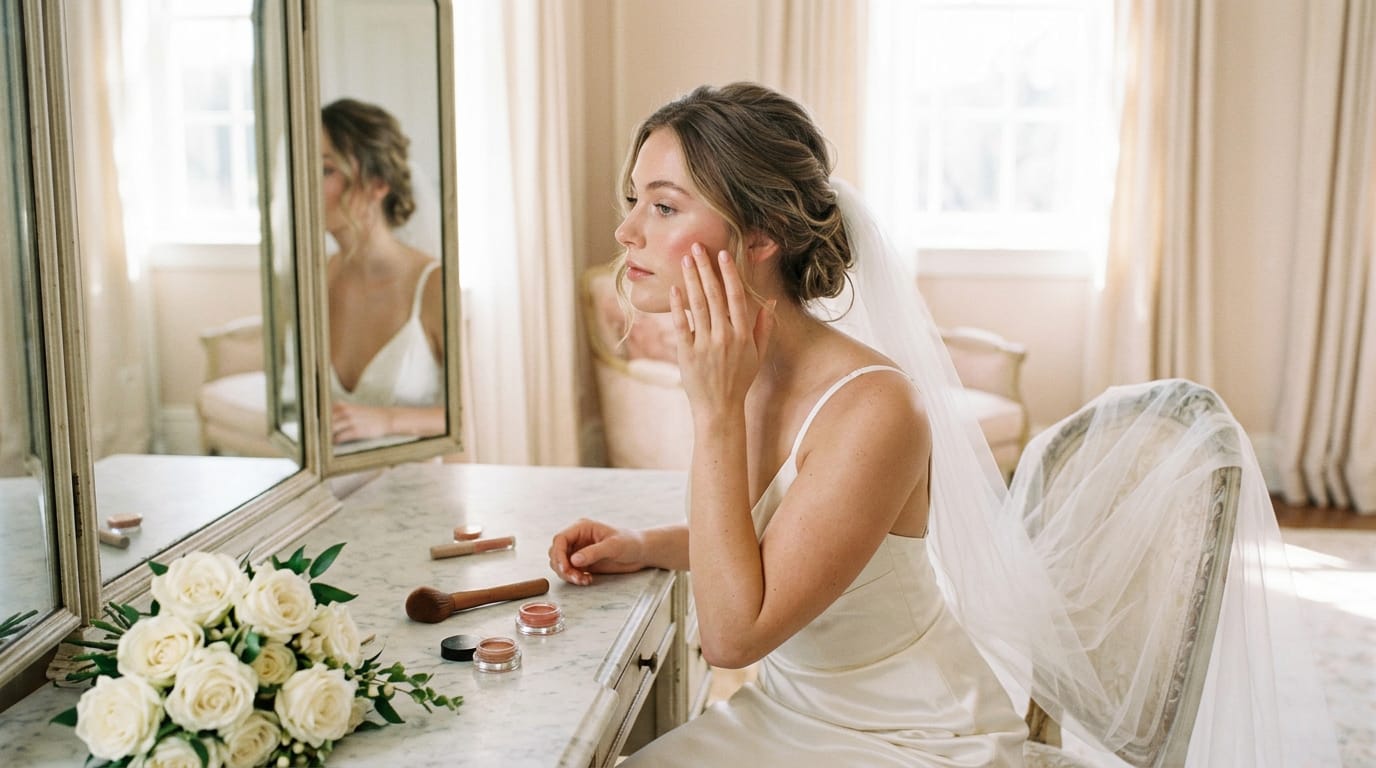
Think of a bride touching up before the first dance: one cream blush, blended with her fingertips, and she’s done.
Save matte bronzer for the outer face:
- temples
- hairline
- jaw edge
Choose matte over shimmer, and keep it off the center of your face so it reads as warmth, not shadow.
Where to put your highlighter
Choose a satin finish rather than glitter. Satin gives a soft glow that looks like light on your own skin. Glow goes on high points like:
- your cheekbones
- brow bone
- the bridge of your nose
Picture a new mom tapping it on those spots before work and walking out with one less step.
Keep shine off creases, like the inner corners of your eyes and the lines beside your nose, since shine pooled there draws attention to them. Glow goes up, not in.
Why warm tones keep skin lively
Warm tones add life, while cool grays can look dull. Picture a flight attendant ending a long shift who swaps a cool gray bronzer for a warm one. Her skin still looks like her skin, just brighter. Warm wins.
Eyes and Brows That Look Fresh
Eyes and brows do much of the work of looking rested, so here’s how to keep them simple.
Choosing eyeshadow that flatters
Reach for a creamy, soft formula that blends in seconds. Cream glides over mature lids more smoothly than dry powder, so color looks even.
Stick with neutral tones like taupe or soft mauve, plus a little light shimmer. Choose shimmer that lifts the eye, not heavy sparkle. Avoid dark, harsh colors that look heavy.
Finish with inner corner brightening: a dab of pale shade in each inner corner opens up the eye. A bride touching up at the reception can do it in seconds.
Mascara and liner for defined lashes
Pick a lengthening or curling mascara for a little lift. Go for brown-black over jet black, which frames the eye more softly.
Try tightlining, which means running a thin liner along the base of the upper lashes. Lashes look fuller without a stark line.
Clumps usually come from too much product, so wipe the extra off the wand and wiggle it from roots to tips. Thin coats win.
Consider a new mom with five minutes before school drop-off: one coat of brown-black mascara, a quick tightline, and she’s out the door.
Filling sparse brows gently
Fill sparse areas with a brow pencil for fine strokes or a powder for a softer, wider fill.
Prefer to skip the pencil? A tinted brow gel fills and tames in one swipe.
Use light, feathery strokes that follow your brow’s natural direction, so it looks like hair rather than paint.
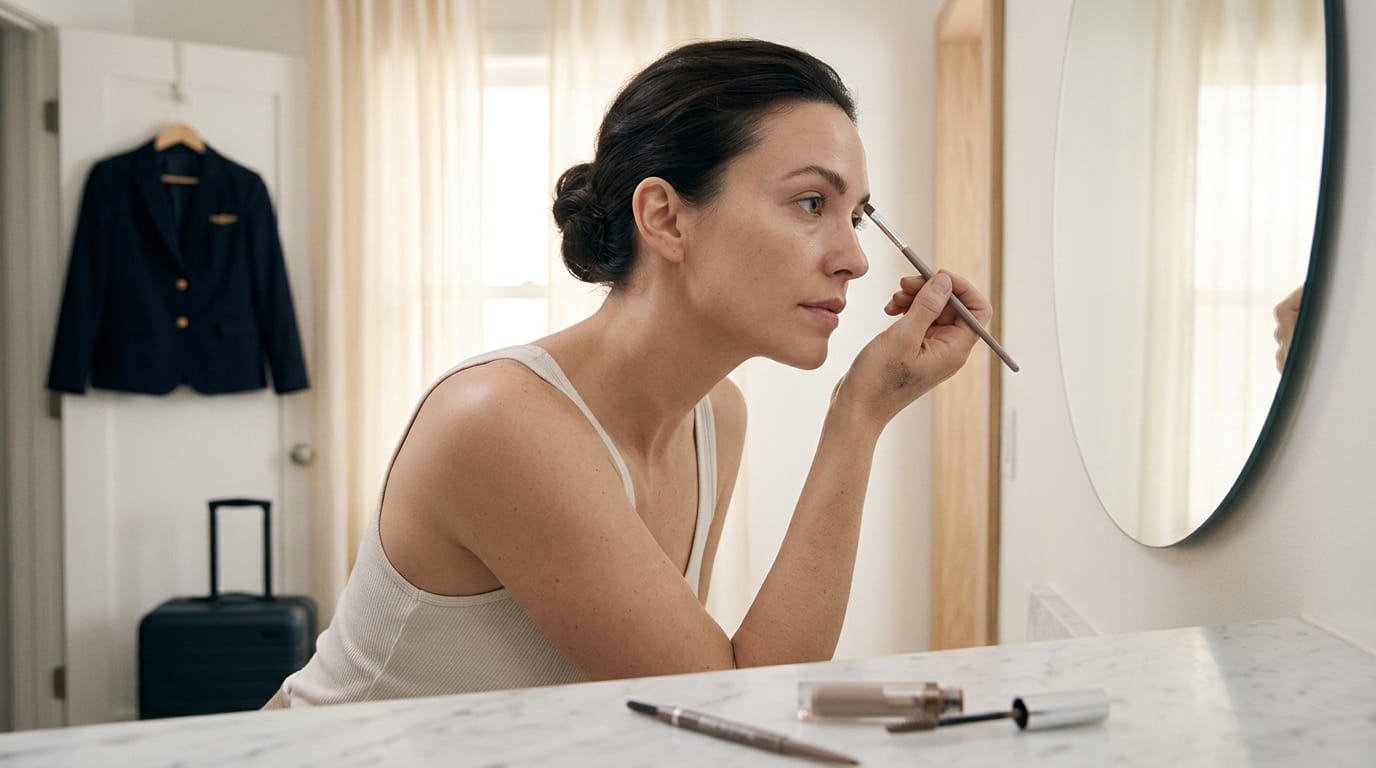
A flight attendant with an early shift can fill and set her brows in the few minutes she has, then head out looking polished.
Making Lips Look Full and Fresh
Full-looking lips come down to two choices: the finish and the shade. Get those right, and you won’t need a long routine.
Pick creamy, satin finishes for lips
Start with creamy, hydrating lipsticks that glide on without tugging at dry edges. Choose a satin finish over flat matte. The sheen makes lips look plumper, while flat matte can cling to dry patches and settle into fine lines.
Prep matters too. Apply a thin layer of lip balm and let it sink in before you color. Balm first, color second.
Consider a bride who swipes on one creamy satin shade after a quick balm. She walks back from the head table still looking fresh, with no touch-up needed before the toast.
Shape lips with natural shades and liner
Reach for natural tones that sit close to your own lip color. They read as fresh, not painted on.
Line with a lip liner one shade deeper than your lipstick, following your natural edge. Fill in the center with the same liner, then add lipstick over it.
Finish with clear gloss at the center of your lower lip. Keep it off the corners, and lips look fuller without another shade.
Picture a new mom with ten minutes before school pickup. She lines, fills, and adds gloss at the center, and her lips are done before she finds her car keys.
Product Picks Worth Trying
Know what each category has to do before you buy. Choose a few workhorses that do a lot, and pick each one for how it wears.
Top 10 must-have products to buy
A lighter kit doesn’t need ten separate items. These categories cover most of the work:
- Foundation or skin tint
- Concealer
- Cream blush
- Setting powder
- Lipstick or tinted lip balm
- Brow pencil or gel
- Mascara
You’ll spot “dermatologist-recommended” on plenty of packaging. That’s a fair starting point, but it says little about how a product looks by 4pm. Run a wear test: apply it in the morning and check again at lunch.
Buy for how a product wears, not what it promises.
Brand picks with ingredient and review notes
Rather than one brand, look for these qualities and compare options on Amazon or in store. Your skin tone and texture decide the best match.
For foundation, concealer and blush, go sheer and skin-like. A tint that looks like skin usually reads better up close than a heavy mask.
For powder, lipstick, brow and mascara, choose:
- a finely milled setting powder
- a satiny lipstick or tinted balm
- a brow gel that sets soft
- a mascara that lengthens without clumping
Scan for hydrating ingredients, and skip heavy fragrance if your skin reacts easily. Then read reviews from people with similar skin, looking for comments on wear.
Consider a bride who wants her skin to look like her skin in ceremony photos. She picks a sheer tint, a cream concealer and a cream blush, then sets it all with one light powder.
Her clutch stays small, and she skips the touch-up. Fewer products, better wear.
Makeup for mature skin doesn’t have to mean more layers. Start with prep, choose one good product for each job, and let the light-layer approach keep your routine short.
Fewer, better-chosen steps give you the fresh, put-together look you want, with less time at the counter and less clutter in your bag.
The best makeup is the kind that still looks like you at the end of the day.
Questions
What is the best makeup routine for mature skin?
Start with moisturizer, then apply hyaluronic acid serum, daily SPF, and a hydrating or glowy primer. Use sheer, thin layers of makeup, choosing hydrating foundation or tinted moisturizer and cream products that blend smoothly. Set only areas that crease or get shiny, and finish with a smile test to check for settling.
What is the best tinted moisturizer for mature skin?
Choose a sheer, hydrating tinted moisturizer in a shade that matches your neck. A soft, skin-like finish is less likely to look dry or heavy on mature skin. The best option is the one that feels comfortable and wears well on your skin.
What is the best waterproof foundation for all-day coverage?
For all-day coverage, choose a long-wearing waterproof foundation suited to your skin type and apply it in thin layers, pressing it in with a damp sponge or brush. The specific product depends on your skin and preferred coverage; set only shiny areas with a light dusting of finely milled powder or use setting spray. Waterproof formulas can be drying, so remove makeup gently and moisturize afterward.
What is the difference between BB cream and foundation?
BB cream is generally lighter and sheerer than foundation, and often includes skincare-style ingredients. Foundation is designed to provide more coverage and comes in a wider range of coverage levels and finishes. Both can even out skin tone, but BB cream gives a lighter, more natural-looking result.
Which type of foundation is best for aging skin?
Sheer to medium coverage usually works well for aging skin, especially in liquid, whipped, or serum-style formulas that let skin show through. Tinted moisturizer is an even lighter option. Avoid heavy layers that can look cakey, and choose a hydrating finish rather than a dry matte one.
How can I make my skin look younger?
Makeup cannot reverse aging, but it can help skin look fresher. Use a light layer of foundation or concealer, enhance rather than mask your features, and choose creamy, dewy products such as cream blush instead of heavy matte powder. Daily SPF and moisturizer also help support skin as part of your routine.