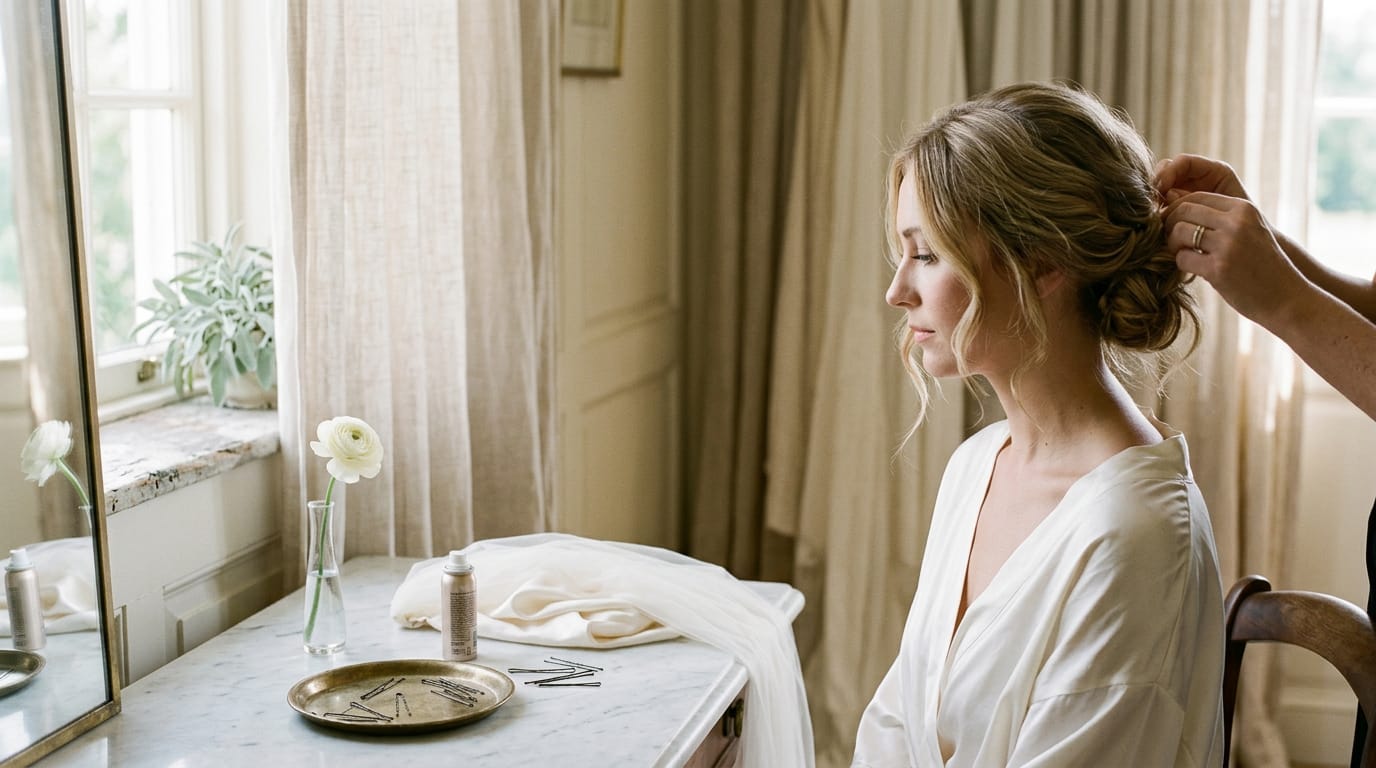
Easy Wedding Updos: Styles, Prep and Pins That Last
Easy wedding updos suit your hair length, texture and venue. Get picks plus veil and pin tips to keep your style in place through dancing.
Picking a wedding updo is a lot like picking shoes for a long day: the prettiest pair won’t help if your feet give out before the reception.
You want a style that looks polished in photos, survives the ceremony breeze and still feels like you once the dancing starts.
The good news is that an easy updo doesn’t take a salon’s worth of tools. In this post, we’ll match styles to hair type, dress, venue and hold, then cover the prep, pins and trial run that make them last.
We’ll also show you how to wear a veil without losing your hairstyle.
Easy Wedding Updos by Style and Setting
Your neckline, venue and mood all shape the right updo. Here’s how to match each one.
Pair updos with your dress neckline
Start with your neckline.
- Open-back gowns look best with a low bun below the shoulder blades.
- A mermaid dress pairs with a sleek, chic updo that keeps the lines clean.
- A ball gown suits a Dutch braid, which adds volume and texture.
- Finger waves soften an A-line dress.
Consider a bride with a deep open back: her low bun keeps hair off her shoulders, so the gown stays the focus in every photo. Choose the style that complements the dress, not one that competes with it.
Updos that fit the venue and season
A seaside ceremony calls for beachy updos with loose, undone pieces that hold up in a breeze. For spring or summer, a braid keeps hair cool and off the neck. Boho or rustic weddings suit braided crowns and loose knots.
A summer halo braid wraps the head like a crown and keeps curls out of your face while you dance.
Think of a bridesmaid at an outdoor garden ceremony: a braid keeps her hair off her neck through the photos. Keep it relaxed.
Let your bridal vibe guide the look
Your personality matters as much as the setting. Traditional updos with classic lines suit formal ceremonies, while modern styles with clean shapes feel fresh. Casual weddings suit relaxed, pieced-together looks, while formal ones call for polish.
Romantic and bohemian brides often choose soft tendrils and loose twists.
Your updo should feel like you, not a costume. Pick one standout detail, like a bold pin, and you’ll be set.
Updos by Hair Length, Texture and Face
Your hair already narrows the field. Length, texture and face shape decide which updos will hold and which will fight you all morning, so start there.
Updos for short and medium hair
On shorter hair, the pins do more of the work than length does. A lob (a long bob) can be swept into a smooth low updo, and a hairpiece adds length for the day.
For a softer finish, try a low curly updo with a few curls left loose, or a twist and roll pinned into a neat knot. Think of a bridesmaid with a chin-length bob who needs to look finished at a long dinner.
A low twist and roll, secured with bobby pins, does the job without fighting her cut.
Ideas for long and thick hair
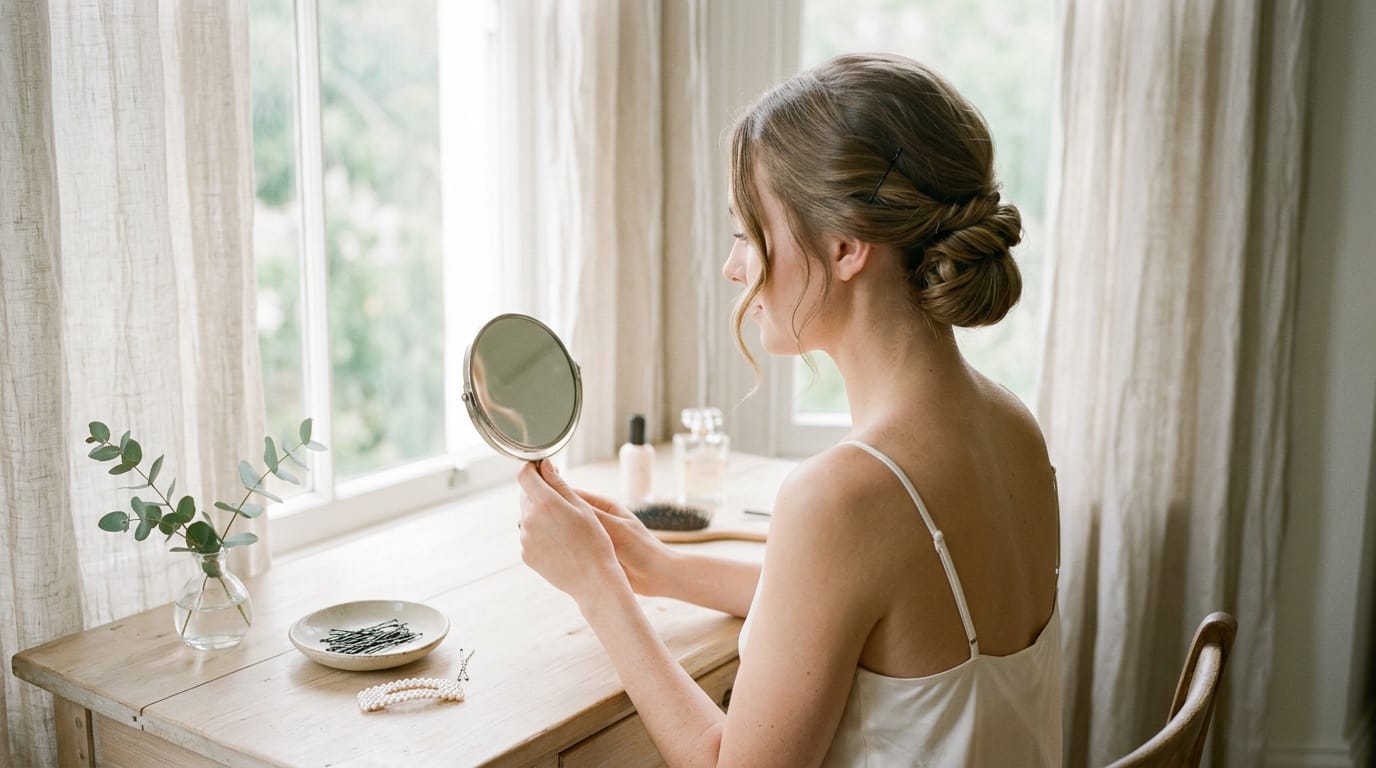
Long hair suits a messy updo, a loose bun with a few pieces falling out on purpose. Thick hair can handle height, so a high-volume updo with a puffed crown sits well. Heavy hair needs stronger anchors.
Layered curls and twists go up in sections at the crown, so you’ll get depth from every angle.
Styling natural and textured hair
Texture changes the method, not the goal. Sisterlocks can be gathered into a high updo, while a side Afro puff gives a soft, sculpted shape and cornrows gathered into a bun give a clean finish.
Curly hair updos work best when you gather curls into a loose pile at the crown. Whether your hair is natural or relaxed, tell your stylist before your trial, since each handles updos a little differently.
Consider a bride with a full natural puff who doesn’t want it flattened by the first dance. Anchored well, a side puff keeps its shape all night.
Updos that flatter face shape and bangs
Bangs can go either way: swept back into the updo, or left forward as a soft fringe. Side-swept bangs can help balance a longer face by reducing how much forehead shows.
It’s a simple touch: face-framing strands, a few loose pieces at the temples, keep the updo from looking severe.
Classic Buns and Chignons to Consider
Buns and chignons are a classic for good reason: they look polished and hold up all day. Here’s how to match each one to your hair, gown and venue.
Elegant low buns and chignons
A chignon is a smooth, low knot at the nape, and a low ballerina bun is its softer, rounded cousin. Keep either one sleek, not stiff, for an elegant yet modern look, or loosen a few pieces for a shaggy take.
Both suit open-back gowns because the knot leaves your back on display.
Think of a bride in an open-back gown who wants her full back visible in the photos. A low chignon keeps her hair off her back all afternoon.
High, side or inverted buns to try
A high bun with a hairpiece (extra hair that fills out the knot) gives you volume and drama. A high ballerina bun adds height with a rounder shape, and a side bun is flattering when you want a little asymmetry.
An inverted bun is the fastest option here, ready in under 10 minutes once you’ve practiced. It looks finished, not rushed.
Loosen up with messy, tousled buns
A tousled bun brings a relaxed, bohemian-luxe feel that looks effortless, not careless. Let a few curls or waves fall from the knot, and leave loose strands around your face for softness.
For volume, tease the crown lightly, then pull a few wisps free. Texture does the work.
Picture a bride who wants to feel like herself all day. This style lets her hug family and dance without checking the mirror.
Braided and Twisted Updos You Can Wear
Braids, twists, and loops are the updos that look finished without a lot of fuss. Here’s what each family looks like and where it fits best.
Updos built around braids
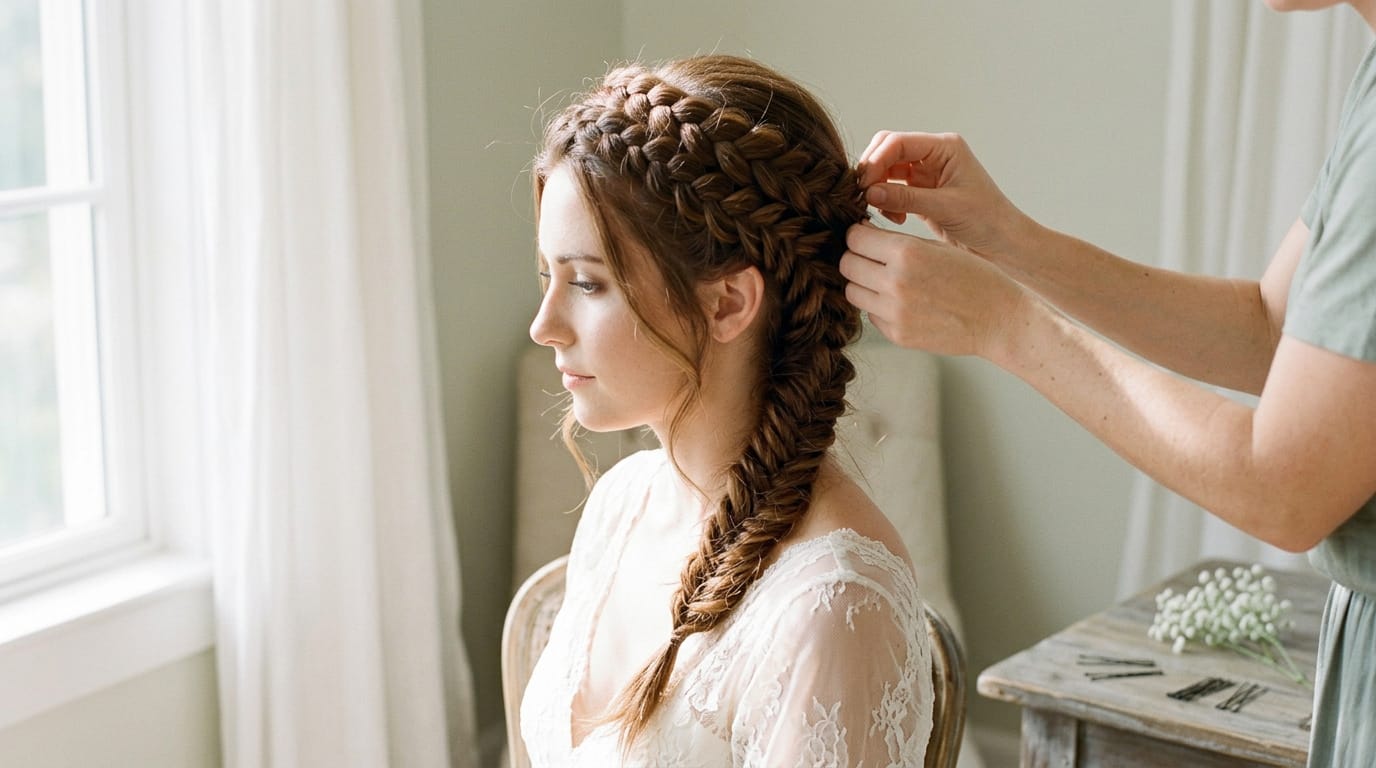
Braids are a flexible place to start. A Dutch braid crosses the strands under, so it stands up off the scalp, while a French braid crosses them over and lies flatter. A fishtail braid, built from two larger sections, gives a softer, textured look.
Try a braided halo for a crown of hair around the head, or an inverted French braid bun for a more streamlined finish. These work on many hair lengths and suit formal or informal weddings.
Twists and rolls worth trying
A French twist gathers the hair into a sleek roll at the back of the head. A twist and roll starts with a twist, then rolls the ends into a bun. For more texture, try a twisted bun with a few pieces left loose around the face.
These work for medium and short hair, so you don’t need a long length for a classic roll.
Looped updos with a boho feel
A looped updo turns the hair into loose loops pinned at the back of the head. A fancy loopy updo is the dressier take, while a low looped updo sits at the nape for a softer look. Looped styles pair with bangs and carry a boho or rustic feel.
Consider a bride with soft bangs getting married in a barn. A low looped updo keeps her hair pinned up, her bangs frame her face, and her bridesmaids can finish it before the photographer arrives. Loose on purpose.
Ponytails, Curls and Sleek Styles
Most easy updos fall into three families: ponytails, pinned curls and sleek finishes. Start with the family that suits your hair type.
Comfortable, simple ponytail updos
The simplest option is a ponytail updo, and it’s also the most comfortable. Consider a bride with fine hair who wants nothing to slip during the vows. She books a braided ponytail, pins it once, and spends the reception dancing instead of fixing it.
Braided or curly ponytails add texture, and a sleek high ponytail gives a clean line. Pick a low puffed ponytail for a relaxed garden venue and a sleek high one for a formal ballroom.
Pinned-up curls and waves
A loose curl updo gathers curls at the crown and lets a few fall free. Pinned curls at the nape keep the back neat while the front stays soft, and they leave room for a veil comb.
A wavy chignon, a low twisted knot, suits a classic ceremony. For a bolder look, a faux hawk with curls adds height at the crown, and finger waves bring a sleek, vintage shape to a short cut.
Sleek, polished updos for a clean finish
Every strand in place starts with a fine-tooth comb and a light hold, not a heavy hand. Pulling hair back puts your cheekbones on display, so a little contour gives them definition. A sculpted, vintage-inspired look suits a retro gown or a historic venue.
A middle-part sleek chignon frames the face evenly and suits a minimalist dress.
Aim for polished rather than stiff, since sleek should look effortless. Less product, cleaner lines.
Finishing Touches That Complete the Look
A few well-chosen extras tie your updo together. Match them to your venue, dress and style, not just to what you love.
Pick the right hair accessories
Match the accessory to your setting. Flower crowns and clips feel relaxed for garden weddings, while a hairpiece or tiara adds structure to a formal ballroom look. Pearls, barrettes and headbands add polish to a low chignon.
Crystal headbands bring evening shine, but they suit sleek updos best.
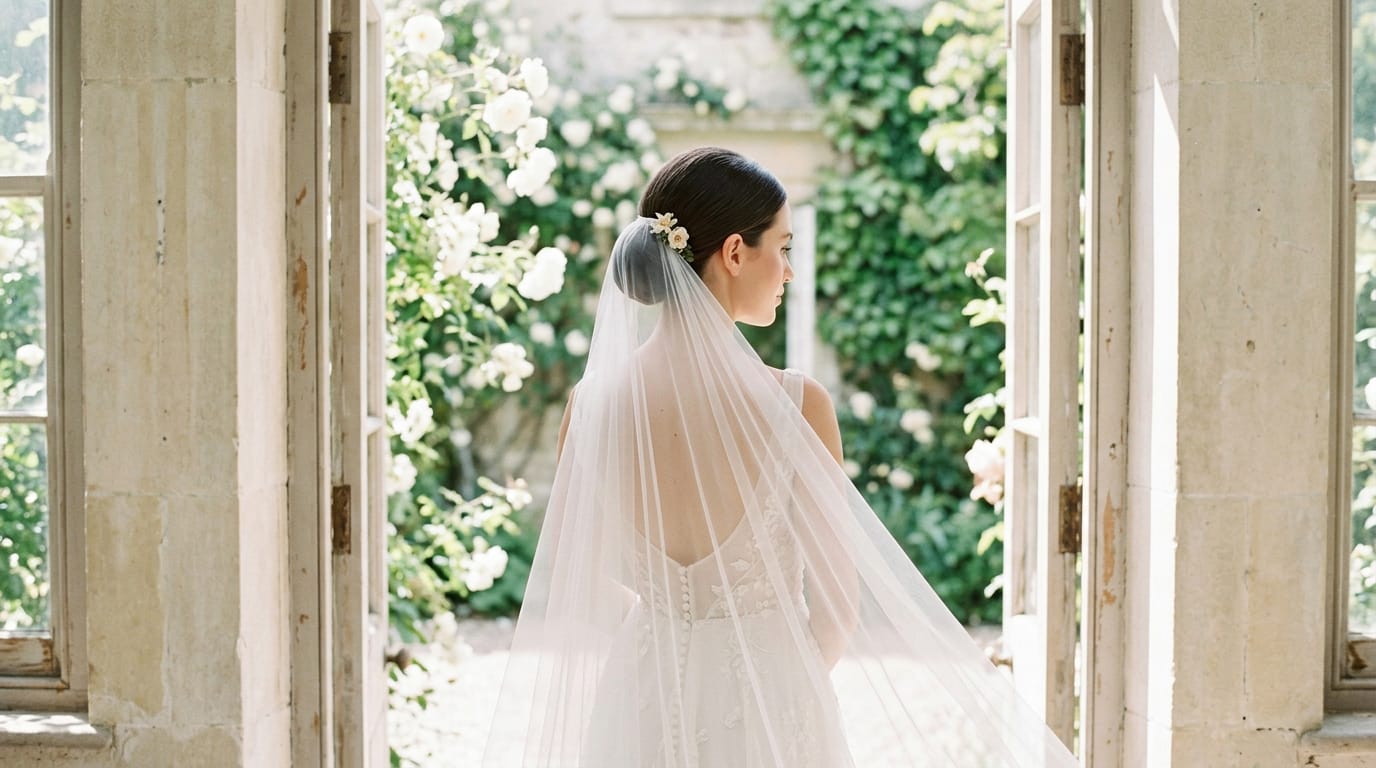
A veil only works if it’s anchored. Good veil placement keeps it secure, so match its spot to your updo:
- High bun: Pin it at the crown so it falls straight down.
- Low chignon: Tuck it just behind the bun, away from your neckline.
- Side-swept updo: Pin it near the ear on the side your hair falls.
Consider a bride with a low chignon at a garden ceremony. She pins one flower clip at the base of the bun and tucks her veil just behind it, so nothing slides during her vows.
Choose one focal point, not three. A single piece keeps the look clean.
Matching jewelry and makeup to your updo
An updo shows off your neck and face, so jewelry and makeup carry more weight. Drop earrings frame your jaw and add movement when your hair is pulled back.
A smokey eye or a red lip can make a glamorous updo feel complete, but pick one so your face doesn’t compete with your hair. A boho updo calls for softer makeup, not bolder: sun-kissed skin and a tinted lip suit loose braids and flower crowns.
A sleek ponytail puts your cheekbones and jawline front and center, so a light contour defines them. Blend it well.
Practical Updos and When to Get Help
Some updos are easy to do yourself, but others need a pro.
Quick and easy updos you can manage
The inverted bun is beginner-friendly: flip a low ponytail under and pin it at the nape. A bride with fine hair can practice it, so her wedding morning doesn’t feel like a first try.
Cornrows need little daily fixing. A low puffed ponytail suits a relaxed or outdoor venue: gather hair at the nape and lift the top.
For a simple bridal updo, pull hair into a low knot and pin it in sections. Use sectioning (dividing hair into clean parts with clips) and keep bobby pins close. Pins do the heavy lifting.
Keeping your updo in place all day
A ballerina bun stays put because its tight base anchors every pin. A beachy bouffant resists breeze, so it suits outdoor venues.
Prep the day before with slightly textured hair. Slick hair slides out of pins.
Spray in layers rather than one heavy coat, and be generous with each. A light final coat tames flyaways.
On the wedding morning, start hair early and put your veil on last so it sits over set pins. Carry a touch-up kit (pins, a mini comb, travel hairspray) to the reception.
Tips for working with your stylist
Ask your stylist for details, like how long the style should hold. Share your timeline with your makeup artist so the hairspray settles before makeup goes on.
The DIY (do-it-yourself) option works too: pick the bun or ponytail and practice. Book local hair and makeup vendors early, and ask for photos with your hair type.
You’ll want to bring these to your hair trial:
- Your veil, to check how it sits
- A photo of your dress neckline
An easy updo comes down to matching the style to your hair, your dress, your venue and your hold, then practicing it before the big day.
Do a trial, pin with a plan and give your veil a secure place to sit, and you’ll walk into the morning with far less to worry about.
Pick the style that lets you stop checking the mirror. The best updo is the one you forget about by the first toast.