How to do your own wedding makeup, step by step
Do your own wedding makeup with confidence: two practice runs, sunscreen under a light base, lips that last, a timed morning plan and a small touch-up bag.

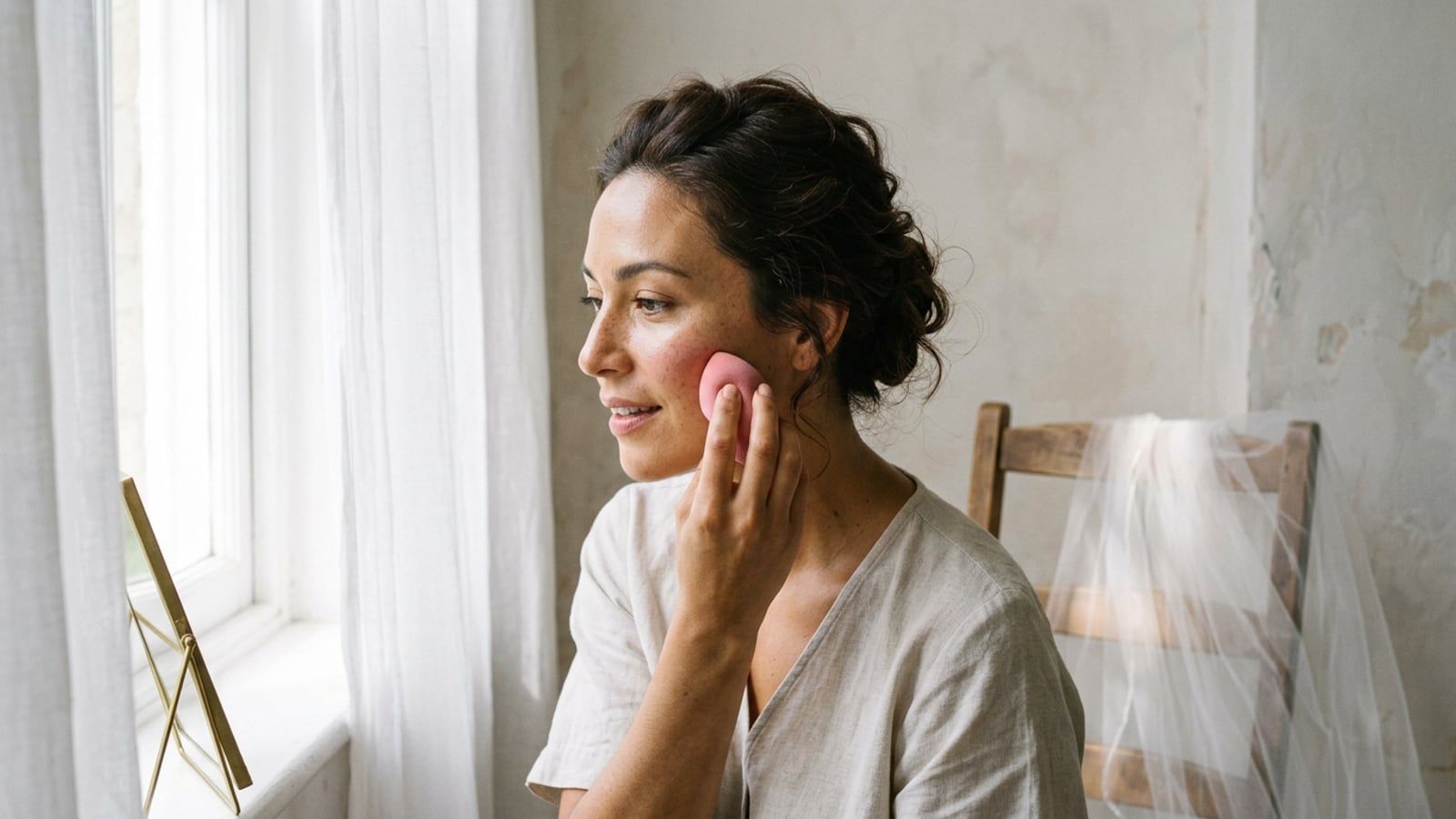
Press the base in with a damp sponge, a thin layer at a time, in daylight.
Doing your own wedding makeup comes down to rehearsal and restraint. Practice the whole look at least twice, in the light and for the hours you will wear it, and on the day use only products you have already tried. Put sunscreen on first, then a thin base that looks like skin, concealer only where you need it, and a lip built to last. Set just the places that shine, and hand a bridesmaid a small touch-up bag. The rest of this guide takes each of those in order, then gives you a timed plan for the morning.
Practice runs: when, where and in what light
Practice is what makes doing your own makeup work. It shows you what lasts, what photographs well and how long the whole thing takes.
- First run, about three months out. Lay out every product you plan to use and do the full look. Note the order, which products earn their place and which you can drop. It fits naturally alongside the makeup-trial stage of a wedding skincare timeline.
- Second run, about six weeks out. A dress rehearsal: same products, same order, at the same time of day as the ceremony. Wear it for as many hours as the wedding will last, eat a meal in it and look again at the end.
- A third run only if you change something, and before the final month. After that, the list is closed: nothing new goes on your face in the last month.
Do each run by a window in daylight, then check it in the kind of light the day will bring: outdoors in the sun, or under warm indoor lamps for an evening reception. Take photographs with your phone, with and without the flash. Some setting powders can look white in flash pictures, and a base that looks right in the mirror can look heavier on camera. Wear a top close to the color and neckline of your dress, so you can see where your face meets your neck and, if the dress shows them, your chest and shoulders.
Time each run from bare skin to the last coat of lipstick. That number is the base of your morning plan.
Skin prep the night before and the morning of
The night before, do your usual routine and nothing more: no new mask, no scrub, no peel and no new active ingredient. Skin that is calm and comfortable takes makeup best. Put on a lip balm before bed.
In the morning:
- Wash your face gently with lukewarm water and pat it dry.
- Smooth on your usual moisturizer and give it a few minutes to sink in.
- Put on sunscreen last in your skincare. The American Academy of Dermatology’s guide to how to apply sunscreen recommends a broad-spectrum, water-resistant formula with an SPF of 30 or higher, at least a teaspoon for the face and about 15 minutes before you go outside. For an outdoor ceremony or photographs in the garden, this step matters most.
- Let the sunscreen set before any makeup goes on, and press rather than rub everything that follows. Our guide to wearing sunscreen under makeup covers the textures that layer well and how to stop pilling.
Base: a light layer, concealer where needed
The base is where most wedding makeup goes heavy, and where a light hand looks best in person and in photographs. If your freckles still show, the layer is thin enough.
- Choose the base you already wear well. A skin tint, a tinted moisturizer or a foundation worn lightly can all work. Our skin tint, tinted moisturizer and foundation comparison sets out the coverage and finish of each.
- Match it at the jaw in daylight, and blend it down onto your neck so there is no line where the dress begins.
- Press it in with a damp sponge, a little at a time, starting at the center of your face and working out. Build a second thin layer only where you want more. The sponges and brushes on our Kit page include a budget pick.
- Conceal only where you need to: the inner corners of the eyes, around the nose and over any spots. Tap it in with a fingertip or a small brush rather than spreading a sheet of it.
If a spot, rash or flare turns up in the final week, resist trying a new product on it. Cover it with the concealer you know, and see a dermatologist if your skin worries you.
Cheeks, eyes and brows
Cheeks. A cream blush pressed onto the cheekbones looks like skin. For more staying power, press a light dusting of a powder blush in a similar shade over it.
Eyes. A thin layer of eyeshadow primer or concealer on the lid keeps shadow from creasing over a long day. Choose a shadow a shade or two deeper than your lid, blended so there are no edges, and a soft line close to the lashes if you wear one. A waterproof mascara is worth it on a day when you may cry.
Eye products deserve extra care. The US Food and Drug Administration’s eye cosmetic safety advice says to throw mascara away three months after you buy it, never to share eye products, to stop using anything that irritates, and never to apply eye makeup in a moving vehicle. On a wedding morning, that means a mascara bought for the season, your own wand rather than a bridesmaid’s, and no touch-ups in the car. Wear false lashes only if you have practiced them in your runs.
Brows. Fill gaps with a pencil in short, hair-like strokes, then brush them up with a clear or tinted brow gel to hold them.
Lips that last through the kiss and the dinner
Lips take the most wear on the day, so build them in layers:
- Blot off the balm from earlier in the morning.
- Line the whole lip, not just the edge, with a long-wear lip liner. A liner that fills the lip leaves color behind when the lipstick fades. Ulta’s lip liner range lets you compare shades and formulas side by side.
- Put on your lipstick or tint, press a tissue over your lips, then add a second coat.
- Skip gloss over the top if you want the color to survive the kiss and the toasts; gloss transfers first.
If a set color feels like too much, a tinted balm you can reapply by feel, without a mirror, works too. Lip Veil, the tinted balm we are making for The Veils, is meant for exactly that kind of lip. Outdoors, the American Academy of Dermatology recommends a lip balm with an SPF of at least 30, so keep one in the touch-up bag for the gaps between coats.
Making it last: setting and blotting
Set only where you shine. Press a little translucent powder onto your forehead, nose and chin with a puff, and leave the cheeks dewy.
A setting spray is optional. It helps on a hot, humid or very long day. Mist it from arm’s length once your makeup is finished and let it dry without touching your face. Ulta’s setting spray and powder range covers both, but whichever you choose, wear it through a practice run first.
Tip: blot before you powder. A blotting paper lifts the shine; more powder on top of oil builds into a heavy layer by the evening.
A timed plan for the morning
Start from the time your second practice run took and add at least 30 minutes. Count back from when you need to be dressed.
| When | What |
|---|---|
| The night before | Usual skincare and lip balm; pack the touch-up bag; lay products out in order |
| On waking | Cleanse, moisturize, breakfast |
| Your start time | Sunscreen, then let it set |
| Next | Base, concealer, cheeks |
| Then | Brows, eyes and mascara |
| Before you dress | Lip liner and a first coat of color; powder where you shine |
| Once you are dressed | Second coat on the lips, setting spray if you use it, a last look in daylight |
| As you leave | The touch-up bag goes to a bridesmaid |
If someone else is doing your hair, plan it around your makeup so that heat and hairspray don’t land on a finished face.
Your touch-up bag
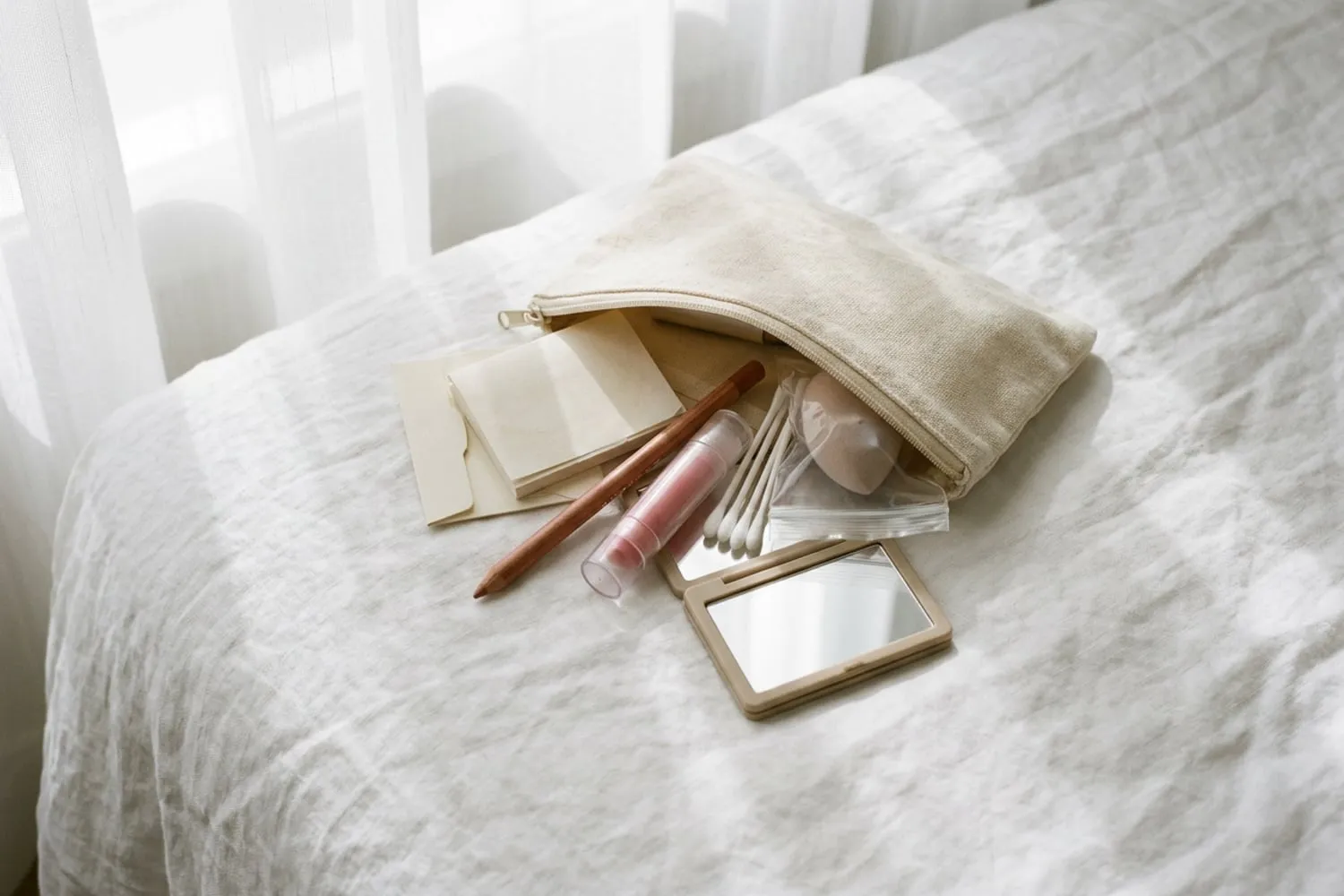
Keep it small enough for a bridesmaid’s bag:
- blotting papers;
- your lip liner and lip color, or a tinted balm;
- a little concealer and a clean sponge in a small bag;
- cotton swabs for smudged liner or mascara;
- a small mirror; a lit travel mirror, like the one on our Kit page, helps in a dim reception room;
- for an outdoor wedding, a sunscreen stick and a lip balm with SPF 30 or higher;
- tissues.
When a makeup artist will do better
Doing it yourself suits a light look you already know how to do. Book a professional trial if you want a full-coverage or dramatic look you don’t wear day to day, strip lashes you haven’t practiced, or simply one less job on the morning. The Bridal Beauty section covers the rest of the wedding year, from skin prep to the morning-of kit.
Questions
How many practice runs should I do?
At least two. The first, about three months out, settles the products and the order; the second, about six weeks before, is a full dress rehearsal worn for as many hours as the wedding will last. Add a third only if you change something after the second, and do it before the final month.
Should I use setting spray for my wedding?
It helps on a hot or humid day or a very long one, but it is optional. Mist it from arm’s length once your makeup is done and let it dry without touching your face. Try it during a practice run first, so you know how it feels and looks on your skin.
What should I put in a wedding touch-up kit?
Blotting papers, your lip liner and lip color, a little concealer, cotton swabs, a clean sponge and a small mirror cover most of the day. Add a sunscreen stick and a lip balm with SPF if you will be outdoors. Keep it small enough for a bridesmaid to carry.
How long does wedding makeup take to do yourself?
As long as your last practice run took, plus a buffer. Time that run from bare skin to the final coat of lipstick, then add at least half an hour for nerves, interruptions and photographs. Start from your skincare, not from your base.
Sources
- Cosmetics Safety Q&A: Eye Cosmetic Safety, US Food and Drug Administration
- Using Cosmetics Safely, US Food and Drug Administration
- How to apply sunscreen, American Academy of Dermatology