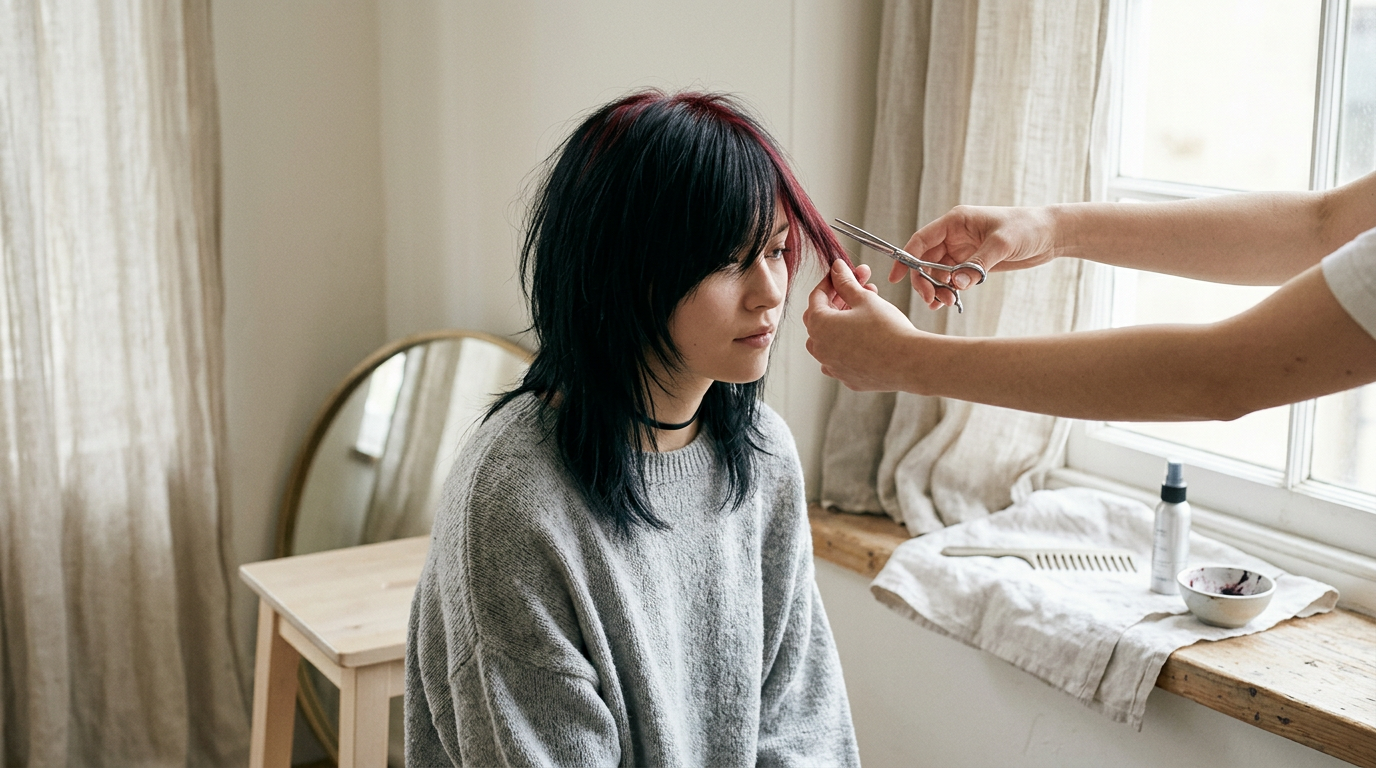
Emo Hair Cut Guide: Styles, Colors and Trimming
An emo cut frames your face with long, side-swept fringe; compare styles and colors, then learn how to ask for the look or trim it safely at home.
Think of your bangs as a curtain you get to open and close each morning. That’s the appeal of the emo cut, a layered, shaggy style built around long, side-swept fringe that softens the face and peeks through the hair.
In this guide, we’ll cover what defines the look, the cut variations and colors that suit it, how to ask for it at a salon or trim it yourself, and how to style and care for it with less product and less damage.
Signature Features of Emo Cut Hair
The emo haircut is easier to recognize than to define, so let’s break it into its parts and see why it’s showing up again.
What defines the emo hair look
The emo haircut comes out of punk and emo music, where the style was tied to the bands and the fans who copied them. Its signature pieces usually show up together:
- Choppy layers cut through the top and sides for a loose, textured shape.
- Side-swept bangs fall across the forehead or one eye.
- Dark or blonde color with bright accents, like jet black with a flash of red or bleached blonde with blue tips.
It’s less about copying one cut and more about choosing the pieces that suit you. Some versions are shaggy and wild, others sleek and tidy.
Consider a bridesmaid who wants a little edge for the rehearsal dinner but needs her hair to hold up in the wedding photos. She keeps the choppy layers and a side-swept fringe, picks a softer shade, and the look reads as a nod rather than a costume.
Why the emo look is back today
Many people wearing it now came of age in the 2000s, and they’re bringing the look back with their own spin.
Today’s version is more subtle. Softer edges, a lighter touch on the fringe, and a bit less color make it easier to wear to the office. Same attitude, quieter delivery.
Mainstream fashion has picked up the look too, so it no longer lives only in alternative music scenes.
Popular Emo Cut Styles to Try
Emo hair runs from sharp, short cuts to long, dramatic looks, so we’ve grouped the most popular emo cut styles by length. Pick a starting point, then check how it fits your hair type and routine.
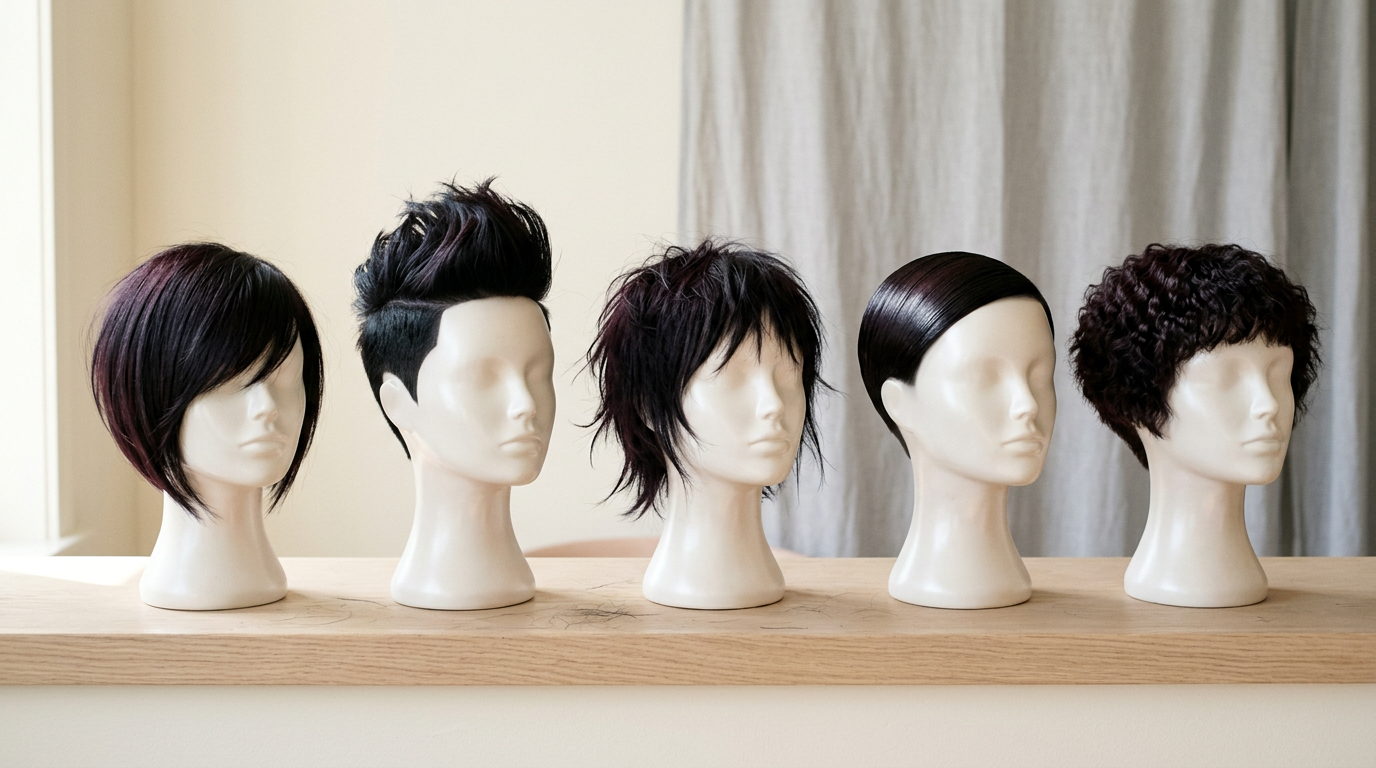
Short cuts with an emo edge
- Bobs with asymmetrical bangs. A bob shorter on one side, with bangs sweeping across one eyebrow.
- Mohawks and spikes. Height at the crown and shorter sides for a bold, graphic shape.
- Wispy, jagged layers. Piecey ends that look undone on purpose.
- Sleek short styles. Smooth, close-to-the-head cuts with a glossy finish.
- Crimped short looks. Tight crimps for a retro, textured finish.
Medium and chin-length emo looks
- Chin-length platinum bob. Icy blonde color with a clean, blunt edge.
- Shoulder-length razor-cut bangs. Fringe cut with a razor for soft, feathered ends.
- Asymmetrical dark red cut. Deep red color with one side longer than the other.
- Shaggy two-tone looks. Tousled layers in two shades that frame the face.
Consider a bride who wants a little edge without a full overhaul. A chin-length platinum bob gives her that attitude, and a few drops of lightweight serum keep the ends smooth on the morning of the wedding. She’s out the door in five minutes.
Long styles with an emo feel
- Curls and waves. Loose texture that softens the sharp lines.
- Updos and half-up styles. Pinned-back looks that show off bangs and face-framing pieces.
- Layered long with colored bangs. Long hair with a pop of color on the fringe only.
- Blunt-cut bangs. Straight-across bangs on long hair for a clean, graphic line.
Long emo hair is less about length and more about the edge you add with bangs and color. A blunt fringe keeps the look bold, even when the rest of your hair is soft.
Bang and fringe styles to consider
- Long side-swept bangs. Fringe that falls to one side and frames the eyes.
- Asymmetrical bangs covering one eye. A dramatic, one-sided sweep that hides one eye.
- Heavy blunt bangs. Thick, straight-across fringe with a strong, solid line.
- Layered or razor-cut bangs. Lighter, feathered fringe that moves with you.
Y2K (short for year 2000) haircuts often featured sleek, side-swept bangs, face-framing layers, and asymmetrical cuts. For that early-2000s feel, start with a side-swept or asymmetrical fringe.
Picking a Style for Your Hair and Face
Before you book a chair, figure out what your hair and face will support. The goal is fit rather than trend, so the cut looks like you, not a photo you copied. Here’s how we’d narrow it down.
Which styles suit your hair type
Thickness and texture set how bold you can go:
- Fine to medium hair: Soft layers and a side-swept fringe add shape without weighing hair down.
- Medium to thick hair: Heavier bangs and blunt ends hold their line, so you can go bolder.
- Thin hair mohawk: Keep the sides close and the top light so the style looks deliberate, not flat.
- Natural curls: Ask for a cut that follows your curl pattern instead of fighting it.
Matching your face shape and occasion
Your face shape and the setting both matter, so think about where you’ll wear the cut.
- Round face options: Longer, side-swept bangs and a little height on top can add length to a round face.
- Work and formal wear: Choose a softer, tidier version you can pin back or smooth down.
- Teen and all-age styles: The look works for teens and adults alike, so scale the drama to your everyday life.
- Casual weekend looks: Let the fringe fall naturally and skip the heavy styling.
Consider a bridesmaid with fine hair who wants a fringe for the photos but has to pin her hair back for the ceremony. A soft, side-swept cut lets her do both with a few pins and almost no product. One cut, two looks.
Colors That Work for Emo Hair
Color is where emo hair gets its personality, but you don’t need a dramatic shade to pull off the look.
Classic shades for an emo look
A black base is the easiest place to start, and it frames the face well. For more contrast, go platinum blonde, which usually takes bleach and toning to keep it from warming to yellow. Want it quieter?
Add bright accent streaks to a dark base, or stick with natural color, which is also fine.
Vivid colors and how to keep them
The go-to shades for a bolder look are:
- Pink
- purple
- red
- blue
Vivid shades fade fast.
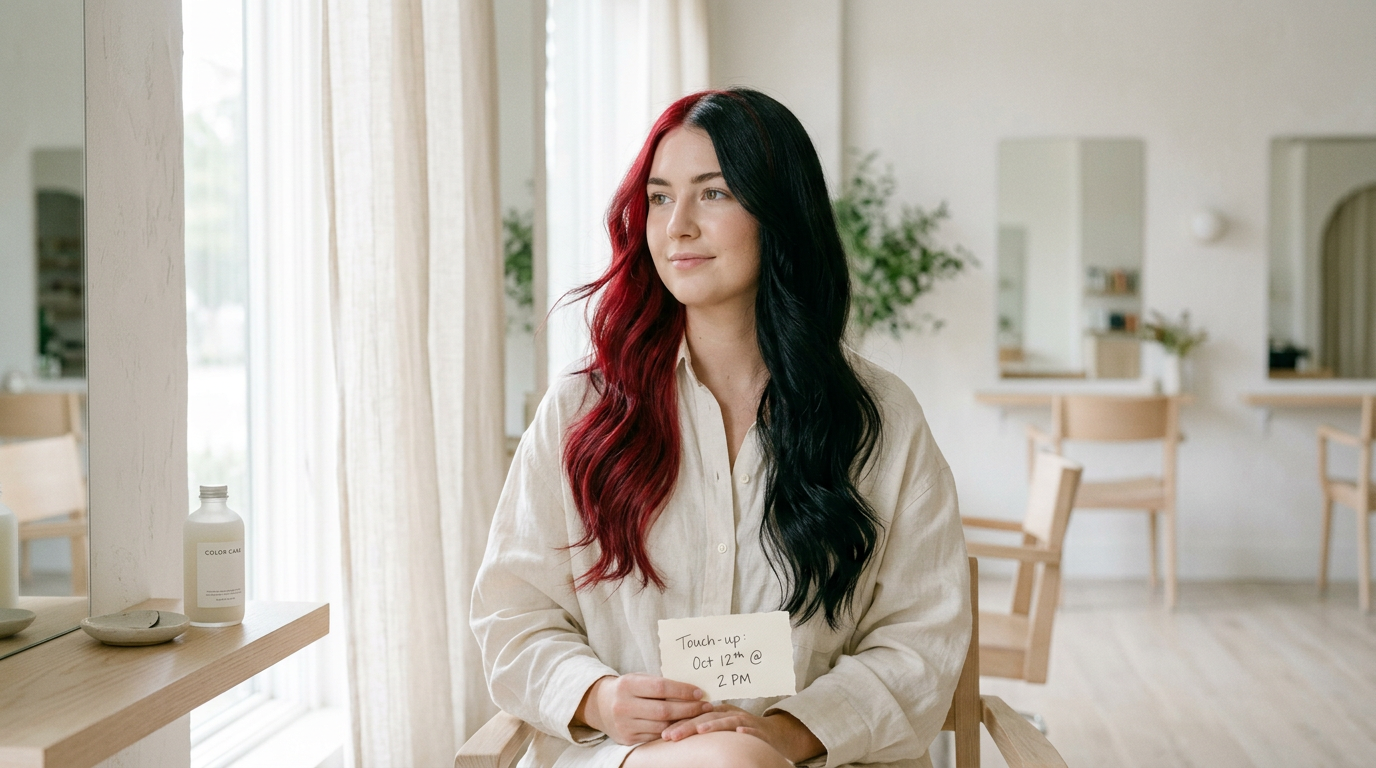
Plan regular upkeep from day one, booking touch-ups before the color dulls rather than after.
Two-tone means splitting the hair into two colors, like black and red. Multicolor adds three or more shades, so it needs more upkeep.
Highlights add lift, and balayage is a hand-painted technique that softens the sweep, with no harsh line at the roots.
For bleached or dyed hair, use a gentle, color-safe shampoo, keep heat low, and wash less often to protect the color.
Color options you can change easily
- Clip-on extensions add a bold section in minutes and come out at night.
- Hair chalk gives a temporary pop of color and rinses out with shampoo.
- Colored hairspray works fast for one night and washes out.
Consider a bridesmaid who wants pink for the reception but not forever. A clip-on piece or a little hair chalk gets her there, and both are gone before she’s back at her desk on Monday.
A salon is the right call for bleach or several shades at once, while at-home dye works best for a single shade on healthy hair.
Asking for an Emo Cut at a Salon
Walking in with a clear plan turns a vague wish into a cut you’ll recognize in the mirror. Here’s how to explain the look, then which techniques to request.
Explaining the look to your stylist
Lead with pictures rather than labels. The term ‘emo’ is vague, and one stylist’s version can look very different from another’s. Bring a few inspiration pictures that show the look from the front and side.
Think of a bridesmaid who arrives with two photos on her phone: long bangs swept across the eyes and soft, choppy layers. Her stylist gets it in seconds, and she leaves with the cut she pictured.
Ask for long razor-cut bangs in those exact words. That tells your stylist the fringe should be long and softened at the edges, not blunt across the brows.
Techniques to request and aftercare tips
Once you’re in the chair, ask for these:
- Razor cut on blunt layers. Ask for a razor cut on your blunt layers so the ends look feathered instead of chopped.
- A brand-new razor. Ask your stylist to open a brand-new razor for your cut so the edges stay clean.
- Thinned bottom 3 to 4 inches. Ask for the bottom 3 to 4 inches to be thinned so the ends look lighter.
- Trims every 4 to 6 weeks. Book a trim every 4 to 6 weeks to keep the shape sharp between visits.
A cut this specific needs regular upkeep, because the edges drift out of shape as the weeks pass. Stay on schedule, and the look stays sharp.
How to Trim Emo Hair at Home?
To trim emo hair at home, you’ll prep your tools, cut the layers, and shape the bangs. It’s less about one big chop and more about small, careful snips, so you can stop before you go too far.
Getting ready with the right tools
Start by studying inspiration photos so you know where the layers and bangs should land. Then work on clean, dry hair so you can see how it actually falls.
Grab real haircutting scissors, the kind made for this job, and use two mirrors: one in front of you and one behind, so you can check the back of your head.
Steps for cutting the layers
- First, section your hair and bangs so each part stays separate.
- Next, point-cut for layers by snipping into the ends. If you’re using a razor, hold it at a 45-degree angle.
- Cut a little at a time, since you can always take more off but you can’t put it back.
- Leave the bottom layers long so you have room to adjust later.
Patience wins.
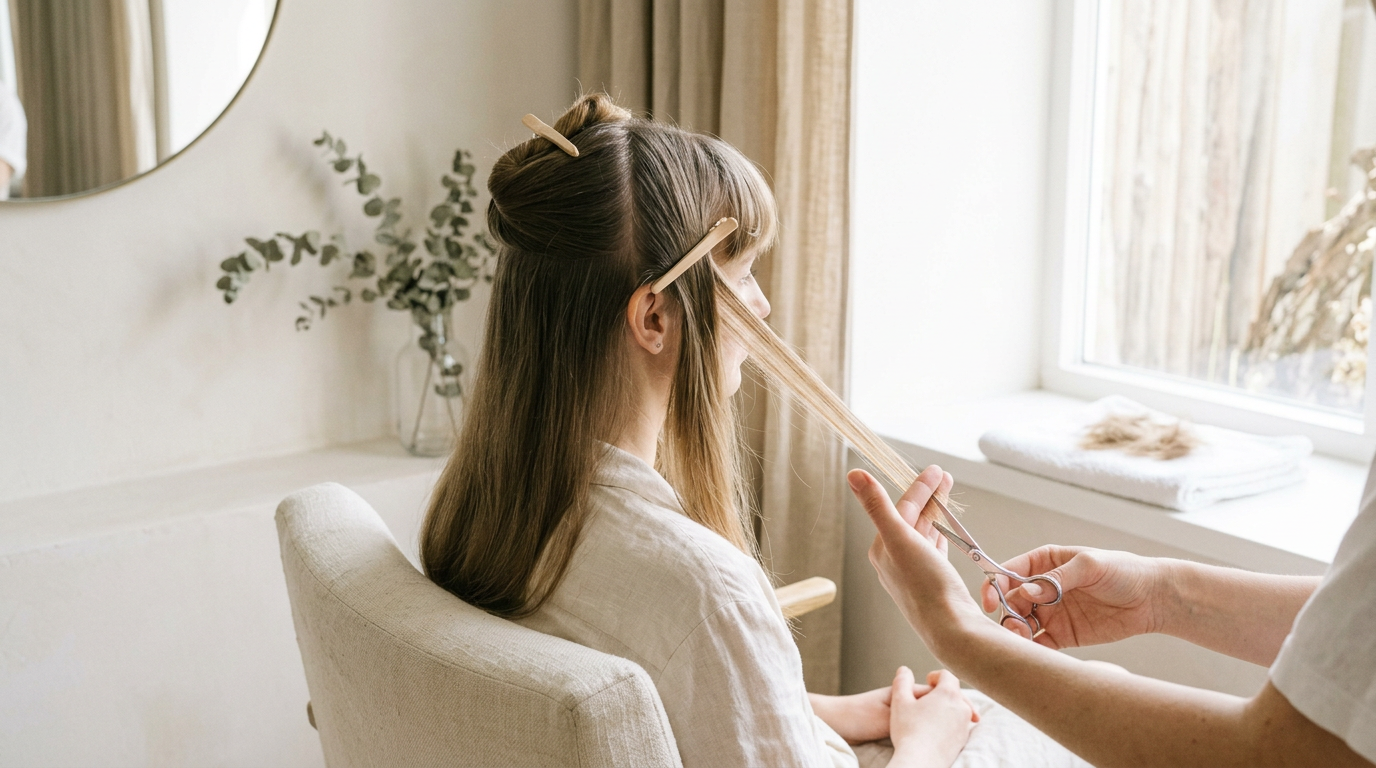
Trimming bangs from cheekbone to chin
Cut your bangs to a length between your cheekbone and chin, then check that they fall below your eyes when you look straight ahead. Think of a bridesmaid who wants her bangs off her face for the photos but still wants some lift at the reception.
Leaving extra length gives her room to tease the bangs up for volume later. Between cuts, you can trim the bangs with the same small snips to keep them looking fresh.
Styling and Keeping Your Cut Fresh
Why does your cut look sharp at the salon and flat by lunch? A few daily habits make the difference.
Quick daily styling steps
- Deep side part: Part deeply to one side so the fringe sweeps across.
- Straighten: Run a flat iron over the front and top in small sections.
- Backcomb for volume: Tease small crown sections, then smooth the top layer.
- Hairspray to hold: Use a light mist, not a heavy coat.
Growing out a fringe? Pin longer front pieces to the side to fake it.
Picture a bridesmaid with ten minutes before the ceremony: one pass with the iron, a few teased pieces, and a light mist, and her hair holds through the photos. Lighter hands win.
The products and accessories you need
Skip the full shelf and keep these:
- Strong-hold gel: Use it for sharp pieces, in small amounts.
- Mousse and lacquer: Mousse adds root body, and lacquer, a firm-hold spray, locks the shape in.
- Root volumizer: Lifts the crown without weighing down the lengths.
- Barrettes, bows, and skull clips: Hold back sides and fringe without extra pinning.
- Light leave-in: Use it most days instead of heavy gel for shine without crunch.
Keeping your hair healthy over time
Protect the cut underneath with these habits:
- Regular trims: Keep the shape sharp and remove ends that have started to split.
- Split end prevention: Moisturize ends with a light leave-in, and don’t brush dry, tangled hair.
- Backcombing damage: Teasing roughens the outer layer, so keep it to the crown.
- Razor-cut breakage risk: Thin, wispy ends snap more easily when yanked through knots.
- Heat protection before flat ironing: Spray a heat protectant on dry hair first.
Safe backcombing starts with detangling: comb from the ends up, then tease only small crown sections. The volume stays, and the damage doesn’t.
A great emo cut comes down to three things: the shape of your fringe, the layers that keep it moving, and a color and care routine you’ll actually stick with.
Whether you book a salon visit or grab the shears at home, you’ll know what to ask for and how to keep it fresh. Let your fringe frame your face, keep the rest of your routine light, and let the cut do the talking.
Questions
What are the 7 basic haircuts?
Common basic haircut shapes include the one-length or blunt cut, layered cut, graduated or wedge cut, bob, pixie, shag, and undercut. These are broad categories, and many hairstyles combine elements of several cuts.
What are some Y2K haircuts?
Y2K-inspired haircuts often feature sleek side-swept bangs, face-framing layers, and asymmetrical shapes. Bobs with side fringes and layered cuts with long, sweeping bangs are examples.
How to trim emo hair?
Work on clean, dry hair with haircutting scissors, using two mirrors and sectioning the bangs away from the rest. Make small point-cuts into the ends of the layers, leaving the bottom layers long; trim the bangs gradually to between cheekbone and chin length, checking how they fall as you go.
What does the 3:2:1 haircut rule mean?
There is no single standard haircut meaning for the 3:2:1 rule. In some haircut tutorials, it refers to a ratio for blending clipper guard lengths, but the exact lengths depend on the barber or technique, so confirm what the numbers mean before cutting.
What does the 3:2:1 rule for haircuts mean?
The 3:2:1 haircut rule does not have one universally accepted definition. It may describe a particular clipper-guard progression or blending technique, and the specific guard sizes can vary by barber or tutorial.
Where does the emo haircut come from?
The emo haircut grew out of punk and emo music scenes, where bands and fans helped popularize its choppy layers, side-swept bangs, and often dark hair with bright accents. The style became especially associated with alternative youth culture in the 2000s.