Fair Skin Explained: What Shapes It and How to Care for It
Fair skin needs more than a light touch. Build a simple routine with daily SPF and one manageable night step, plus safe ways to brighten without harsh fixes.

Think of your skin like a linen tablecloth. You can’t change the fabric you were given, but what you put on top of it, and how carefully you handle it, decides how it looks by the end of the day.
That’s the heart of fair skin: a naturally light complexion that still deserves thoughtful, everyday care.
Fair skin is simply the tone you were born with.
In this post, we’ll walk through what shapes it, how to brighten and protect it safely, and a simple light-layer routine built on daily SPF (sun protection factor) and one night step you can actually stick with.
What Really Decides Fair Skin
Most of what decides fair skin is set before you ever open a bottle. Here’s how, plus the skin color terms you’ll see on shade charts.
How melanin and genetics set your complexion
Your complexion comes down to melanin, the pigment that colors skin. Your genes set how much you start with, so genetics limit achievable change. A brightening serum can even out tone, but it won’t rewrite your starting point.
All complexions are beautiful, and fair skin isn’t a flaw that needs fixing. Your skin is still your skin.
Hyperpigmentation (patches of darker skin), tan, and discoloration are all ways melanin shifts. Take a bridesmaid who comes home from a sunny destination wedding with a tan that’s deeper on her shoulders than her face.
It’s less about what her skin started with and more about how it responds to sun, so her next step is a daily layer of sun protection.
What are the 7 types of skin color?
Skin color is better read as a range than a fixed set of boxes, and your tone is one of several spots on it. Three traits do most of the sorting:
- Undertone. The cool, warm, or neutral hue beneath your surface color.
- Value. How light or deep your skin reads.
- Chroma. How bright or muted that color looks.
A makeup artist matching a bride checks undertone first, then value, so the foundation disappears into her skin instead of sitting on top. Seasonal color theory builds on these same traits to group complexions.
The Fitzpatrick scale adds a different angle. It sorts skin by how it responds to sun, which matters more for sun safety than for shade matching.
A Simple Skincare Routine That Works
You don’t need ten steps to get skin that looks rested. A short routine you’ll actually use beats a long one gathering dust on the shelf, so here’s how we’ll keep it light.
Keep skin moisturized and nourished
A minimal routine is enough for most readers. Think of a bride-to-be with three weeks until the wedding and a shelf full of samples. She doesn’t need every serum on it.
She needs a gentle cleanser, a moisturizer, and one night cream she’ll reach for every evening.
Look for vitamin-rich night creams built on familiar, rich ingredients like olive oil and shea butter. These help seal moisture in so skin feels soft by morning, and they support cell repair while you sleep. Fewer steps, better skin.
When skin looks dull, consider a brightening active, an ingredient with one targeted job. Vitamin C and niacinamide are the two to know. Pick one brightening active instead of stacking several, so you can tell what’s actually working.
A light night layer can help when skin looks flat by evening. Consider a bridesmaid who packs just one light night layer for the whole weekend.
She applies it after her moisturizer, and she wakes up with skin that still looks like her skin, not tired or flat.
Daily Habits That Brighten Your Skin
Brighter skin comes from daily habits more than occasional fixes. Here are four that matter most:
What you eat affects your complexion
A balanced, nutritious diet gives your skin steady fuel. Add antioxidant-rich foods, which help protect skin cells, and ease back on fatty, unhealthy options. Diet can affect acne and pigmentation too.
The American Academy of Dermatology notes that scientists believe a low-glycemic diet, one that avoids sharp blood sugar spikes, may reduce acne.
Why drinking water keeps skin bright
Consider a bride who keeps a water bottle on her vanity during dress fittings. Steady sips add up, so her skin looks rested, not parched, when the photos start.
Aim for 8 glasses a day, and water-rich fruits and vegetables help too. Skipping fluids can lead to dehydration, and dehydrated skin often looks dull. Low water intake is also linked to toxin buildup.
A study using national health survey data found that higher water intake was tied to lower pollutant levels in urine, largely because extra water dilutes them.
How sleep helps skin recover
Your skin repairs itself during sleep, so rest is a daily habit, not a luxury. Poor sleep can leave skin looking dull.
A study on how sleep loss shows on the face found that sleep-deprived people were rated as looking more fatigued, with darker circles under the eyes.
Sleep is also linked to melanin, the pigment that gives skin its color. A study on sleep and skin color found that poor sleep can alter skin melanin and hydration. Keep pillowcases and bedsheets clean, too, since your face rests on them nightly.
Guard skin from sun and pollution
Ultraviolet (UV) radiation can cause irreversible skin damage. A U.S. Environmental Protection Agency reference on UV’s toxic effects links chronic exposure to premature aging and skin cancer. Apply sunscreen to all exposed skin every day.
Keep it light: a daily layer of sun protection factor (SPF) sunscreen is a habit you’ll actually keep.
Pollution affects your complexion too, so daily protection covers more than sunshine. If you’re unsure which sunscreen suits you, a dermatologist (a doctor who specializes in skin) is a great person to ask. Consistency wins.
Natural Remedies You Can Make at Home
Your kitchen may already hold a few brightening helpers, but think of these five remedies as gentle support, not a fast fix.
Turmeric paste to even out tone
Turmeric brings anti-inflammatory and antimicrobial properties to the bowl. Stir a pinch into a spoonful of milk or cream until smooth, then spread it on the areas you want to even out.
Turmeric is often said to even skin tone and fade marks, and a study of homemade turmeric masks found them effective in reducing chloasma faciei, a type of facial pigmentation.
Honey for mild lightening and blemishes
Honey has a mild bleaching effect. Research on honey’s phenolic acids, plant compounds, points to them as effective skin lightening agents because they inhibit melanin production, the pigment behind dark spots.
Honey is also antibacterial, so it’s worth trying on a blemish. Do a patch test first: dab a little on your inner arm and wait for any reaction before it goes on your face. Then let it sit and wash off with lukewarm water.
Honey’s lightening is mild, not harsh. Lemon juice and bleaching products are unsafe lightening methods, so leave them off your shelf.
Orange juice and peel for brighter skin
Vitamin C is the main reason oranges are linked to brighter skin. A study of a citrus peel mixture found that taking it by mouth brightened skin in healthy women without adverse effects. Here are three easy ways to use it:
- Drink it: a glass of orange juice brings vitamin C in from the inside.
- Apply it: dab fresh juice on your skin with a cotton pad.
- Peel mask: mix orange peel powder with a little water or milk into a smooth paste, spread it on, and rinse once it dries.
If you have diabetes, check with your doctor before adding juice to your routine.
Exfoliate with a besan face pack
Besan, or chickpea flour, works as an exfoliant that lifts dead skin from the surface. Mix it with milk and a pinch of turmeric into a paste, then stir in a pinch of sugar for extra exfoliation. It also helps remove tan.
Picture a bridesmaid after a long afternoon of wedding photos: she mixes a small batch at night, spreads it on while she winds down, and rinses before bed.
Cucumber to hydrate and reduce tan
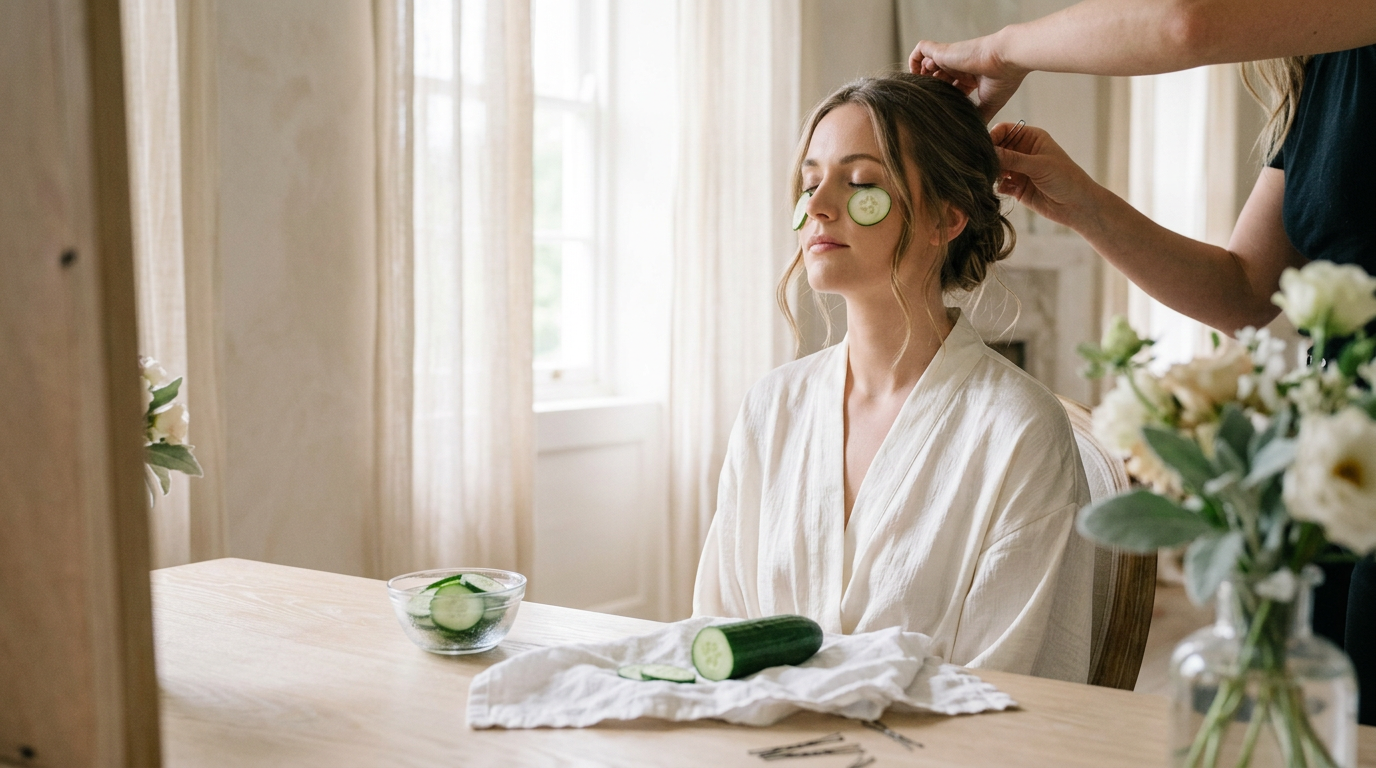
Cucumber is hydrating and nourishing, and it’s often used to help reduce tan and sun damage. Lay chilled slices under your eyes. It also helps maintain your skin’s pH, the natural acidity level of your skin.
Consider a bride on her wedding morning, cucumber slices chilling under her eyes while her hair gets pinned: five minutes that cost her nothing but a trip to the fridge. Cool, simple, and easy to repeat. That’s the whole appeal.
Style Tips That Suit Fair Skin
With fair skin, the real question is which shades make you look bright rather than washed out. Two easy places to start are below.
Browse color, style and beauty guides
The guide hub holds 24 guides. Here’s what you’ll find:
- Clothing color guides show which shades flatter fair skin.
- Style advice covers cuts and silhouettes.
- Beauty and makeup tips cover the everyday basics.
Say you’re a bridesmaid with one fitting left and a closet full of options. Check the clothing color guides first, then the style advice for cuts, and you’ll walk into the fitting with two dresses instead of ten.
Try a selfie-based color analysis
A selfie-based season analysis sorts your coloring into a seasonal palette, and it works best as a starting point rather than a verdict. Your mirror still gets the final word.
Once you have your palette, you can preview colors on your face right on the photo, along with hair color and makeup. Think of a new mom who wants a lipstick that won’t wash out her complexion.
She uploads a clear selfie, previews three shades, and drops the two that look gray. Her payoff: one tube she can grab for date night or a quick school run.
The guides are free and the analysis is optional, so you can browse first and decide later.
Keeping Expectations and Safety in Check
Fair skin can look brighter and stay protected, but it has limits. Here’s what to expect, what to skip, and the questions you’re probably asking.
Results to expect and mistakes to avoid
Your genes set your starting point. Fair skin can get brighter and more even, but it won’t change tone, so we’d aim for healthy-looking skin, not a dramatic transformation.
Remedies work best when you use them regularly, not in one big push. Think of a bride who scrubs nightly for two weeks before her wedding, then wakes up with stinging, blotchy skin. A few gentle sessions a week would have kept her glow steady.
Prefer natural ingredients? That’s fine, but natural doesn’t automatically mean gentle. Patch test any new product on your inner arm first.
Watch out for over-exfoliating. Scrubs, acids, and harsh brushes used too often leave skin red, sore, and reactive. Regular, gentle care beats intensity. Less is more.
Your common questions answered
Can natural ingredients repair skin? They can be soothing, but they aren’t a repair kit. If your skin is raw or peeling, let it recover first.
How do you remove a sun tan? You can’t erase one overnight. It fades as skin renews itself, and daily sunscreen keeps you from adding more.
Do water, sleep, and diet help? They support how skin looks and feels, but they won’t change your natural coloring.
What about turmeric and cucumber? Patch test first, since turmeric can stain and irritate. Treat cucumber as a cooling treat, not a brightening shortcut.
Fair skin is a starting point, not a limitation. Knowing what shapes it, and how to brighten and protect it safely, gives you a clearer picture of what your skin needs.
Keep the routine light: daily SPF in the morning and one night step you’ll actually use. Protect first, brighten gently, and let go of anything that promises more than your skin can safely give.
The best routine is the one you’ll keep up. Your skin is already doing its best, so give it steady, simple care and let it shine through.
References
- The Influence of Drinking Water Intake on Pollutant Levels in the Human Body: Evidence from NHANES Data — pmc.ncbi.nlm.nih.gov (2025)
- The Impact of Sleep Quality on Skin Color — pmc.ncbi.nlm.nih.gov (2025)
- Assessment of in vitro skin permeation and accumulation of phenolic acids from honey and honey-based pharmaceutical formulations — pmc.ncbi.nlm.nih.gov (2025)
- Effectiveness of Homemade Turmeric Mask in Reducing Chloasma Faciei Among Women at Selected Villages, Kolar, Karnataka, India — doi.org (2024)
- Toxic effects of ultraviolet radiation on the skin — hero.epa.gov
- Effect of Oral Intake of A Mixture Containing Natural Citrus Peel Extract, Vitamin C, and L-Cystine on Skin Brightness in Healthy Women — doi.org (2018)
- Cues of fatigue: effects of sleep deprivation on facial appearance — pubmed.ncbi.nlm.nih.gov (2013)
- Can the right diet get rid of acne? — aad.org
- Honey for Face: Uses, Benefits, and Side Effects — healthline.com
Questions
What are the 7 types of skin color?
There is no universally accepted set of seven skin colors; skin tone is a spectrum. Skin can be described by its value, from light to deep, its undertone, such as cool, warm, or neutral, and its chroma, from bright to muted. The Fitzpatrick scale is a separate system that classifies how skin responds to sun exposure.
How do you get fair skin?
You cannot safely change your natural skin color, which is largely determined by genetics. To help skin look brighter and more even, use daily sunscreen, moisturize, and consider one gentle brightening ingredient, such as vitamin C or niacinamide. Avoid harsh bleaching products and over-exfoliation, which can irritate or damage skin.
What does fair skin tone mean?
Fair skin tone means a naturally light complexion. It describes the skin’s surface color, while undertone refers to the cool, warm, or neutral hue beneath it. Genetics and melanin largely determine a person’s natural tone.
Sources
- Can the right diet get rid of acne?, aad.org
- Honey for Face: Uses, Benefits, and Side Effects, healthline.com
- The Influence of Drinking Water Intake on Pollutant Levels in the Human Body: Evidence from NHANES Data - PMC, pmc.ncbi.nlm.nih.gov,
- The Impact of Sleep Quality on Skin Color - PMC, pmc.ncbi.nlm.nih.gov,
- Toxic effects of ultraviolet radiation on the skin, hero.epa.gov
- Effectiveness of Homemade Turmeric Mask in Reducing Chloasma Faciei Among Women at Selected Villages, Kolar, Karnataka, India, doi.org,
- Assessment of in vitro skin permeation and accumulation of phenolic acids from honey and honey-based pharmaceutical formulations - PMC, pmc.ncbi.nlm.nih.gov,
- Effect of Oral Intake of A Mixture Containing Natural Citrus Peel Extract, Vitamin C, and L-Cystine on Skin Brightness in Healthy Women, doi.org,
- Vegetable as a Source of Bioactive Compounds with Photoprotective Properties: Implication in the Aging Process - PMC, pmc.ncbi.nlm.nih.gov,
- Cues of fatigue: effects of sleep deprivation on facial appearance, pubmed.ncbi.nlm.nih.gov,
- Curcumin, an active component of turmeric: biological activities, nutritional aspects, immunological, bioavailability, and human health benefits - a, pmc.ncbi.nlm.nih.gov,