
Jojoba Oil for Combination Skin: A Complete Guide
Jojoba oil for combination skin can hydrate dry cheeks without overloading an oily T-zone; compare it with other oils and learn how to apply it daily.

Think of combination skin as a house with two climates: an oily T-zone down the middle and drier cheeks along the sides. One heavy cream can make the shine worse in one room and do little for the other.
Jojoba oil is a light, plant-based oil that many people with combination skin try when they want one product to work across both.
In this post, we’ll cover how it works, how to choose and use it, and when it’s not the right pick, plus how to use one oil across your face and body without weighing down your routine.
Jojoba Oil for Combination Skin Basics
Before you reach for a bottle, know what your skin is doing. Here’s how to spot combination skin and decide whether jojoba fits.
What combination skin looks and feels like
Combination skin means more than one skin type on one face. The T-zone (forehead, nose and chin) tends to look oily, while your cheeks run normal to dry.
You might notice shine by midday, more visible pores near your nose, and a tight feeling on your cheeks after washing. That’s a pattern, not a flaw.
Working out your skin type at home
Cleanse, pat dry, then wait thirty minutes without applying anything. Press a clean tissue to your forehead, nose and chin, then to each cheek. If the T-zone tissue picks up oil and the cheek tissues don’t, that points to combination skin.
Look at where the oil shows up, not how much you see in the mirror. A skin-type diagnostic tool can also walk you through the same questions.
Choosing an oil that suits your skin
Plant oils don’t cause oiliness, so the real question is which oil suits you. Some are described as penetrating, sinking in quickly, while rebalancing and regulating oils aim to even out shine.
Jojoba can gently nourish and hydrate without feeling heavy on the T-zone. A bride who needs one oil for her face, shoulders and hair ends wants something light enough for her T-zone and gentle on her cheeks, so she packs one bottle, not three.
Jojoba isn’t a cure-all. If your cheeks stay tight or your skin reacts, it may not be the right oil, and a skin professional can help you choose again.
Why Jojoba Suits Combination and Oily Skin
Jojoba oil comes up a lot for oily and combination skin. Here’s why, and where the claims need a closer look.
How it mirrors your skin’s natural oil
Your skin makes its own oil, called sebum, and jojoba closely resembles it. Jojoba is a liquid wax ester, not a triglyceride (the fat in most plant oils).
A 2009 study by Wertz proposed a synthetic sebum that’s about 25% jojoba oil, a sign of how alike they are. Wax esters set jojoba apart from heavier oils, so it tends to feel lighter on the skin. It also contains unsaturated fatty acids and vitamins.
How it helps calm excess oil
The evidence here is thinner. A review of the jojoba plant notes it’s believed that consistent use can signal your skin that it has made enough oil, which may curb overproduction. That’s a belief, not a proven effect.
The goal is less shine across your T-zone (forehead, nose, and chin) without drying out your cheeks. Keeping pores clear helps too, which we’ll get to next.
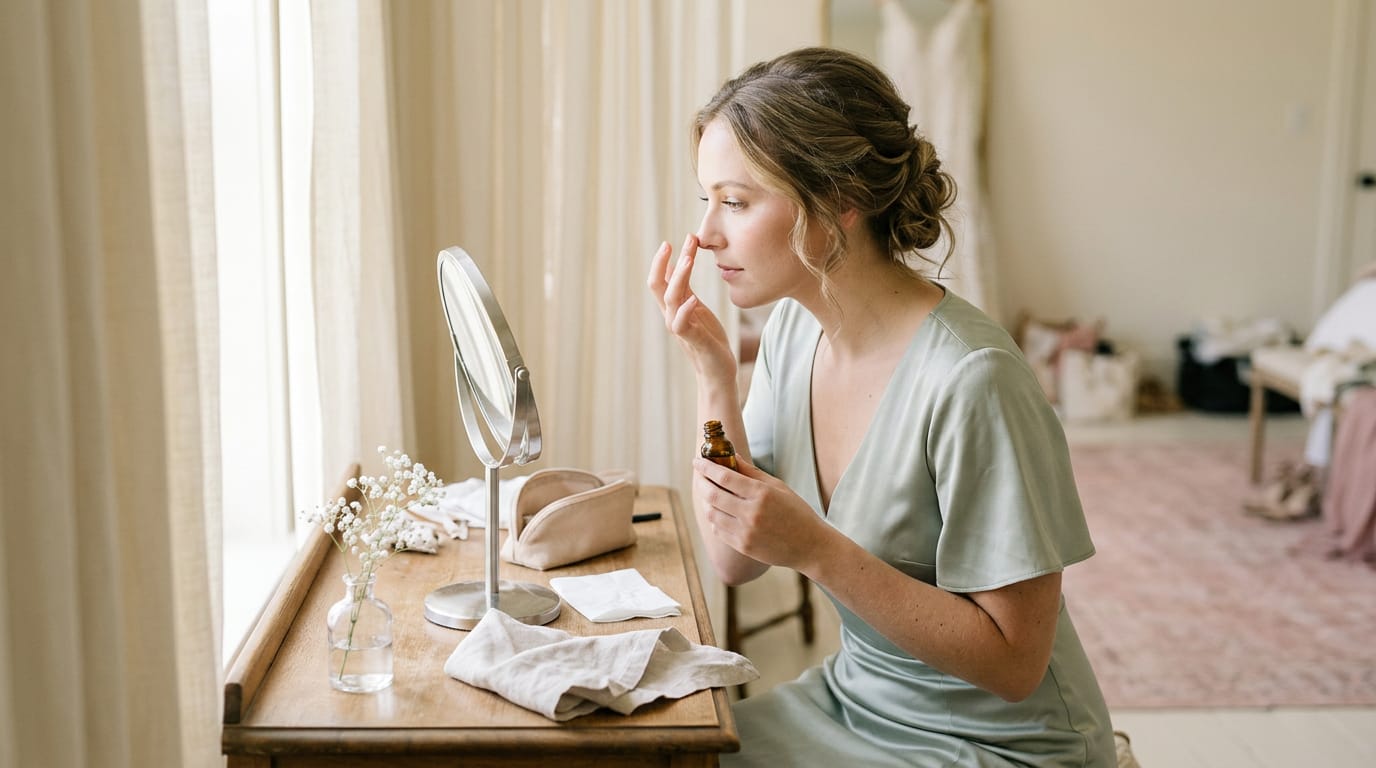
Think of a bridesmaid with an oily nose and dry cheeks who keeps one small bottle in her clutch. She taps a drop on her T-zone before the photos, then smooths the rest onto her elbows after the toast. One bottle, two jobs.
Whether it clogs pores or causes breakouts
Jojoba has a zero comedogenic rating, the term for how likely an oil is to clog pores. That’s a lower chance of clogging, not no chance, so watch how your skin responds. It’s also a common choice for acne-prone skin.
If you’re weighing it against coconut, grapeseed, or rosehip oil, check each one’s comedogenic rating before you switch. Blackheads and whiteheads are clogged pores, so a low-clogging oil is a sensible place to start.
Safe for sensitive skin and babies
Jojoba is often described as suitable for sensitive skin, and it’s unlikely to cause reactions, but that’s not a promise. Do a patch test on your inner arm before it touches your face.
Many people use a little around the eyes, but keep it out of your eyes.
Is jojoba oil safe for babies? We don’t have verified research on infant skin, so we can’t give you a clear yes. Ask your pediatrician first.
What Jojoba Oil Does for Your Skin
Jojoba oil does a few specific jobs well. Knowing which one you need helps you use it on purpose instead of hoping it does everything.
Drawing in water and locking it in
Jojoba oil works as a humectant, which means it attracts water toward the skin’s surface. It works best on damp skin, not dry, because there’s water on the surface for it to grab.
Think of a bride who washes her face before bed, pats on a little jojoba while her skin is still damp, and wakes up feeling soft for her dress fitting. The oil locks that moisture in overnight. Damp skin makes all the difference.
Antioxidant protection and signs of aging
Jojoba contains vitamin E, an antioxidant that helps protect skin from irritants. It’s less antioxidant than rosehip oil, so if signs of aging are your main concern, rosehip is the stronger pick.
For mature skin, you can blend the two, pairing jojoba’s everyday protection with rosehip’s extra antioxidant power.
Repairing the skin barrier after over-cleansing
Over-cleansed skin is skin that’s been washed one too many times, and it can feel tight and look red.
Jojoba oil is used in skincare intended to support the skin barrier, including when skin feels dry or tight, and a study on hydrolyzed jojoba esters reported beneficial effects on barrier function and skin hydration.
- Twice daily. Apply it morning and night to help reduce tightness and redness.
- Winter. Cold, dry months are a good time to lean on it for barrier support.
Does jojoba oil help with eczema? Eczema is a condition that leaves skin red, itchy and inflamed. The research we have covers barrier support for dry or tight skin, not eczema itself, so we can’t promise it will help.
If you have eczema, check with a dermatologist before adding jojoba to your routine.

Keeping skin smooth and springy
Jojoba supports elasticity, the skin’s natural stretch and bounce. When skin keeps its bounce, it looks smoother and more vibrant, which is the look most of us want for a wedding photo or a Monday meeting. Smooth, springy skin, without the fuss.
How to Apply Jojoba Oil Daily
Jojoba works best when it fits your routine. Here’s how to use it on your face, under makeup, and on your body.
Ways to apply it to your face
- Daily facial serum: Apply it as your lightweight layer, before any heavier creams. Patch test a small spot, like the inside of your wrist, first, then start with a small amount.
- Clean, slightly damp skin: Apply it right after cleansing, while your skin is still damp.
- Blend with other carrier oils: Mix in another carrier oil (a plain oil that dilutes others) for a richer feel.
- Overnight use: Use it as your last evening step, when there’s no makeup to layer over.
Using it under makeup each morning
Put jojoba on first and let it sink in before you add makeup. Consider a bride with an early appointment: one thin layer, time to settle, and a smooth base for her foundation. That’s the whole step.
If makeup starts to pill (ball up or flake) or slide, try less oil underneath, not more.
At night, jojoba doubles as a makeup remover. Massage a little over your makeup, then wipe it off with a soft cloth.
Using it for hair and body care
- Hair care: Smooth a small amount over dry ends.
- Body oil blends: Stir a little into your lotion, or press it into damp skin after showering.
- Diluting essential oils: If you add essential oils, mix them into jojoba first, never straight onto skin.
- Homemade skincare formulations: Keep home mixes simple so you don’t lose track of what’s on your skin.
- One oil for face and body: One bottle can cover both, but you’ll want it lighter on your face than on your elbows or legs.
How Jojoba Stacks up Against Other Oils
Plenty of oils promise the same glow, so here’s where jojoba stands out.
How quickly it sinks in and feels
Jojoba is about speed rather than weight: it sinks in fast and leaves a dry, non-greasy finish that’s ready for makeup. Squalane sinks in even faster, while marula oil takes a little longer. Heavier oils leave residue behind.
Picture a bride at her reception: a thin layer of jojoba sinks in before the toast, while a heavy oil keeps her blotting. Residue is the real dealbreaker.
Other oils that suit combination skin
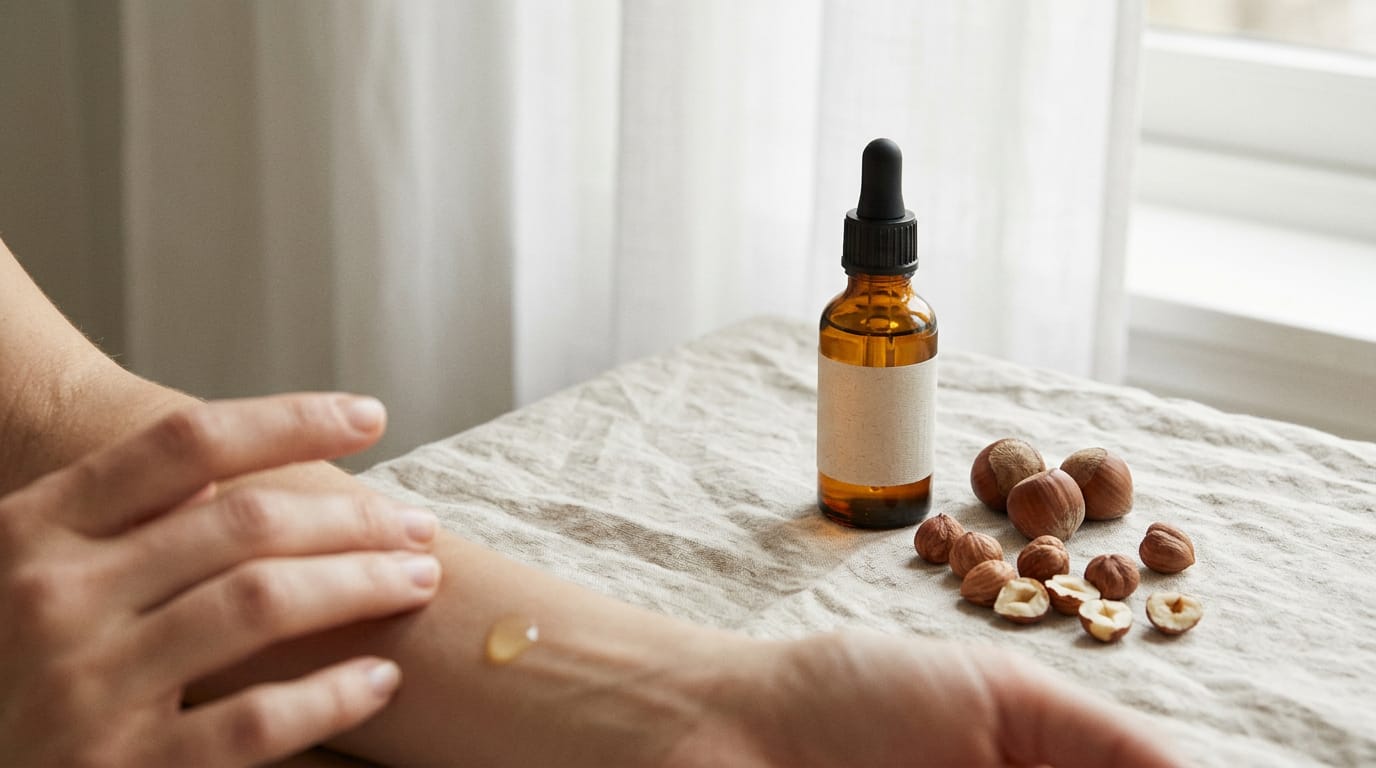
If you’re asking what the best oil to moisturize your face is, hazelnut is the one we’d pick for combination skin.
According to a study on hazelnut’s bioactive properties in cosmetics, it tightens pores and regulates sebum, the natural oil your skin makes. Hazelnut is a nut, so if you have a nut allergy, patch test it on your inner arm before it goes near your face.
Can I mix vitamin E and jojoba oil?
Yes, you can. A drop or two of vitamin E stirred into your jojoba makes a light blend for the face. Here’s how the other combinations fit:
- Rosehip and sea buckthorn blends: richer options when jojoba feels too light.
- Vitamin C serums: apply the serum first, since it’s thinner, then press jojoba over it.
- Winter: when the air dries out, richer oils can take over on cheeks and body while jojoba stays on your T-zone.
Can you use coconut oil and jojoba oil together? Yes, but coconut is heavier and richer, so keep it to drier spots like elbows and heels.
Jojoba’s Origins, Shelf Life and Products
Before you add jojoba to your routine, here’s where it comes from, how long it lasts, and which bottles to try.
Where jojoba grows and how it’s pressed
Jojoba comes from a shrub with the scientific name Simmondsia chinensis, native to the Southwest US and Mexico. It’s cold-pressed and left unrefined, so it isn’t processed further after pressing.
Jojoba also has a surprising history. When whale hunting was banned worldwide, it replaced sperm whale oil in the 1970s, as a biodiesel study on jojoba oil-wax reports.
How long jojoba stays fresh
Rancidity is the stale smell oils develop as they break down, and jojoba resists it. A review of jojoba oil’s chemistry reports that its natural antioxidants make it highly resistant to rancidity.
That resistance can help extend the shelf life of the products it’s blended into.
Its shelf life is nearly indefinite, so the question is less about whether it’s still good and more about when you’ll finish it. Consider a new mom who keeps one bottle in her bathroom basket.
On a busy Tuesday, she grabs it without sniffing it first. One less thing to think about.
Brands and products worth trying
You’ll find jojoba in a few formats. Three to look for:
- Waterless face oil blends. Face oils made without water, so the formula stays oil-based.
- Aura Cacia jojoba products. Aura Cacia is worth comparing if you’re shopping for jojoba.
- Canadian-made formulas. Look for these if you want a made-in-Canada option.
Whichever you choose, check the ingredient list for jojoba.
Combination skin doesn’t need a shelf of products pulling in different directions. It needs a few well-chosen layers that work for the oily middle and the drier edges alike.
Jojoba oil can be one of those layers when it suits your skin, and it’s easy to leave out when it doesn’t.
Keep the routine light, let one simple oil cover more ground, and you’ll spend less time fixing your face and more time getting on with your day. One oil, two zones, and a routine you’ll actually keep.
References
- Biodiesel from Jojoba oil-wax: Transesterification with methanol and properties as a fuel — sciencedirect.com
- The potential of hazelnut (Corylus avellana) nutritive composition and its bioactive properties in cosmetics — doi.org (2025)
- Human synthetic sebum formulation and stability under conditions of use and storage - Wertz - 2009 - International Journal of Cosmetic Science — onlinelibrary.wiley.com (2009)
- A review on plant importance, biotechnological aspects, and cultivation challenges of jojoba plant — doi.org (2017)
- Jojoba Oil: An Updated Comprehensive Review on Chemistry, Pharmaceutical Uses, and Toxicity — pmc.ncbi.nlm.nih.gov (2021)
- Delivery of hydrolyzed jojoba esters to the skin from a nonwoven wipe: Beneficial effects on barrier function and skin hydration — doi.org (2012)
Questions
What is the best oil to moisturize your face?
For combination skin, hazelnut oil is a good choice because it may help regulate sebum and tighten the appearance of pores. If you have a nut allergy, patch-test it carefully or choose another oil, such as jojoba.
Can I mix vitamin E and jojoba oil together?
Yes. Stir one or two drops of vitamin E into jojoba oil for a light facial blend, and patch-test it before regular use.
Can jojoba oil help with eczema?
Jojoba oil may support skin-barrier function and hydration, but it has not been shown to treat eczema. Ask a dermatologist before using it on eczema-prone skin.
Is jojoba oil good for the skin on the face?
Jojoba oil can suit facial skin because it is lightweight, absorbs quickly, and is less likely than many oils to clog pores. Apply a small amount to damp skin and patch-test first, since individual reactions can still occur.
Can you use coconut oil and jojoba oil together?
Yes, you can combine them, but coconut oil is heavier and richer than jojoba. Use the blend on drier areas such as elbows and heels rather than oily areas of the face.
Can you use jojoba oil for your face?
Yes. Apply a small amount of jojoba oil to clean, slightly damp facial skin, then let it absorb before applying makeup or heavier products. Patch-test first and use less if it feels greasy or causes irritation.
Is jojoba oil safe for babies?
There is not enough verified research to confirm that jojoba oil is safe for babies. Ask your pediatrician before applying it to an infant’s skin.
Sources
- Human synthetic sebum formulation and stability under conditions of use and storage - Wertz - 2009 - International Journal of Cosmetic Science - Wiley Online, onlinelibrary.wiley.com,
- A review on plant importance, biotechnological aspects, and cultivation challenges of jojoba plant, doi.org,
- Biodiesel from Jojoba oil-wax: Transesterification with methanol and properties as a fuel, sciencedirect.com
- Jojoba Oil: An Updated Comprehensive Review on Chemistry, Pharmaceutical Uses, and Toxicity - PMC, pmc.ncbi.nlm.nih.gov,
- Delivery of hydrolyzed jojoba esters to the skin from a nonwoven wipe: Beneficial effects on barrier function and skin hydration, doi.org,
- The potential of hazelnut (Corylus avellana) nutritive composition and its bioactive properties in cosmetics, doi.org,