Patchouli Scent Explained: What It Smells Like and Why
Patchouli scent is earthy, deep, and surprisingly soft when worn close to skin. Find perfumes worth your money and ways to layer it lightly.

Think of the last time someone walked past you in a warm wool sweater and you caught an earthy scent you couldn’t quite name. That was probably patchouli.
Patchouli is a deep, earthy fragrance that can feel bold or soft, depending on how you wear it.
In this post, we’ll cover what it smells like, which perfumes are worth your money, and how to wear it light and close to the skin with mists, oils, and layering.
What a Patchouli Scent Actually Smells Like
Patchouli tends to split people into two camps: some find it warm and grounding, others find it heavy. Knowing what you’re smelling helps you pick a side, so we’ll look at how it smells and how it shifts over time.
Its deep, earthy, woody character
Here’s what to expect:
- Deep and velvety: It feels rich and dark, like soft fabric rather than a bright sparkle.
- Earthy: It smells like damp soil after rain, with a dry warmth underneath.
- Woody: A dry wood note sits at the center, so it reads steady, not sweet.
- Strong: A little goes a long way.
- Exotic and intoxicating: Its notes feel like a trip somewhere far away.
Picture a bride who wants her scent to last through the ceremony without filling the room. One small dab on her wrist gives her a warm trail that guests only catch when she hugs them.
It’s built for closeness rather than projection, which is the payoff she’s after.
How the scent changes as oil ages
Young patchouli oil is lighter and fruitier, with brighter notes that feel almost sweet. As it matures, the fruit fades and the oil turns deeper and woodier. The change is less about the oil getting stronger and more about it getting deeper.
Much like wine, a young vintage is lively and bright, while an older one turns smooth and complex. The color follows suit: as the oil ages, its amber deepens, a visual cue that the scent has grown richer. Time does the work.
Want brighter? Pick a younger oil. Want warmth? Pick an older one.
From Plant Leaves to Finished Oil
Patchouli starts out as a plant that looks nothing like the finished oil. Here’s how the leaves become the rich, earthy scent you dab on your wrists, and why getting there takes so long.
Where does the patchouli smell come from?
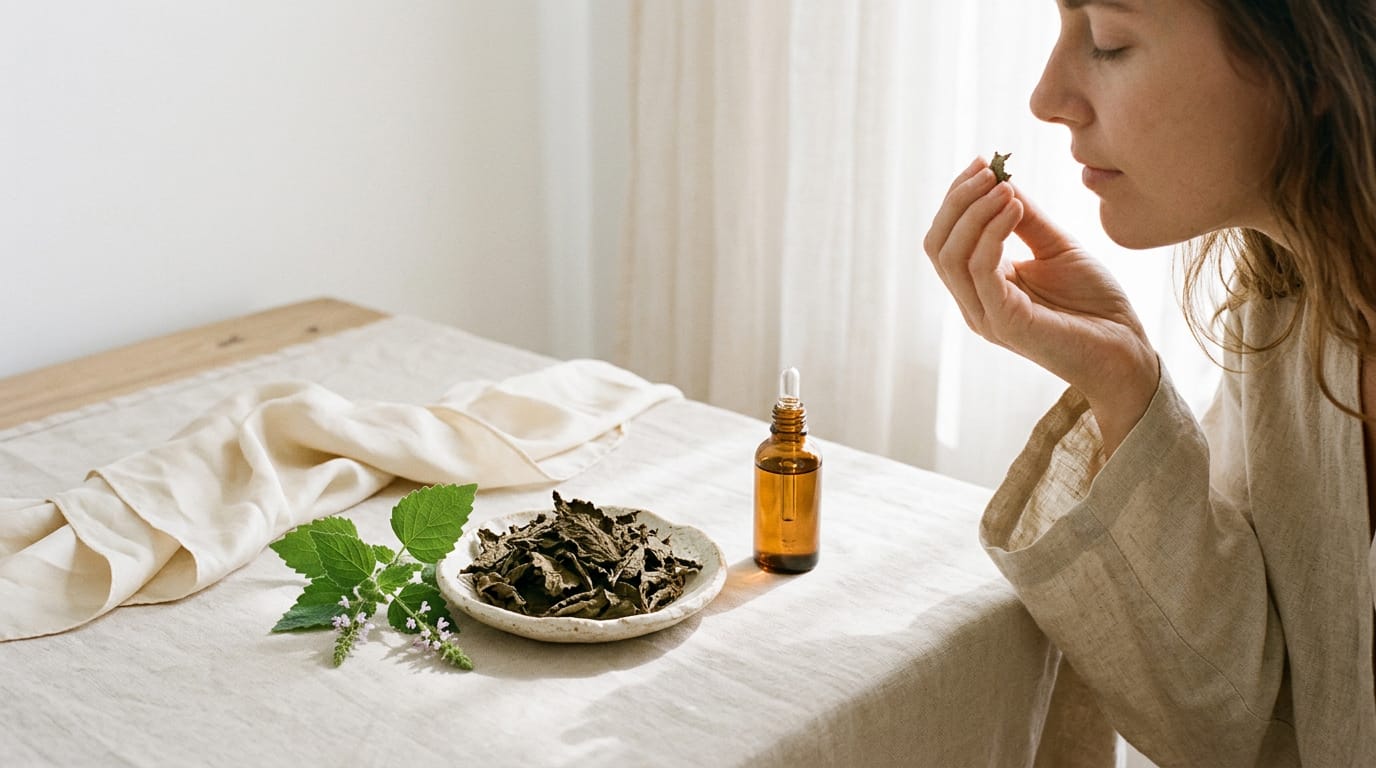
Patchouli is a leafy green herb in the mint family, yet its scent is woody rather than green.
Think of a reader who expects something herbal when she opens her first bottle, only to find a warm, grounded scent that feels more like a cozy sweater than a garden.
Knowing that ahead of time means she won’t be surprised when she reaches for it on a cool evening.

Picking and drying the leaves
Growers work through a few steps:
- Pick the top three to five leaf tufts.
- Spread them on bamboo sheets and sun-dry them.
- Turn them frequently, because turning prevents mold.
According to the Essential Oil of Patchouli monograph, the leaves dry for at least three days before the oil is distilled out. That’s a slow, time-intensive process, and patience is the real ingredient.
Extracting the oil and what affects quality
The oil comes out only after the leaves have dried, but quality isn’t fixed. A few things shift it:
- Harvest timing. Quality varies depending on when the leaves are picked.
- Leaf height. Leaves higher up the plant carry more oil.
Think of a reader who buys two bottles of patchouli that smell a little different. Knowing that harvest timing affects quality helps her stop second-guessing and simply pick the one she loves.
How Perfumers Use Patchouli
Perfumers lean on patchouli for structure and staying power, so here’s where it sits, what it pairs with, and how it comes packaged.
Why it works as a base note
Patchouli is one of perfumery’s most popular ingredients, most often used as a base note, the foundation of a scent. Top notes fade fast, but base notes are what stay on your skin for hours, which is why patchouli shows up in perfumes and other products.
Natural patchouli oil comes from the plant itself, while synthetic patchouli is made in a lab to copy its scent.
Notes that pair well with it
Its best partners often lift its earthiness rather than copy it:
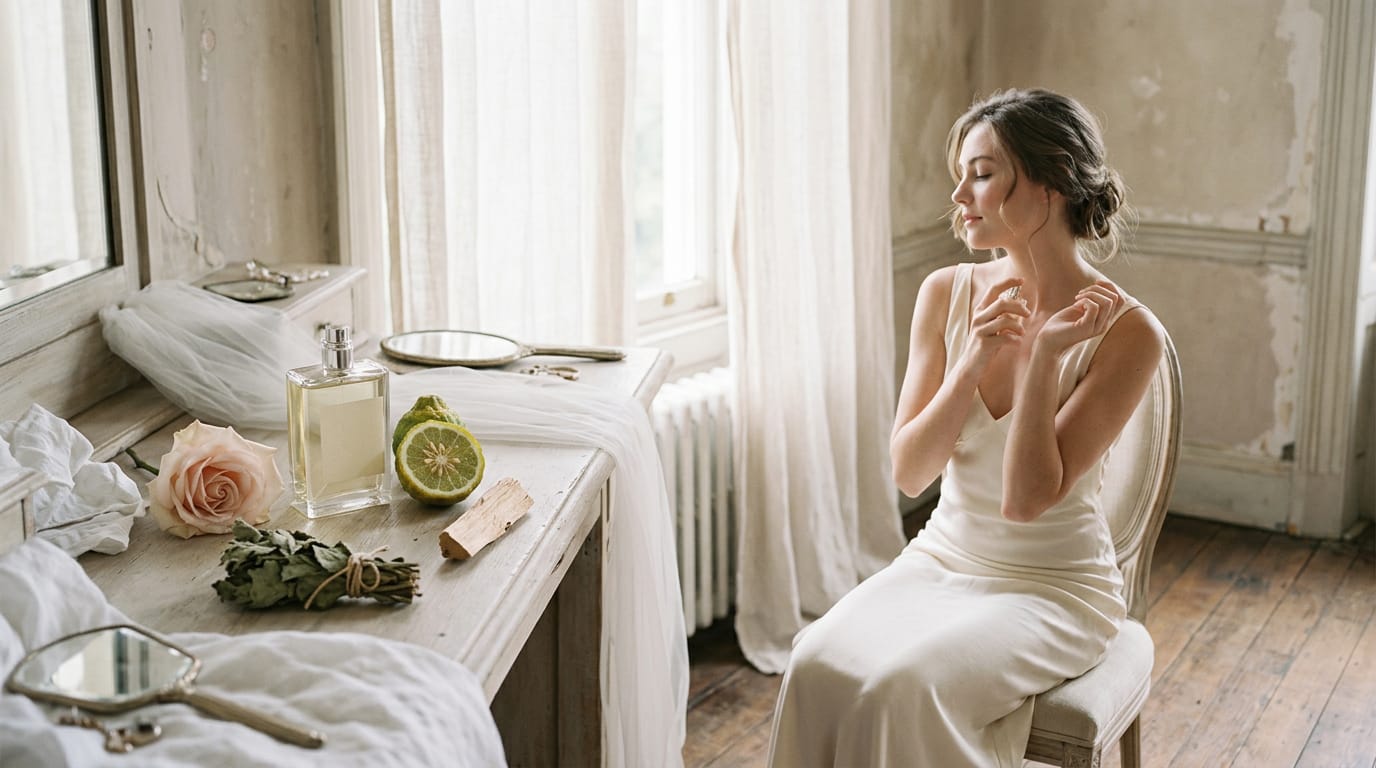
- Bergamot and citrus: bright lifts that keep it from feeling heavy.
- Rose and floral hearts: a soft middle that rounds out its edge.
- Sandalwood and cedarwood: warm woods that deepen the base.
- Vanilla, coconut, and tobacco: rich, sweet, or smoky warmth.
- Lavender, lemon, and berries: fresh or fruity contrast for a brighter take.
Think of a bride who wants something soft. A patchouli blend with a rose heart stays romantic without going heavy, so she can wear one scent from the first photos to the last dance. One bottle, start to finish.
Sprays, oils, and candles it comes in
Patchouli turns up in several formats:
- Eau de parfum: a more concentrated spray with a richer feel.
- Eau de toilette: a lighter spray for everyday wear.
- Roll-on perfume oil: a dab-on option that sits close to the skin.
- Travel sprays: small bottles that fit a clutch or carry-on.
- Candles: the same mood for your room, not just your wrists.
So who should avoid patchouli oil? Anyone with sensitive skin or a known reaction to fragrance or essential oils should be careful. Patch test a small spot on your inner arm first, and check with your doctor if you’re unsure.
Where Patchouli Came from over Time
Patchouli’s story stretches across continents and centuries. Here’s how it traveled from Asia to Europe, and why it has stayed on so many shelves.
How it spread from Asia to Europe
Patchouli is native to India and Malaysia, and it grows across several South-east Asian regions. From there, it made its way west by way of the Middle East before it reached Europe.
A popular rumor credits Napoleon with helping introduce it to the continent, so take that tale with a grain of salt.
Why it has stayed popular for centuries
Patchouli has been popular for centuries and has been around for ages. That’s a long run for one scent. It’s a staple, not a passing trend.
The spiritual meaning of patchouli isn’t one fixed definition. For many people, it’s a grounding ritual, a way to slow down before a big day or a quiet night.
Think of a bride who dabs a little patchouli oil on her wrists while she gets ready. Each time she lifts them, she gets a warm, earthy reminder to breathe before she walks down the aisle.
Who Actually Wears Patchouli, and When
Shelves split patchouli by gender, and the calendar splits it by season. Here’s how we’d sort it out.
Scents marketed to women and men
Patchouli is usually worn by women, but that’s a starting point, not a rule. It’s less about who the label names and more about how it wears on your skin. Many brands sell a feminine edition and a masculine edition, so compare them before you buy.
Men’s patchouli fragrances work the same way. Consider a reader buying a birthday gift for her brother. She sprays two samples on her wrist, waits an hour, and picks the one that smells warm, not sharp. The gift lands because she tested it first.
Does patchouli attract men? Some men love its warm, earthy edge, and others find it heavy. As for which scent drives men crazy, no single one does. Wear patchouli because you like it, and count any reaction as a bonus.
Which seasons suit patchouli best
Patchouli fits the season more by weight than by calendar date.
Late summer into autumn is the sweet spot. The air cools, but you’re still in light layers, and patchouli’s warmth bridges the gap between summer scents and heavier winter ones.
In winter, patchouli becomes cocooning comfort. Picture a new mom in a soft cardigan on the couch at 9pm, dabbing a little oil on her wrists before bed. It feels like a blanket, not a statement.
Autumn calls for a lighter touch. A bridesmaid heading to an October wedding can dab a light patchouli mist on her wrists before the ceremony, so it stays close and doesn’t fight the florals. Subtle wins once the leaves turn.
Patchouli Perfumes Worth Your Money
Patchouli shows up in bottles that smell nothing alike, so the right pick depends on your style and budget. Here’s how to shop for it.
Which is the best patchouli perfume?
There’s no single winner, because the best one is the one that smells right on you, not just on a test strip. These picks are a good place to start:
- Clive Christian 1872 line
- Gucci Guilty and Flora
- Dolce&Gabbana options
- Mugler Angel and Montblanc Explorer
- Maison Margiela Silent Fury
Try samples before you buy a full bottle. Think of a bride who wants one signature scent for her wedding week. She can wear a sample through a full day of errands and see whether it still smells like her by dinner. Sample first.
A bottle you never wear is the expensive option.
What sizes and prices to expect
Expect three price points:
- Travel sizes: $36 to $40
- Full bottles: $100 to $355
- Roll-on oil: $24
A bridesmaid with three weddings this summer can carry a travel size without buying a full bottle. For the lowest price here, try a roll-on oil. According to Who What Wear, a recommended patchouli roll-on oil from Cyklar costs $24.
The different scent families to compare
A scent family groups perfumes by their overall character, so it tells you more than the brand name does. Here’s how the four families differ:
- Oriental gourmand: warm, sweet and cozy
- Woody floral: wood and flowers together
- Floral chypre: flowers over a mossy, earthy base
- Fruity rum and oak: fruit with the warmth of rum and oak
Pick the family first and the brand second.
Patchouli doesn’t have to be heavy or overpowering. Once you know how it smells and which bottles suit your day, you can choose a scent that feels like you.
Start small: a light mist, a single drop of oil, or one layer near your wrists is often plenty. Keep it close to your skin and it stays warm and personal.
A good patchouli scent should feel like a warm sweater you carry with you, not a headline you announce.
References
- Essential Oil of Patchouli — files.achs.edu
- J.Law Wore the $24 Perfume That Makes You Smell … — whowhatwear.com (2026)
Questions
What is the spiritual meaning of patchouli?
Patchouli has no single fixed spiritual meaning. Many people use its warm, earthy scent as a grounding ritual to slow down, breathe, and feel present.
Where does the smell of patchouli come from?
Patchouli’s scent comes from the leaves of the patchouli plant, a leafy herb in the mint family. The leaves are dried and then distilled to extract the fragrant oil, which smells woody and earthy rather than green or herbal.
Which scent drives men crazy?
No single scent drives all men crazy, since fragrance preferences are personal. Some men enjoy patchouli’s warm, earthy character, while others find it too heavy.
Who should not use patchouli oil?
People with sensitive skin or a known reaction to fragrance or essential oils should use patchouli oil cautiously or avoid it. Patch-test a small area first, and ask a doctor if you are unsure.
Which is the best patchouli perfume?
There is no single best patchouli perfume; the right choice depends on how it smells on your skin. Clive Christian 1872, Gucci Guilty and Flora, Dolce&Gabbana options, Mugler Angel, Montblanc Explorer, and Maison Margiela Silent Fury are options to sample before buying.
Sources
- J.Law Wore the $24 Perfume That Makes You Smell ..., whowhatwear.com,
- Essential Oil of Patchouli, files.achs.edu