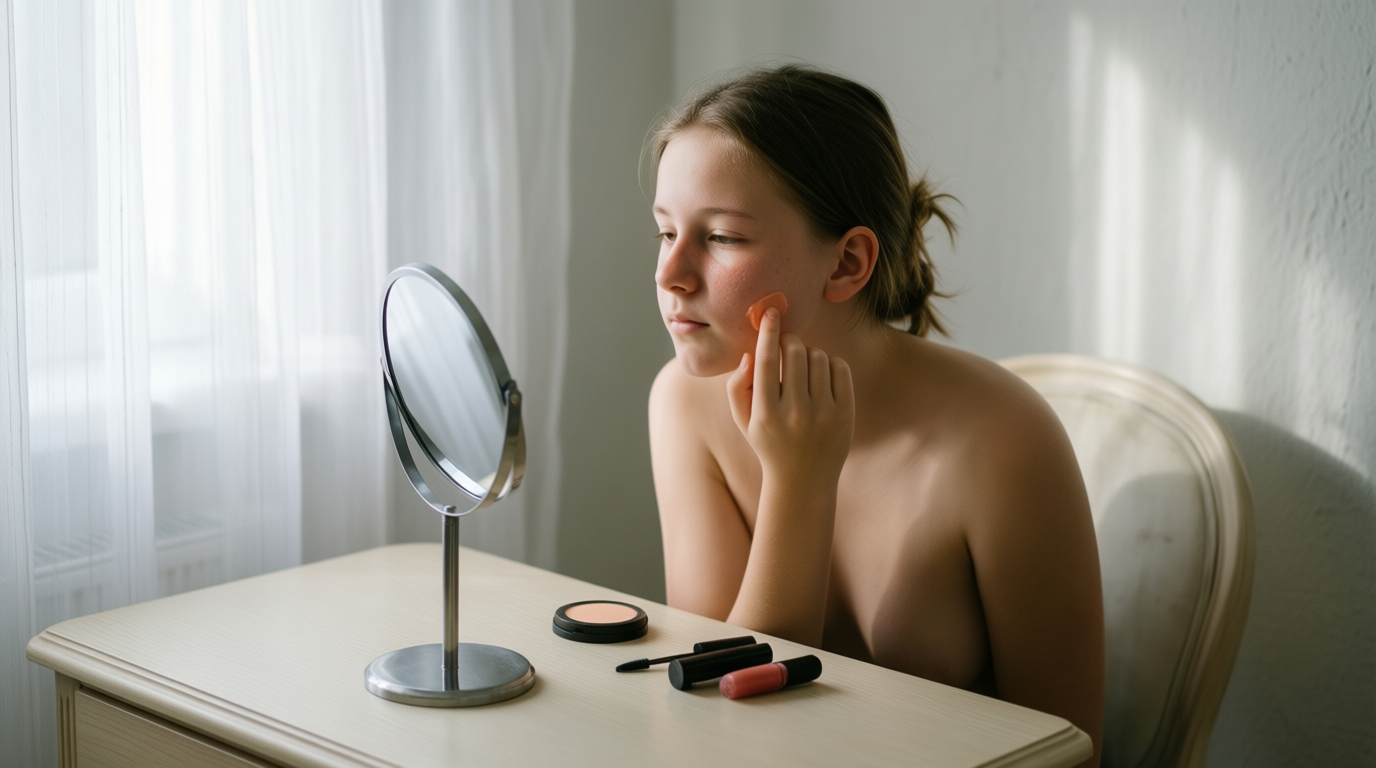
Makeup for Teens: A Simple Guide to Starting Out
Makeup for teens can stay simple: find school-ready essentials, ingredients to avoid, and daily hygiene habits that help keep young skin clear.

Think of your makeup bag like a school backpack. Stuff it with everything you’ve ever picked up and you’ll spend more time digging than getting ready.
The good news is that a teen routine can be light and simple. A few well-chosen layers that look like your own skin on a good day will do more than a crowded shelf.
In this post, we’ll cover what to buy and avoid, when to start, how to apply makeup so it looks natural, and how to keep skin clear.
Ingredients to Avoid in Makeup for Teens
A first makeup kit doesn’t need a chemistry degree to shop. Read the back of the package, not just the front.
Harsh ingredients to watch out for
- Parabens. Some parabens can interact with estrogen receptors, and researchers have studied their potential hormone-disrupting effects. A study in Scientific Reports notes that a substantial number of lab and animal studies have linked paraben exposure to breast cancer.
- PEGs. Look for PEG (short for polyethylene glycol) and other ethoxylated ingredients, which are closely related, on the list.
- Hidden fragrance and phthalates. A label can list just “fragrance,” which hides the mix inside. Check for phthalates too.
- BHT and BHA. These are short for butylated hydroxytoluene and butylated hydroxyanisole. Check the label for both.
- Mineral oil. Look for it on the list, then see how your skin responds.
- Talc and asbestos. The U.S. Food and Drug Administration (FDA) notes that talc can be contaminated with asbestos, a known carcinogen (cancer-causing substance), when the two minerals occur together in the ground. That’s why careful mine selection and ore testing matter.
Checking products for lead and heavy metals
Lead is worth checking in lip products. The Environmental Protection Agency (EPA) notes it has been detected as a contaminant in some lip products, even though it isn’t an approved color additive in cosmetics in the United States.
Some makeup products have been found to contain heavy metals. A Campaign for Safe Cosmetics report tested 48 Halloween face paints for:
- arsenic
- cadmium
- chromium
- lead
- mercury
When you’re comparing shades, look for iron oxides labeled heavy metal-free.
Titanium dioxide, mica and nanoparticle concerns
If you’d rather skip titanium dioxide, check the label before you buy. If you’d rather skip mica, look for mica-free options.
Choose non-nano zinc oxide, meaning the particles aren’t nanoparticles (extremely tiny particles), and look for products free of petroleum dyes.
What testing reveals about weak cosmetic rules
The FDA’s overview of the laws it enforces notes that the agency has limited authority to regulate cosmetics compared with many other products. That means you do more of the checking.
The Halloween face paint testing above is an example of products being checked directly. We can’t confirm the share of products with toxins or the HERMOSA study’s results here, so we won’t guess at either.
Try a patch test before any new product goes near your face.
Think of a 15-year-old trying a new tinted lip balm before a school dance: she dabs a little on her inner wrist and, if it stays calm, wears it to the dance with confidence. Patch testing takes a minute.
Organic, Non-toxic Brands Worth Trying
Plenty of makeup says “natural” on the front, so it pays to check what’s inside. Here’s how we’d sort the brands, kits, and labels for a beginner.
Brands teens can start with
Start with organic brands for teens and check the ingredient list first. Fruit-pigmented makeup takes its color from fruit and plant sources, and 100% Pure is one line in that category.
Honest Beauty suits beginners testing the waters, and Fat And The Moon kits bundle the basics so a new user doesn’t shop item by item.
Consider a 16-year-old building her first kit on a babysitting budget. Buying her eyeshadow, lip tint, and mascara from one brand tends to mean the shades match and nothing sits unused. Affordable, fun branding keeps that first kit low-stakes.
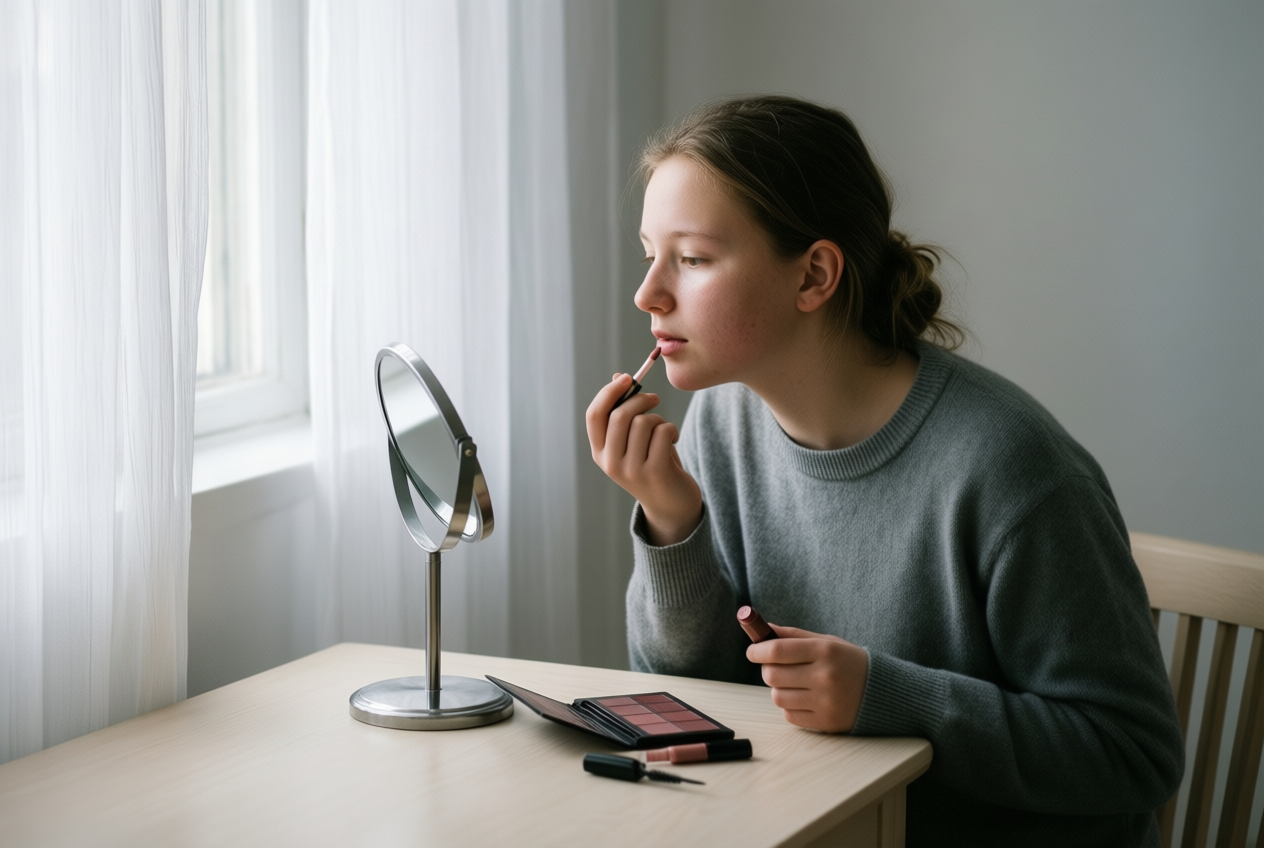
Starter makeup kits for kids and tweens
For younger kids, play makeup is the simplest entry, since it’s kid-sized and built for dress-up.
- Klee Naturals play makeup: kid-sized dress-up sets.
- True Bloom bamboo packaging: a natural look on the shelf.
- Jovy vegan kits: starter sets with no animal-derived ingredients.
- Prim & Pure palettes: compact shades for practicing blending.
- Evereden face crayons: crayon-style color for cheeks and lips.
- Honey glosses and tints: a light wash of shine.
Product reviews and promo codes
For specific products, compare:
- PiperBlue eyeshadow and lip butter
- Lauren Brooke mascara and lash serum
- Omiana lip liner and foundation
- Kapa Nui nail polish
Affiliate promo codes can help too. An affiliate promo code is a discount shared through a partner link, so check that it’s still valid before you check out.
Certifications and ethics to look for
Before you add anything to the cart, look for proof rather than promises:
- Certified organic ingredients: a seal from an outside group.
- Third-party lab testing: results from an independent lab.
- Vegan, cruelty-free: no animal ingredients or animal testing.
- Made in USA, ethically sourced: where it’s made and where its ingredients come from.
- EU or EWG certified: a mark from the European Union or the Environmental Working Group (EWG).
One label rarely tells the whole story, so look for a few that agree. Trust the stack, not the sticker.
Daily Skin Care and Hygiene Habits
Simple habits do more for teen skin than a packed shelf, so we’ll focus on what you can keep up rather than what you can buy.
Build a simple teen skincare routine
- Gentle cleanser. Use it morning and night. Your goal is clean skin, not stripped skin.
- Light, fragrance-free moisturizer. Apply it after cleansing. Fragrance-free is gentler on reactive skin.
- Daily sunscreen. Use an SPF (sun protection factor) 30 formula as your last morning step.
- Optional toner. Skip it if your skin feels fine, and save spot treatment for breakouts.
- Remove makeup before bed. Sleeping in makeup can clog pores, so take it off first, then cleanse.
Not sure where to start? Try a skincare quiz.
Keep brushes and tools clean
- Eco-friendly brush sets. Worth a look for your first set, but they still need cleaning.
- Monthly cleaning. Clean brushes once a month, or sooner if they look dingy.
- Simple soap cleaning. Clean with gentle soap and warm water, then let brushes air dry.
- Avoid sharing makeup. Sharing brushes or mascara can pass bacteria between faces.
Products for acne and blemishes
- Salicylic acid cleanser. A gentle exfoliant that helps clear pores.
- Benzoyl peroxide wash. Targets the bacteria behind breakouts. Start with a small amount, since it can dry skin.
- Spot treatments. Dab them on one blemish, not your whole face.
- Pimple patches. Stick one over a pimple overnight to keep your hands off it.
To hide a breakout, choose a non-comedogenic concealer, meaning it’s formulated not to clog pores. Consider a high school junior who wakes up with a blemish before picture day.
She dabs on spot treatment, covers it with concealer, and skips picking at it. Consistency beats quantity every time.
Makeup Essentials That Work for School
A 15-year-old can wear makeup, and there’s no single right age to start. Talk with your parents or guardians first, then keep the look light.
How to apply makeup for a natural look?
For a natural look, use thin layers and blend well. Start with one light skin tint matched to your jawline in daylight so it disappears into your neck. Skin should still look like skin.
Your goal is to enhance your features, not cover up your face. Here’s the order:
- Tinted moisturizer or BB cream goes on first, thinly.
- Concealer goes only where you need it.
- Light mascara gets one coat.
- Clear brow gel keeps brows in place.
- Neutral eyeshadow in one soft shade.
- Lip balm, gloss, or cream blush finishes the look.
A junior with a dance on Friday skips the full face. One skin tint, a little concealer and light mascara keep her looking like herself in the photos, just rested.
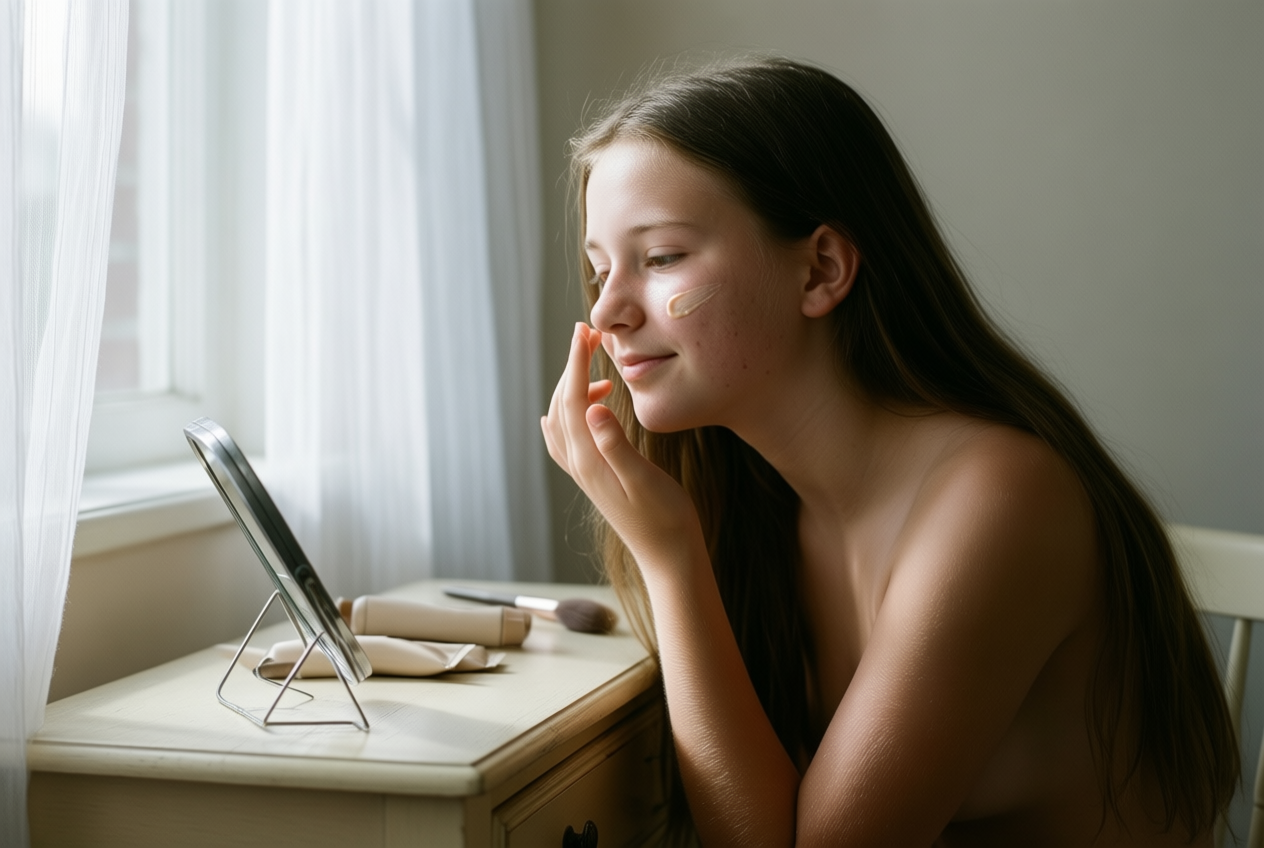
Popular picks from drugstore to high-end
Shop from drugstore shelves to high-end counters. Popular picks like e.l.f., Maybelline, and Essie make a practical start. Choose a few versatile products over a shelf of single-use ones.
- Lip oils and tints add color and shine.
- Setting spray helps makeup last through a long day.
- Nail polish in a soft nude or pink suits a natural look.
Watch a beginner tutorial before you buy.
Locker must-haves and school makeup rules
Keep a small pouch in your locker:
- Facial wipes and blotting papers handle smudges and shine.
- Lip balm and facial mist refresh you after lunch.
- Hand sanitizer and hair accessories cover everyday touch-ups.
- Travel-size minis keep the pouch light.
Check your school’s makeup policy before you pack.
Benefits and Mindset Behind Teen Makeup
Makeup can be more than a row of products on your bathroom counter. Here’s how we want you to think about it before you pick up your first brush.
Empowerment through learning and self-expression
Start with what’s in the product. Ingredient awareness means reading the label and understanding what you’re putting on your face, instead of trusting the packaging alone.
Learning a few basic terms helps you choose products that suit your skin, and it gives you the confidence to pass on anything that doesn’t.
Makeup can also be a few minutes of mindfulness, a chance to slow down and pay attention to yourself. Picture a teen at the bathroom counter before school, dabbing on a tinted balm and taking one slow breath before the bus comes.
That short pause is self-care, and it’s the kind of habit that carries into the rest of your day. The goal is presence rather than rushing.
Makeup is also a way to show who you are. A little color on your lips or a touch of shimmer on your lids can say something about your mood or your style, and you get to decide what that is. There’s no single right look, only the one that feels like you.
Ads, social feeds, and group chats can make it seem like everyone has flawless skin and perfect features. They don’t.
Noticing when a message pushes you toward one of those unhealthy beauty standards is a real skill, and it keeps your makeup working for you instead of working against your confidence.
Other Beauty Products for Teens
Makeup is only one piece of a teen’s routine. Here’s a look at the everyday products worth knowing about, and how to keep them simple.
Body, scent and hair products to try
- Body wash and scrubs. A gentle body wash covers daily cleaning. Save scrubs for once or twice a week, since harder exfoliation can irritate skin.
- Bath bombs. Fun for a weekend soak, but they’re a treat rather than a daily step.
- Celebrity body mists and perfumes. Body mists are light and playful, while perfumes are more concentrated and last longer. Start with a light spritz, since a little goes a long way.
- Deodorant. Choose one that suits your skin and how active your day is, then apply it after showering.
- Hair stylers and tools. Heat can dry out hair, so keep temperatures moderate and use a heat protectant first.
- Dry shampoo and detanglers. Dry shampoo is for refreshing hair between washes, not replacing them. A detangler helps keep wet hair from breaking.
Think of a student with a dance on Friday who wants smooth hair without spending an hour at the mirror. She detangles her damp ends, applies a heat protectant, and runs a flat iron on a low setting.
Her hair looks sleek, and she still has time to get ready with her friends. Less heat, happier hair.
Makeup for teens works best when it’s simple. Pick gentle, well-chosen products, keep your skin clean, and let a few light layers do the work.
Start small, learn what your skin likes, and add more only when you need it. Progress beats a full shelf every time.
The best teen makeup is the kind that still looks like you at the end of the school day.
References
- Is there lead in lipstick? — epa.gov (2026)
- Talc | FDA — fda.gov (2025)
- Laws Enforced by FDA — fda.gov
- Associations between phenol and paraben exposure and the risk of developing breast cancer in adult women: a cross-sectional study — nature.com
- Pretty-Scary_2016 — safecosmetics.org
- Switch in cosmetics lowers chemical exposure in teens — organic-center.org
Questions
What is trendy with teens right now?
Teen makeup trends include lip oils and tints, light skin tints, soft neutral eyeshadow, clear brow gel, and natural-looking nail polish. A few versatile products and light layers are popular choices for school.
What are some basic makeup essentials for teenagers?
Basic teen makeup essentials can include tinted moisturizer or BB cream, concealer, light mascara, clear brow gel, neutral eyeshadow, and lip balm or gloss. You can add cream blush if you want a little color, but a small starter kit is enough.
How to apply makeup for a natural look?
Apply a thin layer of tinted moisturizer or BB cream, choosing a shade that matches your jawline in daylight. Blend well, use concealer only where needed, then add one coat of mascara, clear brow gel, a soft neutral eyeshadow, and lip balm or gloss.
Can a 15 year old wear makeup?
Yes, a 15-year-old can wear makeup, and there is no single right age to start. It is a good idea to talk with a parent or guardian first, keep the look light, and follow school makeup rules.
Sources
- Is there lead in lipstick?, epa.gov,
- Pretty-Scary_2016, safecosmetics.org
- Laws Enforced by FDA | FDA, fda.gov
- Switch in cosmetics lowers chemical exposure in teens | The Organic Center, organic-center.org
- Talc | FDA, fda.gov,
- Associations between phenol and paraben exposure and the risk of developing breast cancer in adult women: a cross-sectional study | Scientific Reports, nature.com