Skin tint vs tinted moisturizer vs foundation
How skin tint, tinted moisturizer and foundation differ in coverage, texture and finish, which suits your skin and your day, and how to wear each lightly.

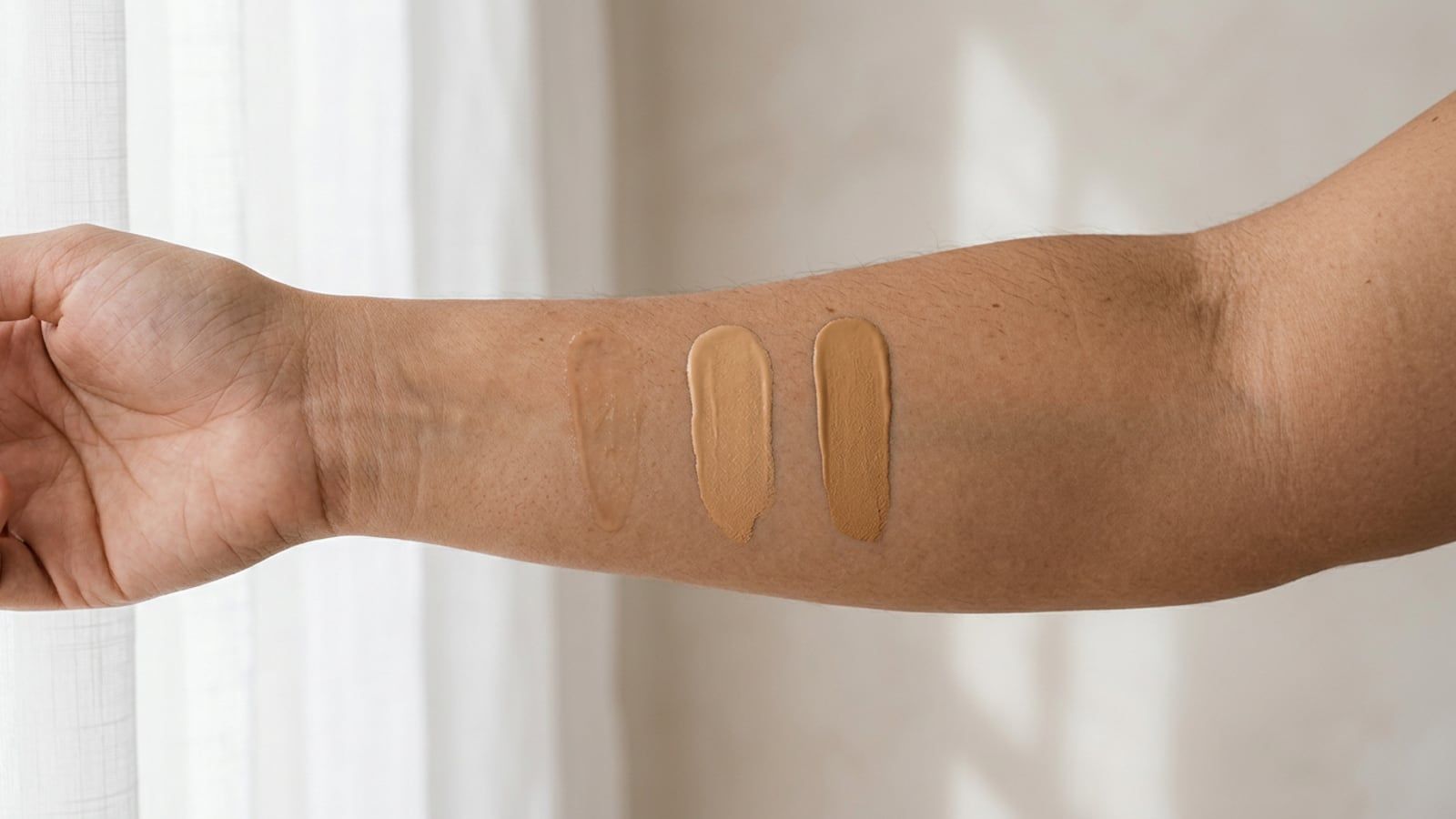
From sheer to full: a skin tint, a tinted moisturizer and a foundation on the same arm.
A skin tint is the sheerest of the three: a wash of color that evens your skin a little and lets your freckles show. A tinted moisturizer is a moisturizer with some pigment in it, sheer to light in coverage and kindest to normal and dry skin. A foundation covers the most, from light to full, comes in the widest range of finishes and shades, and can still be worn thin. Pick by how much you want to cover today and how your skin feels, and wear sunscreen under whichever you choose. None of the three replaces it, even with SPF on the label.
Side by side: coverage, texture, finish
These names are not fixed definitions. Brands use them loosely, so one maker’s skin tint can be another’s light foundation. Read the coverage and the texture on the box before the name. As a rule of thumb:
| Skin tint | Tinted moisturizer | Foundation | |
|---|---|---|---|
| What it is | Pigment in a thin, light base | A moisturizer with pigment added | Pigment in a base made for coverage and wear |
| Coverage | Sheer | Sheer to light | Light to full, buildable |
| Texture | Watery, serum-like or a thin fluid | Lotion or light cream | Fluid, cream, stick or powder |
| Finish | Natural to dewy | Usually dewy or satin | Matte, satin, natural or dewy |
| Suits | Fairly even skin, quick mornings | Normal to dry skin, one-step mornings | Redness or marks you want evened, long days |
| Replaces moisturizer? | Rarely; most go over one | Often, if your skin is normal | No |
| Replaces sunscreen? | No | No, even with SPF | No, even with SPF |
Whichever you choose, it goes on after your sunscreen has set. How to wear sunscreen under makeup covers the order, the wait and how to press your base on so the sunscreen stays put.
Skin tint: when and how to wear it
Wear a skin tint when your skin is fairly even and you only want it to look rested: a little less redness around the nose, a little more warmth. It is the base for days when you would rather not think about your base.
- Start with less than you think: a small dab for each cheek, one for the forehead and one for the chin.
- Press it in with your fingertips. The warmth of your skin helps a thin fluid melt in.
- Look in daylight and add a second dab only where you want a little more.
- Finish with concealer on the few spots that still show.
On oily skin, a tint over a gel sunscreen may be all you need. On dry skin, moisturize first, or the tint will catch on dry patches.
Tinted moisturizer: when and how to wear it
Wear a tinted moisturizer when your skin wants moisture as much as color: normal to dry skin, winter mornings, the day after a long flight. It is the easiest one-step base, and it forgives a quick hand.
Put on your sunscreen, let it set, then press the tinted moisturizer over it with your fingertips. Don’t rub. If your skin is dry, keep your usual moisturizer underneath the sunscreen as well. To compare textures and shade ranges, browse Ulta’s tinted moisturizers and read the ingredient list before you buy.
Our own Skin Veil is a tinted moisturizer with sheer coverage, made to go on over sunscreen. It has no SPF on purpose. In the US, the FDA’s rules for makeup treat a product sold both as makeup and as sun protection as a cosmetic and a drug, so a tinted moisturizer with SPF is labeled like a sunscreen, with a Drug Facts box. The SPF in that box assumes a full layer, though, and the AAD’s advice is at least a teaspoon of sunscreen for your face. Nobody wears that much tint. Wear your sunscreen underneath and count any SPF in your base as a bonus.
Foundation: when and how to wear it lightly
Reach for foundation when you want more evened out than a tint can manage: redness, marks or a breakout you would rather not see. It is also the one that lasts through a long day and holds up in photographs, which is why it is the base in doing your own wedding makeup.
Foundation does not have to look like foundation. To wear it lightly:
- Use less, where it is needed. Start in the center of your face, where most redness sits, and blend outward. The edges of your face often need almost nothing.
- Press, then blend. A damp sponge presses a thin layer into skin; a dense, flat brush stipples it on. The Kit has both: the e.l.f. Total Face Sponge as the budget pick, the Beautyblender Original and the Sigma F80 Flat Kabuki brush as the splurges.
- Sheer it out. Mix a drop with your moisturizer on the back of your hand for a lighter layer on days you do not need full coverage.
- Choose the finish for your skin. Matte or oil-free formulas suit oily skin; satin and dewy ones suit dry skin. Natural is the middle ground.
To compare formulas, finishes and shade ranges before you swatch anything, browse Ulta’s foundations.
Matching your shade in daylight
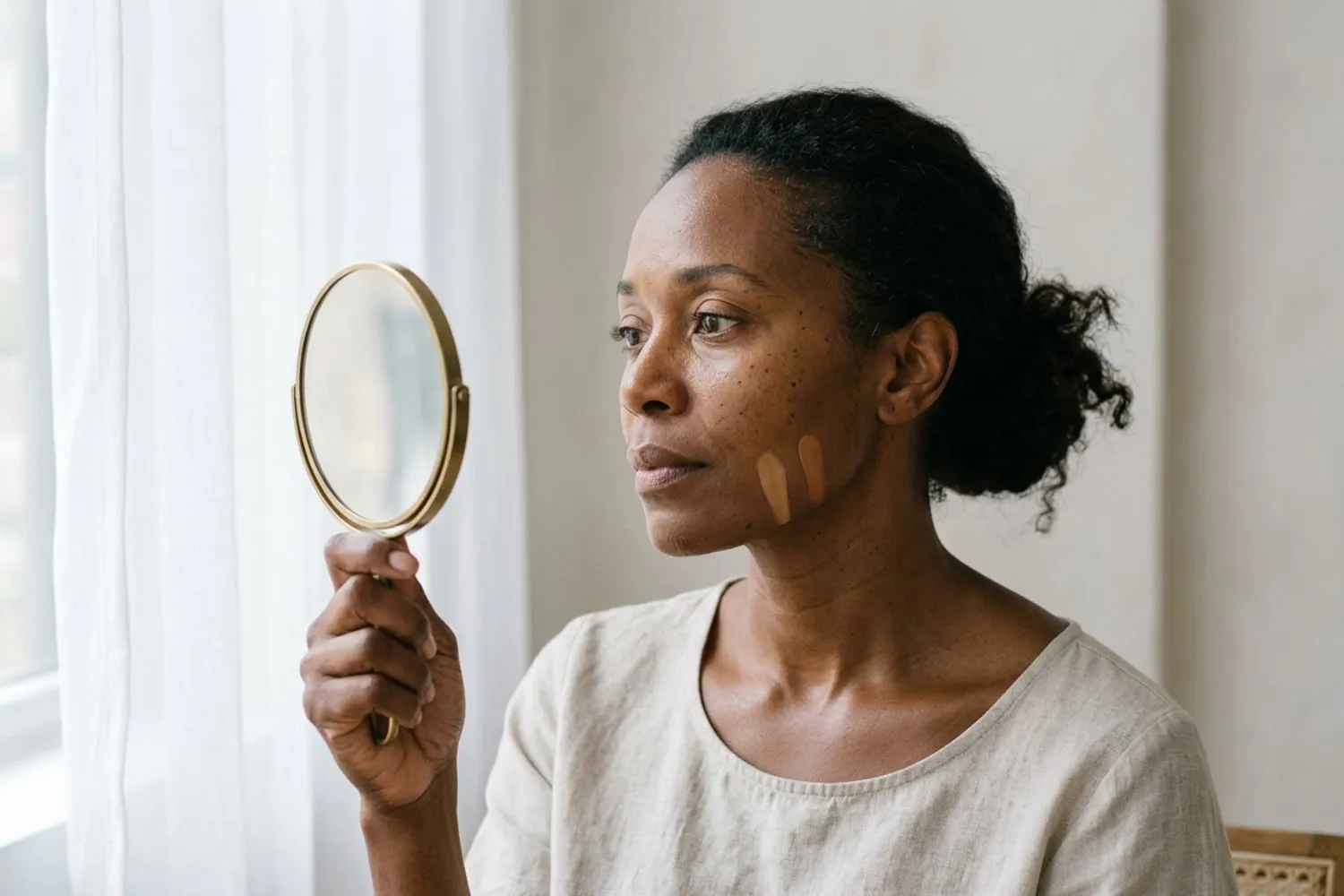
The right shade disappears into your skin. The wrong one shows as a line at your jaw. Match it like this:
- Find daylight. Shop lights are warm or very bright and change how a shade reads. Step outside or stand by a window.
- Swatch on your jaw. Draw two or three shades in thin stripes along the side of your jaw, where your face meets your neck. The back of your hand is often a different color from your face.
- Let them dry. Wait a few minutes. Some formulas look a touch darker once they set.
- Check the undertone. Skin that leans pink is cool, skin that leans golden is warm and skin that does neither is neutral. Choose the stripe whose undertone matches yours, then the depth.
- Pick the one that vanishes. Between two shades of a sheer tint, take the lighter one: you can build a tint up, but you can’t take it back.
Your shade can shift with the seasons. If your summer and winter shades differ, keep both and mix them in between. Ask for a sample when you can, and wear it for a day before you buy the full size.
Concealer only where you need it
Whichever base you choose, finish with concealer, and only on the spots that still show. Look in daylight once your base has settled and find the two or three places that need it: the redness beside your nose, the shadow at the inner corner of your eyes, a blemish.
Tap a small amount onto each spot with your ring finger or a small brush, then press the edges softly into the base. Thin layers again: one, then a second only if the first is not enough.
Tip: a sheer tint with concealer on two or three spots looks more like skin than foundation all over. Try it on a day with nowhere important to be.
For blush, lips and the rest of the face, the Makeup section picks up where the base leaves off.
Questions
Is a skin tint the same as a tinted moisturizer?
Not quite, though the names overlap and brands use them loosely. A tinted moisturizer is a moisturizer first, with pigment added. A skin tint is usually a thinner, more watery formula that is mostly about color, so it often goes on over a moisturizer rather than replacing one.
Can I wear a skin tint without moisturizer?
If your skin is normal or oily and the tint feels comfortable all day, yes: your sunscreen can be the layer underneath. On dry skin, moisturize first, or the tint will cling to dry patches by midday.
Does tinted moisturizer with SPF replace sunscreen?
No. The SPF on the label depends on wearing a full layer, at least a teaspoon for your face, which is far more than anyone wears as a tint. Wear your sunscreen underneath and count the SPF in the tint as a little extra.
Can I mix foundation with moisturizer to make a tint?
Yes. Mix a drop of foundation with your moisturizer on the back of your hand and press it on: the coverage drops and the finish turns softer. If the foundation has SPF, mixing thins it out, so do not count on it, and never mix makeup into your sunscreen.
Sources
- Makeup, US Food and Drug Administration
- How to apply sunscreen, American Academy of Dermatology
- Making Your Sunscreen Work With Your Makeup, The Skin Cancer Foundation