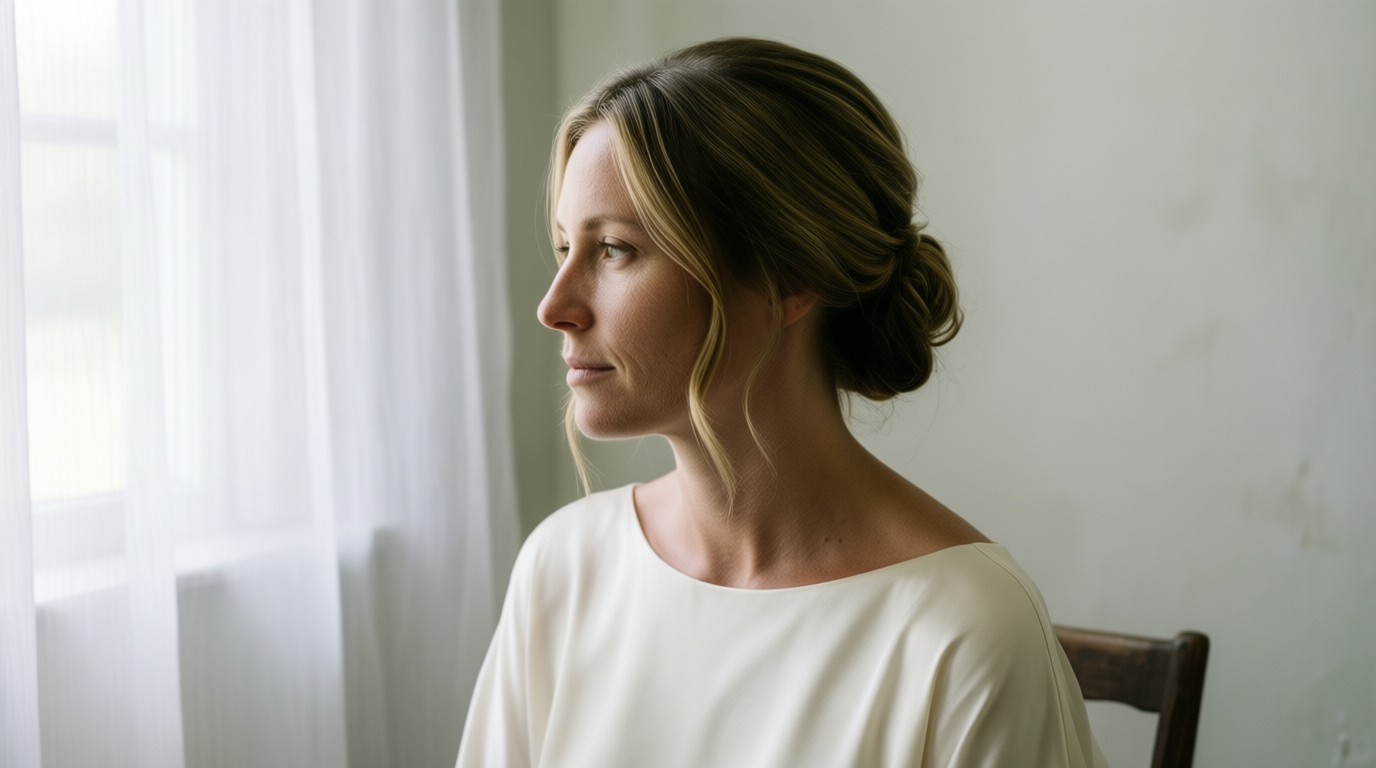
Wedding Hairstyles That Last From Ceremony to Dance Floor
Wedding hairstyles that last beyond the first photo: match your look to your dress and role, secure your veil, and plan timing, colour and a bridal hair kit.
Picking a wedding hairstyle works a lot like packing for a long trip. You want something that looks right in the first photo, holds up through the ceremony, and still feels like you after hours of dancing.
The right look is the one that travels well, not just the one that looks good in a mirror.
Here we’ll cover wedding hairstyles by style, length, dress and role, then the planning most roundups skip: securing your veil, timing hair colour, mapping a hair-day schedule and packing a bridal kit for the morning of.
Let’s make sure your hair lasts every hour, not just the first.
Picking Wedding Hairstyles That Suit Your Day
Your hairstyle should suit the day you’re having, not the one on a pinned board.
Match your theme, season and dress
A boho or rustic theme suits looser textures, like a low braid. For a hot summer ceremony, lift your hair off your neck. Heat and humidity can undo a fussy style fast.
Consider a bride in an open-back gown at a July garden wedding. Her low chignon keeps her cool, and the showcase dress back stays visible in every photo.
Up or down depends on where the dress shines: go up for the back, down for a statement neckline.
What suits your face shape and length
Face shape is a starting point, not a rule. Oval faces suit most styles, round faces look balanced with height at the crown, square faces soften with side-swept pieces, and heart shapes balance well with volume around the jaw.
Check the style is achievable with your length and texture, then adapt it to your natural hair so you still look like you by the last dance.
Extensions are an option, not a requirement, for extra length or volume. Book a trial with them in so you know how they sit.
Styling the bride, bridesmaids and guests
Guests should look semi-formal and polished without upstaging the bride. Keep accessories minimal, since one clip or pin is plenty.
Bridesmaids need not match the bride. A shared color or texture ties the group together without identical updos.
For the bridal party, plan the morning in order:
- Book stylists in sequence, with the bride first.
- Time each style and build in buffer for veil placement.
- Pack a bridal kit with bobby pins, hairspray and a comb for touch-ups.
Up-styles and Updos to Consider
Updos keep hair off your neck and out of your veil’s way. Here’s how we’ve grouped the main families, from soft buns to retro curls.
Buns, chignons and knots to try
Buns are the easiest place to start because they give a veil something solid to hold.
- Low bun with loose tendrils: soft, with a few face-framing pieces left out.
- Classic chignon: a smooth, polished bun at the nape. A French twist is its twisted cousin.
- Top knots and sleek midi knots: a higher knot for a modern edge, or a sleeker mid-height one.
- Folded and twisted buns: texture built from folded or twisted lengths.
Think of a bride whose veil keeps sliding off her low bun. Her stylist can set the comb into the base of the bun, not the top, so it has something to grip.
Pinned-up braids and twisted styles
Braids add movement and suit a relaxed, outdoor ceremony. Aim for a braid that looks lived in, not overdone.
- Braided buns: a bun wrapped in a braid or built from braided sections.
- Boho braided updos: loose, undone braids pinned up for an airy look.
- Twisted loose updos: twisted sections pinned loosely so the shape looks effortless.
- Ribboned or beaded braids: a braid woven with ribbon or beads for a bit of detail.
A bridesmaid dancing all night in a humid barn doesn’t want to stop between songs to fix her hair. A pinned braided bun keeps it off her shoulders. Fewer fixes, more dancing.
Ponytail ideas, from sleek to curled
Ponytails are the lowest-fuss way to get hair up. The gather point changes the whole look, so where you place it matters more than length.
- Sleek low ponytail: smooth from crown to tip for a clean, minimalist finish.
- Side ponytail: gathered to one side for a soft, slightly romantic line.
- High bunched ponytail: a higher gather with the ends wrapped into a fuller bunch.
- Hollywood curl ponytail: finished with defined, glamorous curls.
Retro looks with a vintage feel
Retro styles borrow from another era, so they pair well with a vintage-inspired gown.
- Beehive updo: a tall, teased crown with the rest swept up and back.
- Vintage pinned curls: set curls pinned into soft, old-fashioned shapes.
- Bouffant lift: gentle volume at the crown. Aim for lift rather than height.
- French roll: hair smoothed back and rolled into a neat, classic shape.
A bride in a vintage-style gown might pair a French roll with a simple pinned veil. Less teasing, more polish.
Hair-down and Half-up Looks
Hair-down and half-up styles give you room to move, but they still need a plan. Here’s how we group the looks that work best:
Half-up looks you can refresh easily
A half-up style lifts the top off the face and leaves the rest down, which suits a bride who wants her hair out of her eyes.
- Pinned waves. Set your waves, then anchor the crown with hidden pins so they hold under a veil.
- Twisted or braided top section. A small twist keeps the front neat and gives a headpiece a place to sit.
- Large braid half-up. A chunkier braid across the top makes a bolder statement with the lengths free.
Half-up looks are easy to refresh mid-day. When a maid of honor’s top section slips by the reception, a quick brush and a few reset pins fix it. Aim to refresh rather than redo.
Waves with old Hollywood glamour
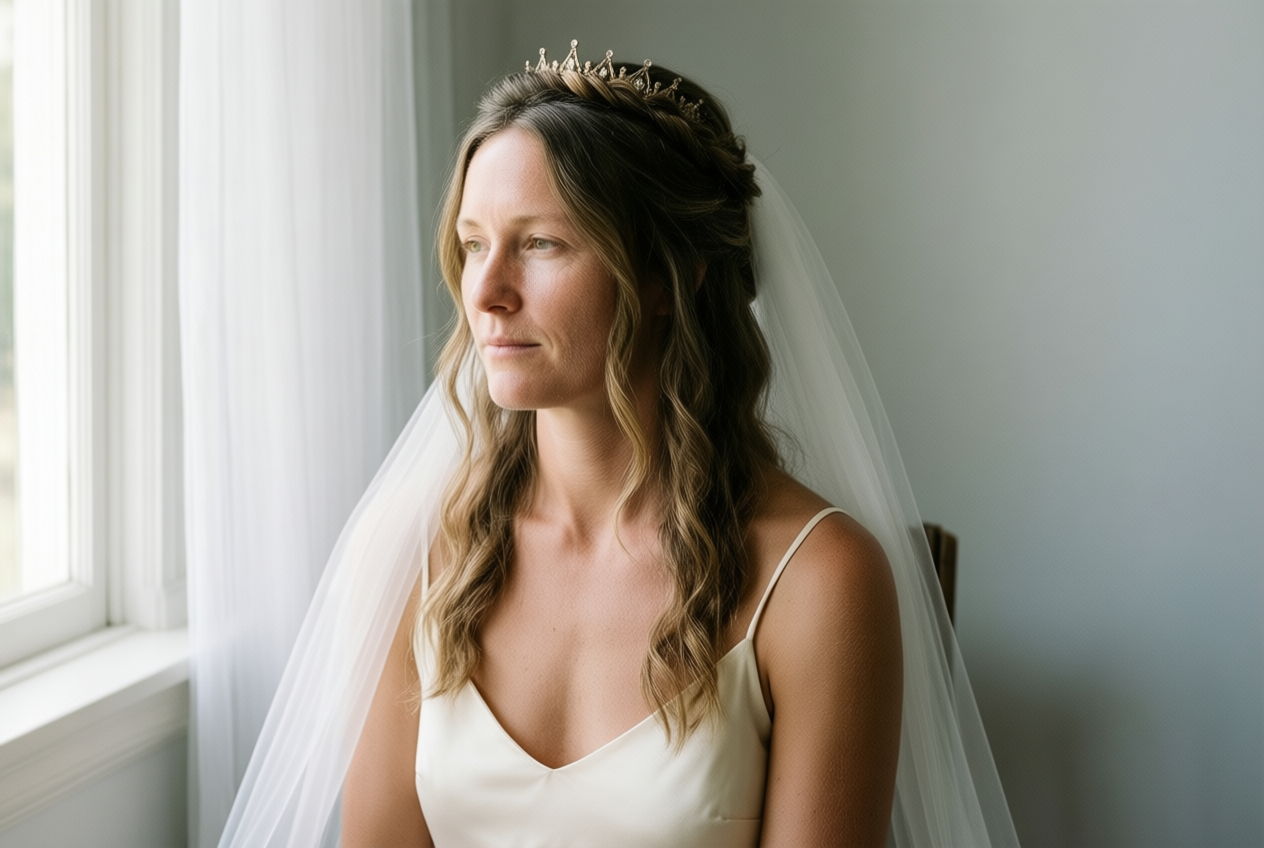
Loose beach waves feel relaxed and tousled, like an afternoon by the water. Old Hollywood waves are more sculpted, with defined ridges, and a bombshell blowout adds volume at the crown. A side part adds drama, while a middle part feels classic.
A bride who wants photo-ready glamour can pair old Hollywood waves with a side part, and the set holds through the first dance.
Curls that celebrate your natural texture
Embrace natural curls by working with your pattern rather than against it. Soft loose curls are a gentler version with lighter definition. Curly updos and top knots gather the curls at the crown for more structure.
To add lift, pin one side for volume: secure the roots at the back and let the other side fall.
A bridesmaid with tight curls who plans to dance all night can wear a top knot that holds past the last song.
Sleek, straight and polished looks
A middle-parted straight style is simple and timeless, and slicked-back looks pull everything off the face for a sharp frame. Polished glossy lengths depend on smooth ends and a finished shine.
A mom of the bride at an outdoor garden wedding keeps her glossy lengths sleek from ceremony to toast. Smooth ends do the work.
Wedding Hairstyles for Your Length and Type
Your length and texture decide what works, so here’s how we’d match each look.
Long hair, from straight to curly
Straight hair sweeps into a sleek low chignon, wavy hair holds loose curls, and curly hair shines in soft ringlets. Aim to showcase the length rather than bury it under pins.
For a romantic finish, try a fishtail braid. Split the hair in two, cross a thin strand from one outer edge to the other, and repeat down the length. Practice once or twice, and it’s simple.
Mid-length hair with waves or braids
Mid-length waves need a loose curling iron and a light hold spray, and they work with or without a veil.
A curly top knot suits a wedding morning. Gather the curls at the crown, twist loosely, pin, and let a few tendrils escape.
Braids and half-up looks add structure. For example, a bridesmaid with shoulder-length hair can braid two front sections and pin them back, leaving the rest loose for photos.
A side ponytail is the cleanest option: gather it low on one side, then wrap and pin the tail under.
Pixies, bobs and other short cuts
A pixie cut pairs well with a slim headband. Think of a bridesmaid who’s short on prep time: a headband and a few curls at the temples do the job.
Chin-length lobs and bobs go sleek with a smoothing balm or tousle into soft waves. Wavy or curly bobs look best with a curling wand and texture spray.
A 1920s retro look uses finger waves, short curls, and a headband.
For short hair buns with padding, wrap your hair around a foam ring (a bun pad for volume) and pin at the crown.
Styles for fine, thin or thick hair
Fine hair benefits from volume tricks: a lightweight mousse at the roots and a loose curl to give it body.
Backcombing roots (gently teasing near the scalp) adds lift without weight. Keep it light.
Taming thick hair is about control rather than force. Section it, then pin each part to the head rather than stacking pins.
A half-up bun or braid suits almost any thickness: padding adds fullness for fine hair, and a braid gives thick hair a neater finish.
Finishing Touches and Hair Accessories
A good accessory finishes your look and keeps your hair in place. Here’s how to choose the right pieces and pair them with your veil.
Which clips, headbands and tiaras to pick
Pearl and jewelled clips suit updos and catch the light in photos.
A slim headband or side comb adds shape to loose waves without a heavy look.
Ribbons bring a soft finish. Tie one through a low bun, then turn your head: if it stays put, it’s ready.
Tiaras and crowns make a bold statement, so keep the rest simple. A bride with a sleek low chignon can add a slim crystal tiara that supports the look rather than overpowering it.
Flowers and greenery for every look
A flower crown suits garden ceremonies. Ask for wired blooms so they hold all afternoon.
Gypsophila, or baby’s breath, is a light filler for pinned braids. Real orchids look sculptural but are delicate, so pin them in last.
For rustic weddings, eucalyptus or small ferns woven into a loose braid look natural. Choose greenery that echoes your bouquet rather than copies it.
Pairing a veil with bangs and curls
For example, a bride with a half-up style can tuck a veil comb just behind her crown, so the veil falls freely down her back.
A kiss curl is a small curl pressed flat at the forehead or temple, giving the veil a clean line.
Baby bangs and fringe are short and light, so the veil layers over them without a bulky edge.
Secure the veil last, once your hair is set. Pins suit updos and a clip suits loose waves. If it stays put, you’re set.
Prepping Your Hair and Choosing Products
Good hair on the day starts early, so we’ll cover prep, tools, a touch-up kit, and extensions.
Hair care before the wedding
Start with a protein treatment and a deep conditioner, and keep them in your routine. Consistency beats cramming.
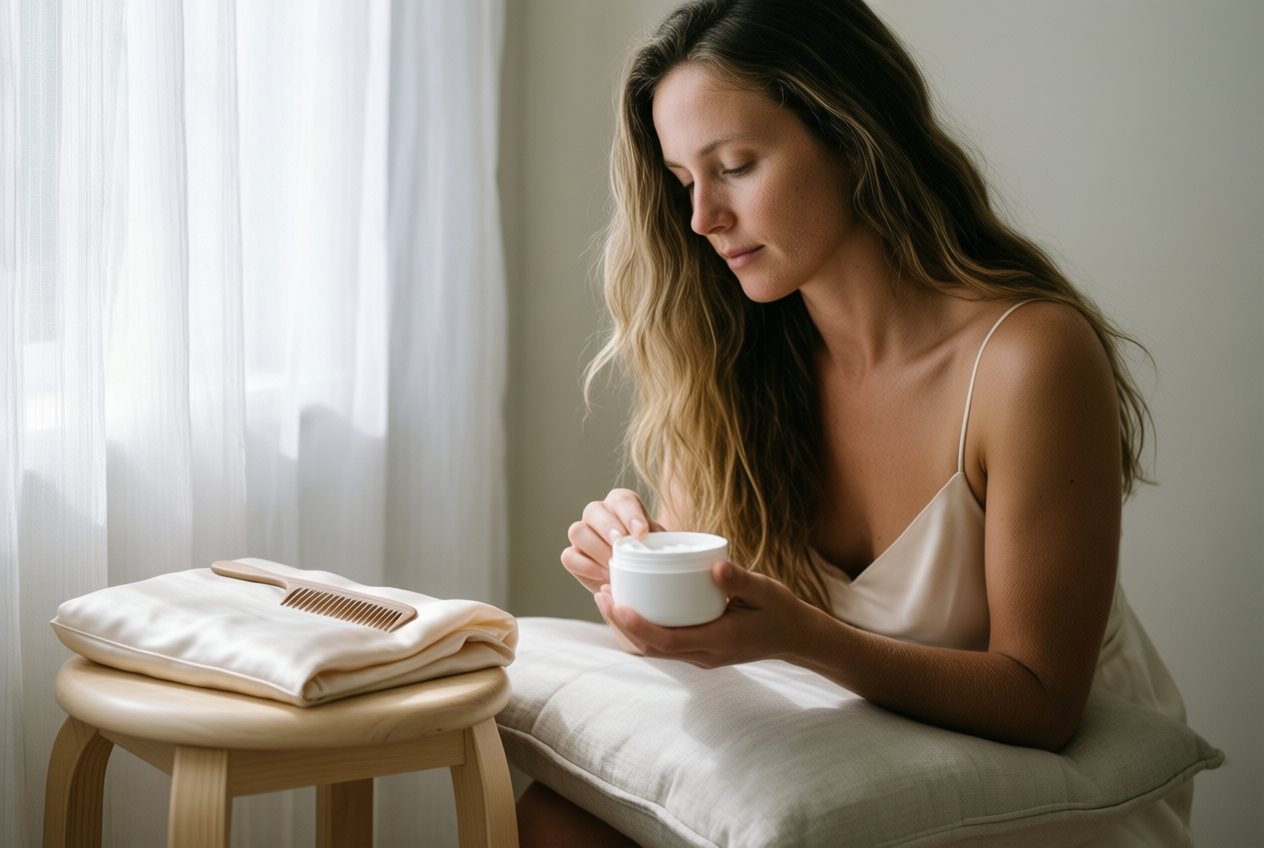
Use a heat protectant before any hot tool; it guards your strands against the heat. A silk pillowcase can help keep hair smoother overnight.
Hair growth tonics are a personal choice, but don’t expect one to change your hair in the weeks before the wedding.
Book a trim that lands early, not the week of the wedding, so you can settle back in before the big day. Book colour early too, for room to do a strand test and tweaks.
Styling tools and products you’ll need
These cover most bridal styles:
- Straighteners and curling wands: a flat iron for sleek looks and a curling wand for soft waves.
- Detangling brushes: pick one that works through knots gently, especially on wet hair.
- Texture spray: gives fine or slippery hair grip so pins hold and updos don’t slide.
- Heat protection product: apply it before any hot tool.
Think of a bridesmaid with a sleek ponytail for the ceremony and soft curls for the reception. One flat iron and one curling wand cover both looks.
Pack a touch-up kit for the day
Your kit is for repairs, not restyles. Pack:
- Bobby pins and hairspray for rebuilding an updo
- A mini comb and serum for smoothing and reshaping
- A vanity mirror for checking the back of your style
- A portable hot brush for refreshing curls
- A light finishing product for flyaways
- Travel-size minis of your go-to products
Picture a maid of honor at a windy outdoor ceremony. A dab of finishing product tames flyaways, and a vanity mirror lets her check the back of her bun. Assemble the kit the night before.
Extensions are helpful but optional
Extensions can add length and volume, which helps if your style needs more of either. They can also help fine or thinning hair look fuller. They’re optional, not required.
Plenty of brides wear their own hair beautifully, so use them only if they solve a specific goal. Your own hair can absolutely carry the day.
Getting Professional Help and Planning Costs
Not sure whether you need a pro? Here’s how to decide, and how to plan the money side.
Doing it yourself or hiring a stylist
A loose low bun or a simple braid is DIY-friendly, especially after a few practice runs. Intricate looks, like a sculpted updo with a veil, are where a pro earns her fee. A pro is less about making the style and more about keeping it in place all day.
If your stylist says a style won’t survive the ceremony, trust that call.
What you’ll spend on wedding hair
Ask stylists what most brides in your area spend, and get every quote in writing, including any trial fee and travel charge. Wedding cost guides report bridesmaid hair separately from bridal hair.
According to Brides.com’s guide to who pays for bridal party hair and makeup, there’s no average cost for bridesmaid hair, so you’ll need to estimate based on where you live.
Booking a trial to avoid bad hair days
A hair trial is your rehearsal: less about perfecting the look, more about testing it.
- Book the trial. Schedule it early, but close enough to the wedding that your hair is in its usual condition.
- Don’t experiment on the day. Test the style, veil, and headpiece at the trial.
- Prep with your stylist. Bring your veil, headpiece, and inspiration photos.
- Wash timing. Ask whether your stylist wants clean or day-old hair, then time your wash to match.
Consider a bride who books her trial for the same time of day as her ceremony. After an hour of photos, she knows her updo is still standing.
Map the wedding morning on paper, from stylist arrival to veil placement, and build in a buffer before photos. Rushed hair is hard to fix.
Expert Advice and Current Trends
Trends shift fast, but a few bridal looks keep coming back. Here’s what’s popular now, plus tips to help each one last all day.
Stylist tips on what’s trending now
Four looks lead the pack right now:
- Low, effortless buns. Soft and a little undone, especially with loose pieces at the face. A bride planning to dance all night should anchor hers at the nape with bobby pins so it stays put.
- Sleek buns and Hollywood ponytails. Aim for smooth rather than stiff. A light smoothing cream at the hairline gives a glossy finish without crunch.
- Half-up, half-down. It’s still popular because it keeps hair off the face while letting the length move. A bridesmaid gets a polished look without much fuss.
- Bob styling. A bob has less to work with, so styling does the heavy lifting. A sleek side part or a small clip at the crown can keep a veil secure. Less hair, more finish.
Ideas taken from celebrity red carpets
Red carpet photos are great for ideas. Borrow the shape, not every detail. For example, a bride who loves a sculpted chignon can ask her stylist to keep the volume at the crown and skip heavy sprays, so the result looks like her, not a costume.
Bridgerton-style updos suit anyone drawn to period-drama romance. Try a soft, romantic updo with face-framing curls and a little lift at the crown, then pin a comb or your veil near the back to hold it.
At your trial, bring inspiration photos and ask your stylist two questions: will this hold through a long day, and how will it sit with your veil?
Your wedding hair doesn’t have to be the most complicated item on your checklist. Start with a style that fits your day, the length and texture you already have, and the dress you’ll wear.
Then add the essentials: a veil that stays put, colour timed well before the big day, and a hair-day schedule with room to breathe. Keep a small bridal kit ready for the morning of, and you’ll be set for whatever comes.
The best wedding hair is the one you forget about by the last dance, because it never stopped looking like you.
References
- Who Pays for Bridesmaid Hair and Makeup? — brides.com
Sources
- Who Pays for Bridesmaid Hair and Makeup?, brides.com