
How to Get Glass Skin: A Complete Guide
How to get glass skin starts with a simple layered routine, not ten products. Find the ingredients, order, and tweaks that support a dewy glow.

Think of a freshly cleaned window. The glass is smooth and clear, and the light passes right through. That’s the idea behind glass skin: a smooth, dewy, luminous complexion that reflects light without looking greasy or heavily made up.
You don’t need a ten-step shelf to get there. Glass skin comes from a few well-chosen layers, applied in the right order and backed by habits that keep your skin hydrated and calm.
Here’s what we’ll cover: the daily routine, the ingredients that do the real work, how to adjust for your concerns, and how sleep, stress, and nutrition play a part.
Learn How to Get Glass Skin
Glass skin sounds intimidating, but it’s really about skin healthy enough to catch the light, so we’ll start with where it came from.
Where glass skin began in Korean beauty
Glass skin is a Korean beauty concept built around a clear, luminous complexion that looks almost like polished glass. Once it went viral, it spread well beyond the beauty counters where it started.
What a glass skin complexion looks like
Glass skin comes down to five traits:
- Even, smooth texture: no rough patches or bumps.
- Luminous, not greasy: it’s glow rather than shine, so light bounces off without a slick of oil.
- Plump hydration: skin looks bouncy, not tight or flaky.
- Even tone, minimal blemishes: redness and marks stay quiet.
- Less emphasized pores: pores are still there, but they don’t steal the spotlight.
Think of a bridesmaid who wants her skin to still look fresh in photos at midnight. A lightweight moisturizer under sunscreen and a sheer tint that won’t slide off by the toasts get her there. Less cover, more skin.
The benefits and principles behind the glow
Glass skin reflects overall health. Sleep, stress, and what you eat all show up on the surface, so your routine works best alongside those habits. Rested skin also gives a confidence boost, and you’ll likely reach for less concealer before you head out.
A healthy skin barrier, the outer layer that holds moisture in and keeps irritants out, keeps inflammation in check. Gentle products that don’t irritate help protect it.
Glass skin is built on skin-first habits, not quick fixes, so expect it to take weeks.
Oily skin can get the glow without the grease, dry skin usually needs more hydration first, and combination skin may need different amounts of moisture in different areas.
What’s in a Daily Glass Skin Routine?
A good daily routine for glow is shorter than most people expect: cleanse, hydrate, layer, seal, and protect. Each step has one job, and the order matters as much as the products.
Double cleanse with oil, then water
Start with a double cleanse: an oil-based balm or oil lifts sunscreen and makeup, then a gentle water-based cleanser rinses away what’s left. Use lukewarm water, since hot water can over-strip your skin.
Think of a bride-to-be on her wedding morning, still wearing last night’s makeup. The oil does the heavy lifting, so her face feels clean without a harsh scrub.
Exfoliate gently, and not too often
Choose a gentle physical scrub or a chemical exfoliant such as alpha hydroxy acids (AHAs) or beta hydroxy acids (BHAs). With exfoliants, how often matters more than how strong, so start slowly and increase only if your skin stays calm.
Over-exfoliating can leave skin red and reactive.
You may have seen the 4-2-4 rule in skincare searches. We won’t guess at its exact numbers here, but its core idea is worth keeping: go slowly with strong products.
Dermaplaning, a blade-based smoothing treatment, can be an occasional add-on, but it isn’t a daily step.
Pat on a hydrating essence while damp
Next, pat on a hydrating essence, a light, water-like layer. Apply it to damp skin to help it spread and prepare for serums. Look for:
- rice water
- hyaluronic acid
- glycerin
Pat rather than rub.
Layer serums, starting with hydrating ones
Put your hydrating serum on first, such as one with hyaluronic acid, since it’s the thinnest and needs to reach skin before richer layers.
Then add barrier-supporting serums or brightening options: niacinamide often supports the barrier, and vitamin C is a popular brightening pick.
Add one new serum at a time and give it a few weeks before the next. The question is when each one goes on, not how many you own.
Consider a new mom with five minutes at the sink. Her routine stays short, and when her skin changes, she knows which bottle caused it.
Seal in moisture while skin is dewy
Finish with a moisturizer to lock in hydration while skin is still dewy, so everything underneath stays put. Choose a barrier-supporting formula for your skin type: a lightweight gel often suits oily skin, while a richer cream can help dry skin.
Finish mornings with SPF 30+ sunscreen
Every morning, sunscreen is your final step before makeup.
Daily use of a broad-spectrum formula with a sun protection factor (SPF) of 30 or higher helps prevent pigmentation and dullness, and the American Academy of Dermatology recommends a water-resistant version too.
Think of a bridesmaid in outdoor photos all afternoon. Daily SPF means her skin still looks even in the pictures.
Pared-back light-layer version: if mornings are tight, use one hydrating layer, a moisturizer, and SPF, and skip the rest until your skin asks for more. Consistency wins.
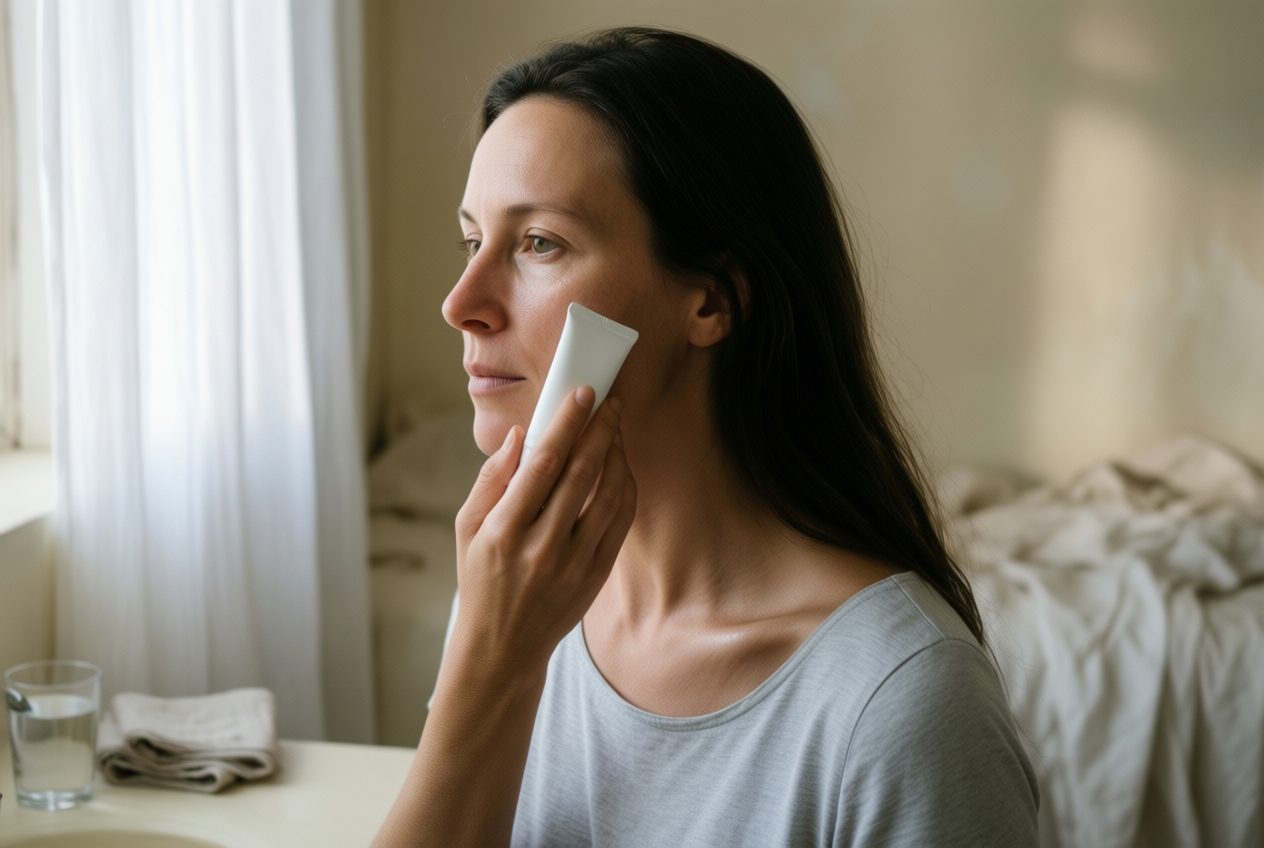
Ingredients That Do the Real Work
Most glass skin routines rely on three jobs: hydration, barrier repair, and evening out tone. Here’s which ingredients handle each.
Ingredients that keep skin hydrated
Humectants pull water into the skin’s outer layer. Hyaluronic acid and glycerin are the common examples, while panthenol and beta-glucan add a soothing feel for tight or rough skin.
Rice water is a water-based ingredient found in many hydrating formulas, but it works best alongside humectants, not instead of them.
Consider a new mom on three hours of sleep. By mid-morning her face feels tight, so a hyaluronic acid serum under her moisturizer keeps her comfortable through feeds and errands.
Ingredients that repair the skin barrier
Your skin barrier holds moisture in and keeps irritants out. Repairing it is less about adding products than protecting the ones already working for you.
- Ceramides are fat-like lipids that help hold the barrier together, and fatty acids replenish what gets lost.
- Peptides are short chains of amino acids that support a smoother, firmer look.
- Centella asiatica (cica) is a plant extract known for calming irritated skin.
Barrier first, glow second.
Ingredients that brighten and fade spots
According to a clinical trial comparing topical vitamin C and niacinamide on melasma, a condition that causes dark patches, both can help fade dark spots.
Vitamin C is an antioxidant that helps slow pigment production, while niacinamide reduces how much pigment reaches the skin’s surface cells and calms inflammation.
Brighteners shouldn’t sting. If a serum burns or turns your skin red, it’s too strong for you right now, so pause and try a gentler formula. Stinging is a stop sign.
Optional Treatments and Glow Boosters
Extras can add a quick lift, but they don’t replace your basics. Here’s where each one fits.
Hydrating sheet masks for a quick plump
A hydrating sheet mask is a fabric sheet soaked in a hydrating serum that you lay over clean skin. Think of a bride with ten spare minutes before the first photos who wants a rested glow.
It gives a temporary plumping boost: a quick lift rather than lasting change. Treat it as an optional step, and don’t stack it with strong actives (the ingredients doing the heavy lifting) in the same routine.
Brighten eyes and add a light sheen
Use a brightening eye cream under your eyes, patting gently with your ring finger. For sheen, pick one: an illuminator (a light-reflecting product) or a glowy primer. Apply highlighter sparingly, and aim for a soft sheen rather than a spotlight.
A bridesmaid who wants to look awake in group photos gets there with one eye cream and one illuminator, not five products.
Does a Korean glass skin facial work?
Some readers book a multi-session glass skin program, a series of facials spread over several visits. Korean facial treatments are another spa route toward that luminous finish.
If acne or pigmentation is your concern, a corrective facial targets the problem directly and is best done with a licensed esthetician or dermatologist. Does a Korean glass facial work?
It can be a lovely treat, but one appointment won’t carry the look alone. Consistency beats a single visit.
Products Worth Adding to Your Shelf
Not every bottle earns a spot on your counter. Here’s how to choose the few that do, then which four to start with.
Match products to your skin and tolerance
Choose by category and function, not by brand. Ask what each product needs to do: cleanse, hydrate, brighten or protect. If a bottle does a job nothing else on your shelf covers, it stays.
Your tolerance matters too. If your skin stings easily, add one new product at a time and give it time to settle before the next.
Think of a bride testing a new routine three weeks before her wedding: one change at a time shows you any reaction early, not on the morning of the ceremony. Slow wins here.
For oily skin, go lighter. Look for gels, water-based serums and lotions over rich creams, since heavy layers can feel greasy by midday. The goal is light hydration, not no hydration.
Top picks with their pros and cons
Start with these four, and the honest tradeoffs for each:
- Cleansing balm or gel cleanser: Pro: a balm melts away sunscreen and makeup. Con: it can feel heavy on oily skin, while a gel rinses lighter but may feel tight on dry skin.
- Hyaluronic acid serum: Pro: this water-based layer draws moisture into skin and sits well under moisturiser. Con: in dry air, it needs a moisturiser on top to hold that water in.
- Vitamin C moisturiser: Pro: it hydrates and adds a brightening step in one bottle. Con: it can sting sensitive skin, and some formulas are scented.
- SPF 50 (sun protection factor) sun cream: Pro: strong daily protection in the step you can’t skip. Con: some formulas leave a white cast, so test a few until you find one you’ll wear every day.
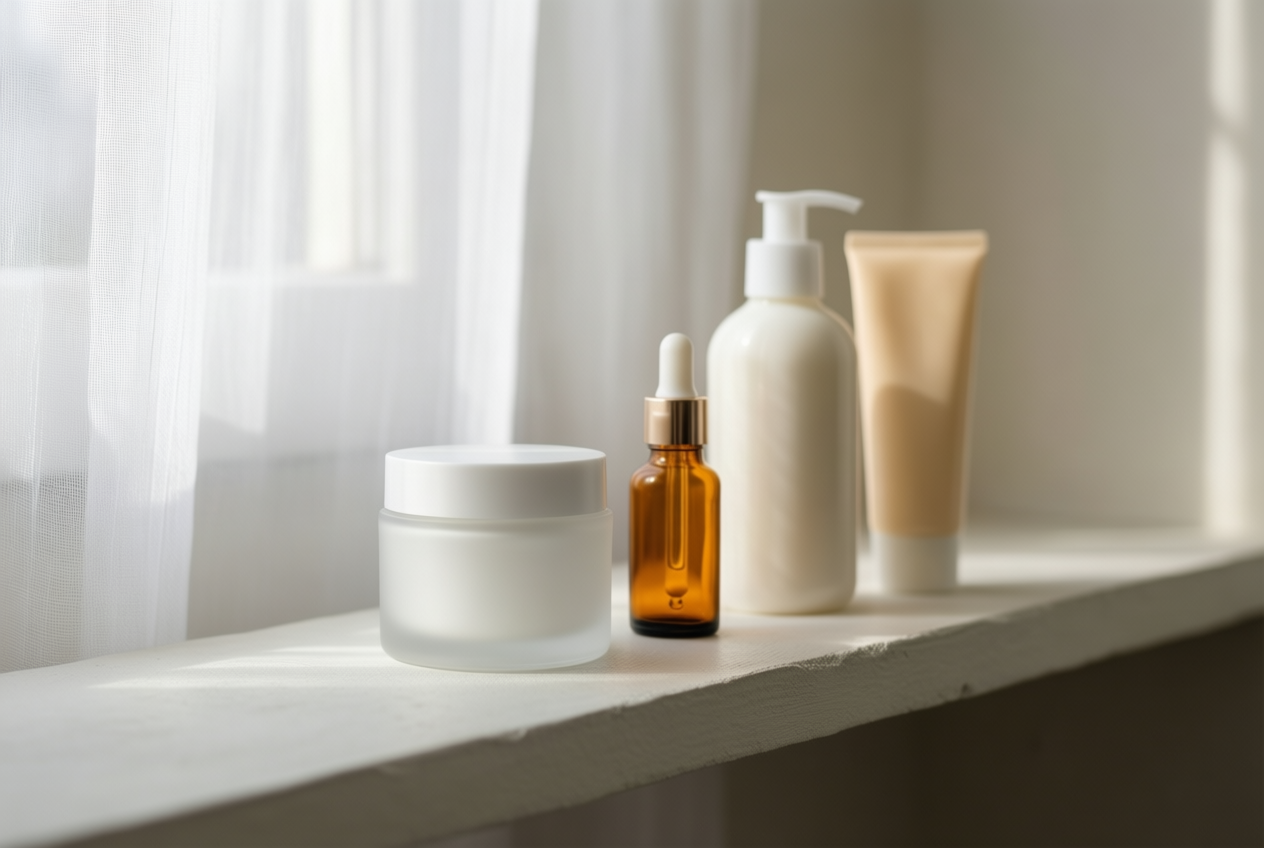
Adjusting the Routine to Your Concerns
Your skin doesn’t need a whole new routine to get that glassy look. A few targeted tweaks keep the same simple steps working for acne, dark spots, and sensitivity.
Tweaks for acne, pigmentation, and sensitivity
- Gentle cleansing for acne-prone skin. Pick a cleanser that’s gentle rather than harsh. Scrubbing hard can irritate breakouts, so cleanse with your fingertips and a mild formula.
- Daily SPF for pigmentation. Sun can darken existing spots, so sunscreen every morning is non-negotiable, even on cloudy days.
- Barrier-first for sensitive skin. Your skin barrier is the outer layer that holds moisture in. When it’s irritated, drop the extras and stick to a gentle cleanser, a simple moisturizer, and SPF.
- Introduce actives slowly. Actives are the ingredients doing the heavy lifting, like exfoliating acids or retinol. Consider a bridesmaid who starts a new retinol the week of the wedding and wakes up red by the rehearsal dinner. She’d have been better off starting months ahead, one at a time, so her skin still looks like her skin in the photos.
- Break the irritation cycle. When stinging hits, it’s tempting to add another product, but that’s usually how the cycle starts. Pause the newest step instead. Fewer products, calmer skin.
Makeup That Keeps the Glass Skin Look
Glass skin only looks like glass when your makeup stays out of its way. Keep the layers light and let your prepped skin do most of the work.
Prep skin, then layer thin and dewy
Here’s the order that keeps the glow intact:
- Prep skin first: Moisturize and give it a minute to sink in. Makeup sits best on skin that’s already hydrated, not dry.
- Hydrating primer and base: Start with a hydrating primer (the layer that goes on before base makeup), then a sheer base instead of a heavy one.
- Thin layers, spot conceal: Build coverage in thin layers rather than one thick coat. Use concealer only where you need it, like under the eyes or on a stubborn spot.
- Minimal powder: Skip the all-over powder. Press a little on your T-zone if you need to, and leave the rest of your face alone.
- Dewy setting spray: Finish with a dewy setting spray to hold everything in place without flattening your glow.
Think of a bride touching up before the toast. With prepped skin, one thin layer of concealer, and no powder, she can skip the compact in her clutch and still look like herself in the photos. Fewer layers, more glow.
Everyday Habits That Support Glowing Skin
Glow comes less from what you add to your shelf and more from how you live. These habits do quiet work behind the scenes.
Drink water, eat well, and sleep enough
- Drink plenty of water. Keep a bottle on your desk so you’re sipping all day.
- Eat a balanced, antioxidant-rich diet. A review of nutrition and skin homeostasis links this habit to healthy-looking skin. Instead of hunting for five superfoods, build a varied plate.
- Get consistent, quality sleep. Think of a bride three weeks out, up late with seating charts. Trading one late scroll for lights-out at a set time is a change she can keep, and she walks into the morning photos rested.
Stress, exercise, and not touching your face
Stressful days are when routines slip, so protect one five-minute reset, like a short walk or a few slow breaths.
Circulation is the blood flow that carries oxygen and nutrients to your skin. Regular movement, like a brisk walk, keeps it moving.
Hands pick up a lot in a day, so keep yours off your face and away from spots you’re tempted to pick.
Be patient and stick to the routine
Glow is a slow build, not a one-week fix. Hormones shift through the month and can change how your skin looks, so a dull week doesn’t mean the routine has failed.
Choose a routine you can repeat on a tired Tuesday, and give it a few weeks before you judge it. Steady habits beat bursts of effort.
So how do you make your skin glow naturally at home? Start with water, sleep, a daily reset, hands off your face, and a routine you repeat. Give it time.
Glass skin isn’t about perfection or a crowded bathroom counter. It’s about a simple routine you’ll actually use, ingredients doing their job, and everyday habits that keep your skin hydrated and calm.
Results build gradually, so consistency matters more than any single product.
Start with the basics, then fine-tune as you learn what your skin needs. Progress comes from showing up, not from adding more steps. The glow that lasts is the one you can keep up on a busy Tuesday, and that’s the routine worth keeping.
References
- COMPARISON OF TOPICAL VITAMIN C VS NIAC… | Clinical Trial — opentrials.com (2026)
- Role of Nutritional Elements in Skin Homeostasis: A Review — pmc.ncbi.nlm.nih.gov (2025)
- American Academy of Dermatology Statement on the Importance of Sun Protection — aad.org (2025)
Questions
What is the 4 2 4 rule in skincare?
The 4-2-4 rule is commonly described as a Korean double-cleansing method: massage cleansing oil for 4 minutes, use a water-based cleanser for 2 minutes, then rinse for 4 minutes. It is not a necessary or universally suitable routine, and prolonged cleansing can irritate skin, so cleanse gently and stop if your skin feels tight or sore.
What is a good daily skin care routine for glowing skin?
A simple daily routine is to cleanse gently, apply a hydrating serum or essence, moisturize, and use broad-spectrum SPF 30 or higher in the morning. At night, remove sunscreen and makeup, cleanse, then moisturize; add exfoliants or brightening serums gradually if your skin tolerates them. Consistent sleep, a balanced diet, and patience also support a healthy glow.
What are 5 superfoods for glowing skin?
There is no definitive list of five superfoods for glowing skin. A varied diet with fruits and vegetables such as berries, leafy greens, tomatoes, and sweet potatoes, along with healthy fats from foods like salmon, can supply nutrients that support overall skin health.
What are some Korean beauty secrets?
Korean beauty often emphasizes gentle cleansing, hydrating layers, and protecting the skin barrier rather than relying on harsh treatments. For a glass-skin look, use a hydrating essence or serum, moisturize, apply daily sunscreen, and introduce exfoliants slowly. These ideas can be adapted to your skin type without following a lengthy routine.
How can I look 10 years younger naturally?
You cannot reliably look 10 years younger naturally, and no routine can reverse aging completely. Daily sunscreen, gentle skincare, adequate sleep, not smoking, and a balanced diet can support healthier-looking skin over time. Avoid harsh or excessive treatments that irritate the skin.
How do I get my face to look like glass?
Build a hydrated, smooth-looking complexion with gentle cleansing, a hydrating essence or serum, moisturizer, and daily sunscreen. Add brightening ingredients such as vitamin C or niacinamide only if your skin tolerates them, and use makeup lightly if desired. Glass skin is a gradual, healthy-looking glow, not poreless or perfectly clear skin.
How to make your skin glow naturally at home?
At home, drink enough water, get consistent sleep, eat a balanced diet, and keep a gentle skincare routine you can repeat. Cleanse, moisturize, and use sunscreen each morning; avoid picking at your face and introduce exfoliants slowly. Give changes several weeks rather than expecting an overnight glow.
What's the best way to get glass skin?
The best approach is a consistent routine that hydrates skin, supports its barrier, and protects it from sun damage. Cleanse gently, layer a hydrating essence or serum, seal with moisturizer, and finish mornings with broad-spectrum SPF 30 or higher. Add other products one at a time and give the routine weeks to show results.