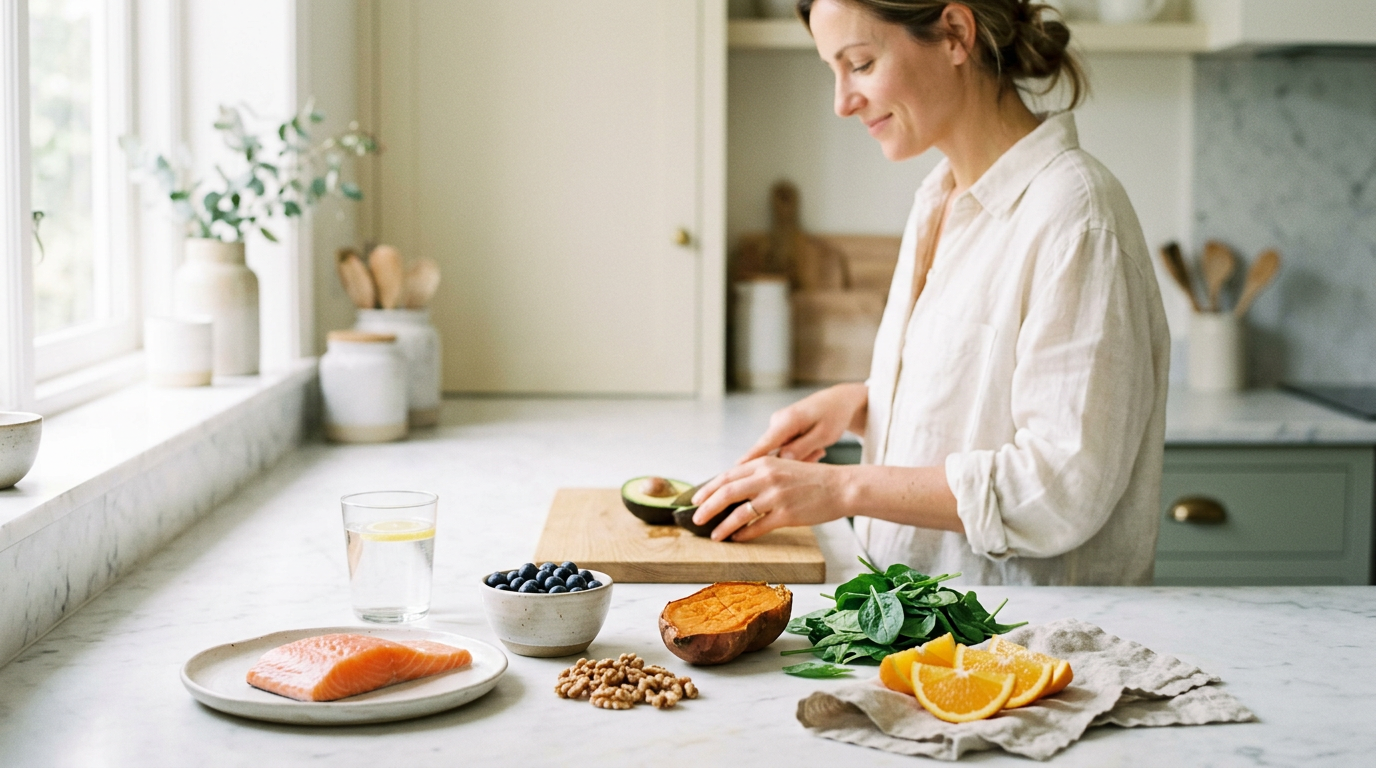
Best Food for Skin: What to Eat and Why It Works
Best food for skin means colorful produce, healthy fats and lean protein. See which nutrients matter, how hydration helps, and when supplements make sense.

Think of your skin like a garden: what you feed it shows up over time. Ever notice it looks dull after a run of late nights and takeout? Your plate matters too.
The short answer is a varied plate of colorful produce, healthy fats, lean protein, and plenty of water, eaten consistently rather than perfectly.
This post covers the nutrients that matter most, the foods that supply them, hydration, simple eating patterns, and when a supplement makes sense. We’ll also show how diet shows up on body skin, alongside a light routine that won’t eat up your morning.
Best Food for Skin and Everyday Habits
Steady habits do more for your skin than any one standout ingredient, and they work best alongside the routine you already use.
Eat a balanced diet of whole foods
Consider a bride in the month before her wedding who swaps takeout for simple meals of eggs, beans and vegetables. A balanced diet built from whole foods beats chasing a single superfood.
Consistency beats occasional binges: one salad won’t undo a month of late-night snacking. Limit red meat, sugar and butter, but don’t ban them.
For the research side, a Monash study examined the relationship between diet and skin wrinkling.
Food works alongside your skincare routine
Food complements your products, working with them, not instead of them. Antioxidant-rich foods don’t replace sunscreen, so keep your SPF on even when you’ve eaten well.
Your habits matter too:
- Sun. Cover up and wear sunscreen, even on cloudy days.
- Smoking. Skip it, so your food and products get a fair chance.
Does sleep affect skin health? Yes, and it’s easy to spot. Think of the morning after a short night: tired eyes and a dull complexion. Stress and heavy drinking show up too, so keep alcohol in check and build a few minutes of calm into your evening.
Consider a new mom running on broken sleep. She doesn’t need a new serum, just an earlier bedtime on a few nights and a moisturizer she’ll actually use, so her skin still looks like her own.
Pair all of this with a light-layer routine: a gentle cleanser, a thin moisturizer and sunscreen by day, and a few well-chosen products at night. Steady habits win.
Nutrients That Keep Skin Healthy
Your skin rebuilds itself every day, and food supplies the raw materials. Each nutrient below has a clear job, so start with the foods that already fit your week.
Vitamin A from carotenoid-rich orange foods
Vitamin A supports cell turnover, the process of shedding older skin cells and replacing them with fresh ones. Beta-carotene, a carotenoid (the orange pigment in plants), converts to vitamin A once you eat it.
Carrots, sweet potatoes and mango are easy starts. A bridesmaid who snacks on mango on the way to the venue covers her beta-carotene without a second thought. Food is the safer route than supplements, so let your plate lead.
How vitamin C supports collagen production
Vitamin C lends a hand to collagen production. Collagen is the protein that gives skin its structure, and vitamin C also helps fight free radicals, unstable molecules that can damage skin cells.
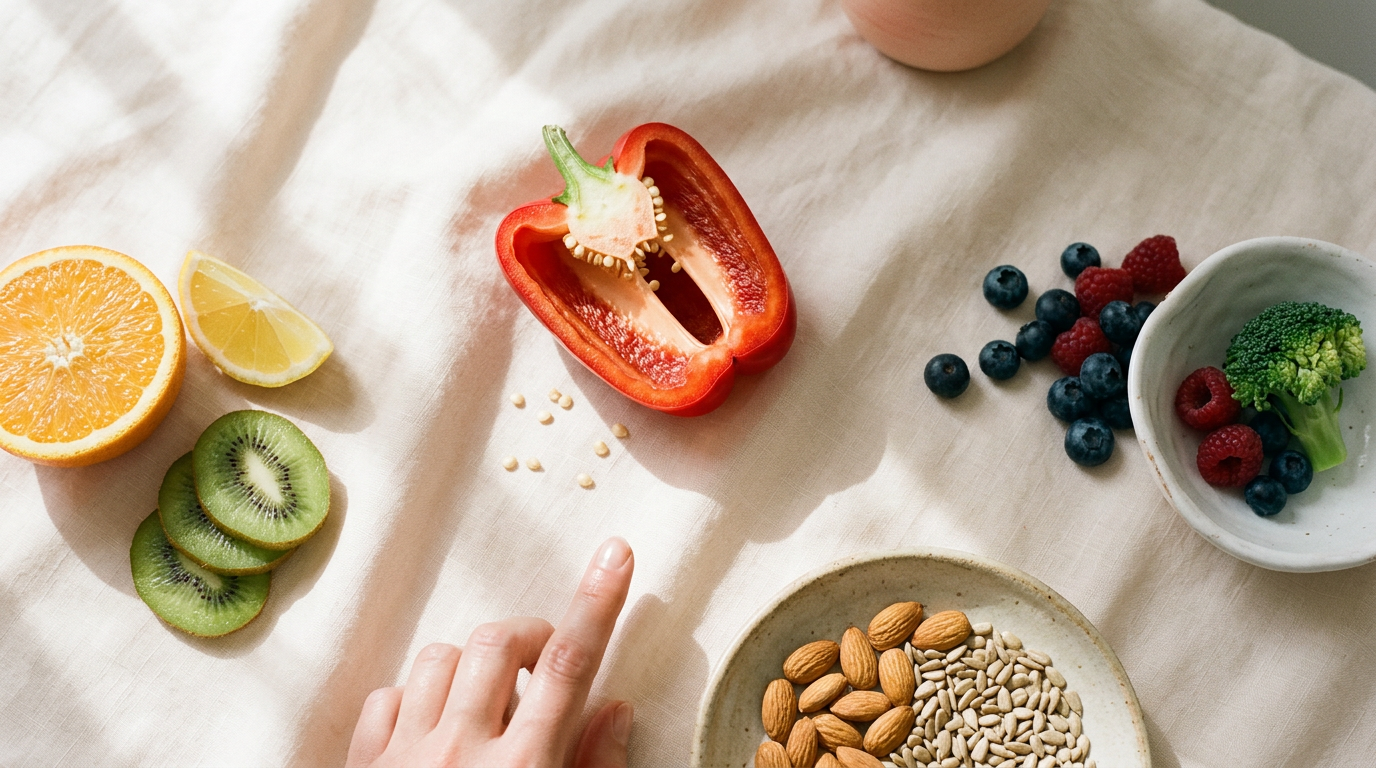
Reach for citrus, peppers, broccoli and berries. Red pepper is the richest of the bunch: according to Verywell Health, red bell peppers have some of the highest vitamin C levels of any vegetable.
So which is best for skin, vitamin C or E? They do different jobs, so the real answer is both:
- Vitamin C supports collagen and fights free radicals.
- Vitamin E protects skin from environmental stressors.
Vitamin E guards against environmental damage
Vitamin E protects your skin from environmental stressors, the everyday forces outside your body that wear it down. You’ll find it in nuts, seeds and oils, and wheat germ is another source.
Here’s the catch: vitamin E is hard to get from food alone, so treat nuts, seeds and oils as a steady base. A new mom who keeps almonds in her diaper bag has a one-handed snack ready for busy days.
Omega-3 fats that protect the skin barrier
Your lipid barrier is the layer of fats on your skin’s surface that holds moisture in. Omega-3 fats help maintain that barrier, so think upkeep rather than repair.
According to UC Davis Health, walnuts are a great source of alpha-linolenic acid (ALA), an omega-3 fatty acid important for reducing inflammation.
Monounsaturated fats, a type of healthy fat, also tie into skin pH, the measure of how acidic or alkaline your skin’s surface is. Fish, flax and walnuts are the go-to sources.
Zinc, biotin and protein for skin repair
Zinc aids wound healing, so it’s part of your skin’s repair crew. Biotin supports skin and hair. Protein builds collagen and elastin, the fibers that help skin bounce back.
If you’re wondering which food is highest in collagen, skip the search for one champion and focus on protein, since your body uses it to build both. Eggs, beef, shrimp and lentils all bring protein to the table.
A flight attendant who grabs a lentil bowl between flights gets a protein-rich meal in minutes.
Antioxidant polyphenols that slow premature aging
Polyphenols are plant compounds that act as antioxidants, helping counter oxidative stress, the wear-and-tear that can speed up premature aging. Families include anthocyanins, catechins and flavonoids.
A systematic review and meta-analysis of randomized trials notes that oral supplements, including polyphenols, have demonstrated effectiveness in addressing skin photoaging, the aging caused by sun exposure.
That review focused on supplements, so build polyphenols into your meals first. Color on the plate counts.
Top Foods for Healthier Skin
Your skin responds to what you eat, and most helpful foods are easy to grab on a regular grocery run. Here’s what we’d add, swap, and enjoy in moderation.
Fatty fish like salmon and mackerel
Fatty fish is a go-to source of omega-3 fatty acids, healthy fats that support hydration. Salmon, sardines, and mackerel are the easiest to find.
A study on chum salmon processing by-products suggests salmon-derived ingredients may help reinforce the skin barrier and improve hydration.
Omega-3s may also ease inflammatory skin conditions. A systematic review of omega-3s in skin care points to protection from ultraviolet (UV) damage from the sun. Food’s a bonus, not a replacement for sunscreen, so keep yours on.
Swap butter for avocado and olive oil
Avocado brings vitamins C and E along with healthy fats, and a pilot study in healthy women suggests daily avocado may improve skin firmness. Where a recipe calls for butter, try olive oil instead, since olive oil also aids wound healing.
Think swap rather than cut: you’re trading one fat for a better one.
Consider a bride who wants her skin to look rested under the ceremony lights. She swaps buttered toast for avocado and hopes her skin still looks like her skin by the first dance.
Crunchy nuts and seeds for your skin
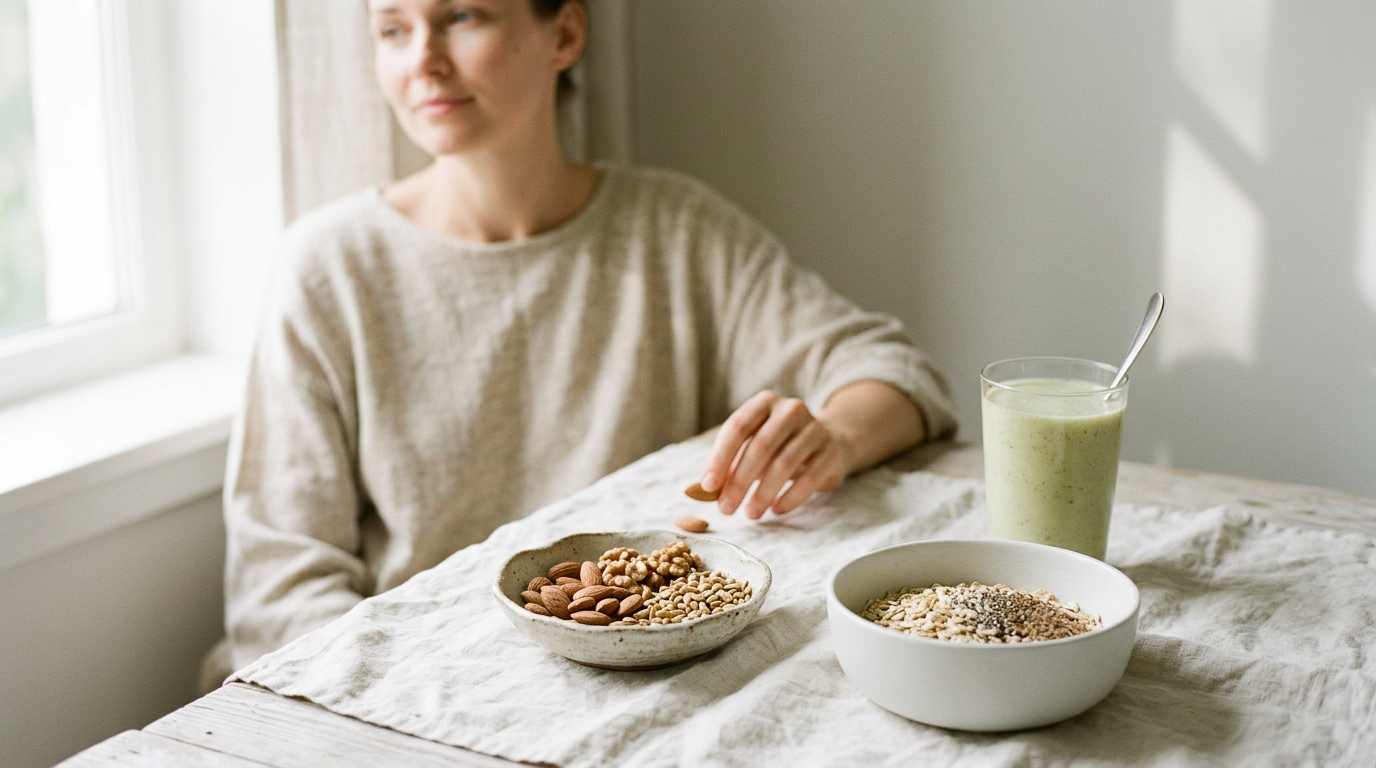
Almonds, walnuts, and sunflower seeds make a satisfying snack, while flax and chia blend easily into oats and smoothies. These foods bring zinc and copper, two minerals, plus vitamin E. A UC Davis pilot study on almonds reported reduced wrinkles.
Because it focused on almonds, treat that as an encouraging sign rather than a guarantee for every nut.
Pile your plate with colorful produce
Color is the easy part. Aim for variety rather than volume:
- Blueberries are rich in antioxidants, plant compounds that help protect skin cells.
- Citrus, kiwi, and mango are sweet add-ins for yogurt or salads.
- Bell peppers and broccoli roast beautifully or eat raw with hummus.
- Leafy greens and sweet potatoes round out nearly any bowl.
Spices, tea and chocolate in moderation
Each of these brings a compound worth knowing:
- Turmeric contains curcumin, which a review of its effects on human health describes as helpful for oxidative and inflammatory conditions. Stir a pinch into eggs or roasted vegetables.
- Green tea supplies catechins, plant compounds that come with an easy daily cup.
- Dark chocolate contains flavanols, plant compounds found in cocoa. Keep portions small and enjoy it as a treat, not as a health food.
Beans, whole grains and soy foods
Beans, grains, and soy are about adding to your plate, not replacing everything on it. Chickpeas bring protein and zinc, so roast them for a crunchy snack.
Quinoa offers quercetin, a plant compound, and soy foods like tofu and edamame supply isoflavones, a family of plant compounds.
So, are eggs good for your skin? They supply vitamins A and E, so they’re a useful part of the plate. Just don’t expect one food to do all the work.
Staying Hydrated for Better Skin
Hydration is the easiest skin habit to start, and it works from both sides: what you sip and what you eat. Here’s what to drink for skin, plus the water-rich foods that help fill in the gaps.
What to drink to improve skin?
Water is the answer, and it’s the foundation. Staying well hydrated helps your skin maintain moisture. When you’re low on fluids, your skin loses some of its elasticity, the stretch-and-bounce-back quality that keeps it looking smooth.
So how much is enough? Henry Ford Health recommends six to eight, eight-ounce glasses of water daily. It’s less about one big glass and more about steady sipping through the day.
Consider a bride who keeps a water bottle at every dress fitting. By the big day, her skin still looks like her skin, and her routine hasn’t grown a single step.
Water-rich foods that hydrate skin
Food counts too. Here are the picks worth keeping on hand:
- Watermelon, cucumber, and celery are crisp, easy snacks.
- Tomatoes and white asparagus add hydration to salads and sides.
Lettuce is less hydrating than many people assume, especially next to watermelon, cucumber, and celery. Cleveland Clinic notes this, so don’t count on a big green salad to top you off.
Summer hydration needs are where this pays off most. A bridesmaid running between outdoor photos and the rehearsal dinner can toss a container of cut watermelon and cucumber in her bag, so she’s not relying on one big glass when the heat hits.

Easy Ways to Eat for Skin
You don’t need an overhaul to eat for better skin. Most of the easiest wins are meals you already make, with a few smart swaps.
Meals and snacks to try
Try building these into your week:
- Breakfast: Berries in yogurt or oatmeal
- Smoothies: Add flax and turmeric
- Dinner: Salmon tacos or almond-crusted trout
- Snacks: Nuts and seeds you can grab on the way out the door
Consider an office worker who keeps a bag of almonds in her desk drawer. When the afternoon slump hits, she grabs a handful instead of the vending machine and is back to her inbox without a second thought.
Cooking and pairing tips to absorb more
This is less about eating more and more about eating smarter. A few simple habits help you get more from what’s on your plate:
- Pair carotenoids (the orange and yellow plant pigments in foods like carrots and sweet potatoes) with a little fat.
- Frozen berries are just as nutritious as fresh, so keep a bag in the freezer for smoothies.
- Steam your broccoli until it’s just tender.
Start with one or two foods you already like. Small swaps add up.
Supplements or Food for Skin
Before you add a skin supplement, know when one makes sense and when food should do the heavy lifting.
When supplements make sense
Supplements work best when they bridge a nutrient gap, meaning a vitamin your meals regularly miss. They’re there to fill that gap, not replace your plate. Consider a bride who starts three supplements the week she books her venue.
Before the wedding, she can’t tell which one is helping, and she’s doubling up on some doses. She keeps one daily multivitamin instead and knows exactly what she’s taking. One bottle, not three.
Whole foods come first, so reach for a supplement only when food can’t close the gap.
Do skin vitamins actually work? We don’t have solid evidence that they reliably change how skin looks, so treat them as a gap-filler, not a glow-up.
Do prenatal vitamins help skin? We don’t have evidence that they do, so don’t count on one for your complexion.
Keep three cautions in mind:
- Consult a healthcare professional first, especially if you’re pregnant, taking medication, or managing a health condition. Your provider can also help you pick a prenatal.
- Watch vitamin A. Too much can be harmful, and it can show up in some multivitamins, so read labels before you stack products.
- Vitamin E. Keep your total under 400 IU (International Units, the measure used for vitamin doses). A review of vitamin E’s safety controversy notes that in 2004, the authors of a study (Miller et al.) warned that 400 IU or more per day raised the risk of dying from any cause. That warning rested on a meta-analysis of 19 studies and is still debated, so check with your provider before going over.
Good skin food isn’t about a perfect plate or a cabinet full of supplements. It’s about steady choices: colorful produce, healthy fats, lean protein, and water you actually drink throughout the day.
Pair those habits with a light routine and your skin gets support from both sides. Fewer steps and better meals work together, so you can spend less time at the counter and more time living your day.
Feed your skin well, and let the rest of your routine stay simple.
References
- Therapeutic Benefits of Topical Omega‐3 Polyunsaturated Fatty Acids in Skin Diseases and Cosmetics: An Updated Systematic Review — pmc.ncbi.nlm.nih.gov (2025)
- 4 health benefits of walnuts and how much you should eat | Good Food Is Good Medicine — health.ucdavis.edu
- Effectiveness of dietary supplements for skin photoaging in healthy adults: a systematic review and meta-analysis of randomized controlled trials — pmc.ncbi.nlm.nih.gov (2025)
- Valorization of Chum Salmon (Oncorhynchus keta) Processing By-Products: High-Value Functional Food Ingredients for Skin Health — doi.org (2026)
- Avocado Consumption Increased Skin Elasticity and Firmness in Women ‐ A Pilot Study — pmc.ncbi.nlm.nih.gov
- UC Davis — escholarship.org
- Curcumin: A Review of Its Effects on Human Health — pubmed.ncbi.nlm.nih.gov
- 6 Side Effects Of Not Drinking Enough Water | Henry Ford Health — henryford.com (2026)
- Vitamin E’s safety controversy — aocs.org
- 11 Vegetables That Can Help You Get More Vitamin C — verywellhealth.com (2026)
- Foods To Help Keep You Hydrated This Summer — health.clevelandclinic.org
Questions
Does sleep affect skin health?
Yes. Short sleep can leave skin looking dull and tired, while stress and heavy drinking can also affect its appearance. Consistent sleep and other steady habits support skin health.
What to drink to improve skin?
Water is the best drink for supporting skin hydration. Sip steadily through the day; green tea can also be part of a balanced routine, but water is the foundation.
What food is highest in collagen?
There isn’t one food that is highest in collagen in a way that makes it essential to seek out. Protein-rich foods such as eggs, beef, shrimp, and lentils provide building blocks your body uses to make collagen.
Are eggs good for your skin?
Yes. Eggs provide vitamins A and E, as well as protein, making them a useful part of a balanced diet for skin. No single food can do all the work on its own.
Do prenatal vitamins help skin?
There’s no good evidence that prenatal vitamins improve skin or complexion. Take them for pregnancy-related needs only with guidance from a healthcare professional, not as a skin supplement.
Do skin vitamins actually work?
Skin vitamins may help fill a nutrient gap, but there isn’t solid evidence that they reliably improve how skin looks. Food should come first, and supplements are best chosen with a healthcare professional, especially because excessive vitamin A can be harmful.
Which is best for skin, vitamin C or E?
Neither is universally best because they have different roles. Vitamin C supports collagen production and helps fight free radicals, while vitamin E helps protect skin from environmental stressors, so getting both through a balanced diet is useful.
Sources
- 4 health benefits of walnuts and how much you should eat | Good Food Is Good Medicine | UC Davis Health, health.ucdavis.edu
- Effectiveness of dietary supplements for skin photoaging in healthy adults: a systematic review and meta-analysis of randomized controlled trials - PMC, pmc.ncbi.nlm.nih.gov,
- Therapeutic Benefits of Topical Omega‐3 Polyunsaturated Fatty Acids in Skin Diseases and Cosmetics: An Updated Systematic Review - PMC, pmc.ncbi.nlm.nih.gov,
- Avocado Consumption Increased Skin Elasticity and Firmness in Women ‐ A Pilot Study - PMC, pmc.ncbi.nlm.nih.gov
- UC Davis, escholarship.org
- Curcumin: A Review of Its Effects on Human Health - PubMed, pubmed.ncbi.nlm.nih.gov
- Dietary water affects human skin hydration and biomechanics - PMC, pmc.ncbi.nlm.nih.gov,
- 6 Side Effects Of Not Drinking Enough Water | Henry Ford Health - Detroit, MI, henryford.com,
- Foods To Help Keep You Hydrated This Summer, health.clevelandclinic.org
- Vitamin E’s safety controversy – AOCS, aocs.org
- Valorization of Chum Salmon (Oncorhynchus keta) Processing By-Products: High-Value Functional Food Ingredients for Skin Health, doi.org,
- 11 Vegetables That Can Help You Get More Vitamin C, verywellhealth.com,