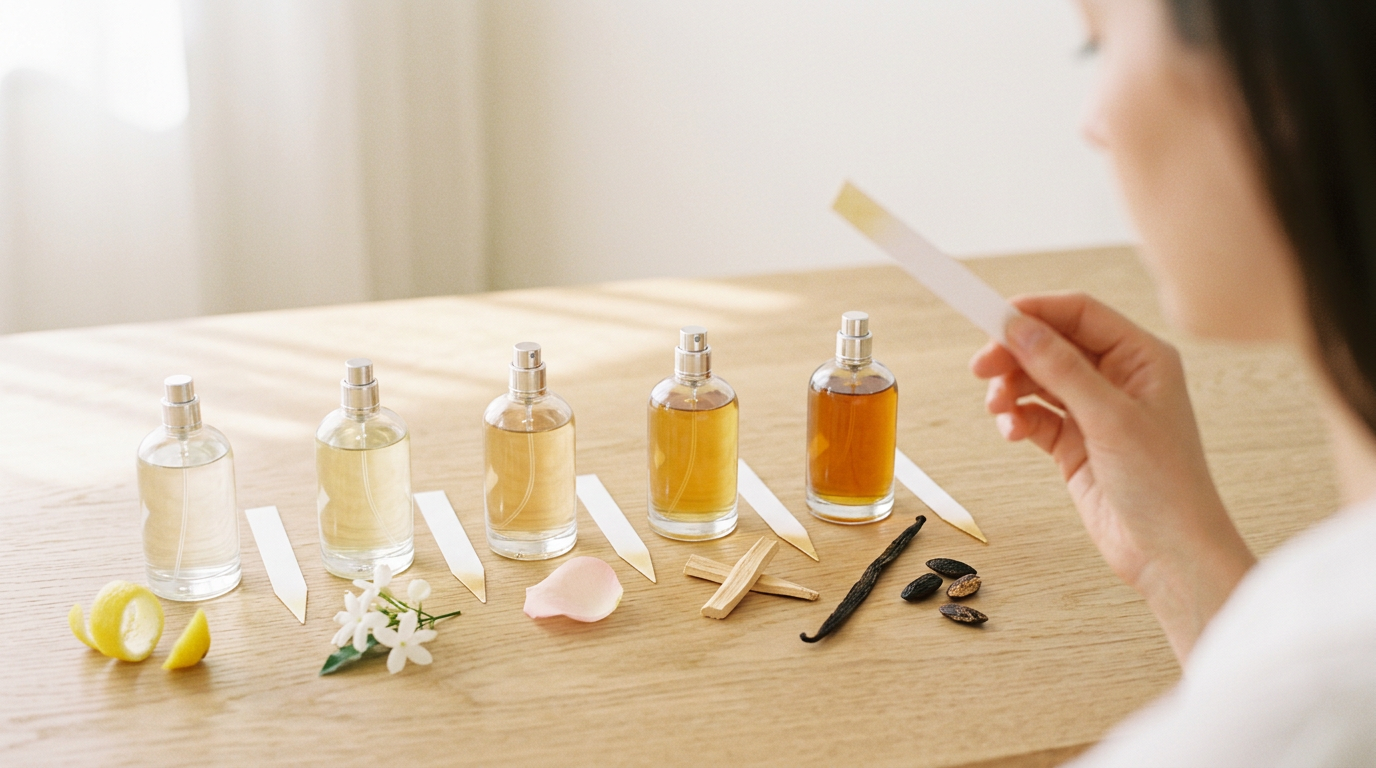
Types of Scents Explained: Families, Notes and Strength
Types of scents make shopping easier: compare families, note layers, strength, and formats to find a light, skin-close scent for your routine.

Ever sprayed three testers on your wrist at a fragrance counter and still couldn’t pick one? Choosing scent works like shopping a closet: there’s more than one kind of piece, and each suits a different setting.
The short answer is that scent types sort fragrances by family, by the notes that unfold over time, by strength, and by format, from sprays to mists and oils.
In this post, we’ll walk through each one so you can find a light, skin-close scent for every part of your routine.
How Many Types of Scents Are There?
There’s no single number to memorize, so think in six families arranged on a fragrance wheel, where neighboring families share a feel.
You may also have seen the 10 basic scents or the 7 basic smells, but shopping by family is easier when you’re standing at the counter.
Floral scents, light to powdery
Florals run from airy to powdery, so you can match the mood of the day. Rose, jasmine, lily, and tuberose are the names you’ll meet first. A soliflore is built around one flower, while a bouquet blends several into a single bloom.
For a romantic, feminine character, a soft rose soliflore is a gentle place to start.
Picture a bridesmaid who wants something light for a long morning of photos: a powdery floral stays close to her skin, so it’s there when she needs it without filling the room.
Zesty citrus, fresh and aquatic scents
Citrus is the brightest group here. Lemon, bergamot, and grapefruit lead the way, often joined by green, herbal, and marine notes. These scents feel clean, energizing, and uplifting, which makes them a natural fit for a five-minute morning.
An accord is a blend of notes that reads as one idea, like a sea breeze or a rain shower. A new mom who needs a lift before the school run can spritz a light citrus on her wrists and be out the door in minutes.
Earthy woods and mossy scents
Sandalwood, cedar, and vetiver anchor the grounded side of the wheel, with oakmoss and patchouli adding extra earthiness. Dry woods and mossy woods are close cousins, but they feel different.
Dry woods feel smooth and airy, while mossy woods feel deeper and more rooted. These nature-inspired scents feel like a walk through the trees.
A coworker who wants something calm through a long day of back-to-back meetings might choose a cedar scent that stays steady without demanding attention.
Warm amber, spice and musk scents
Spices, resins, vanilla, and amber give this group its warmth. Orientals come in floral, spicy, and woody styles, and they tend to feel warm, exotic, and sensual. Musk adds a soft, skin-like warmth that sits close to you rather than out in front.
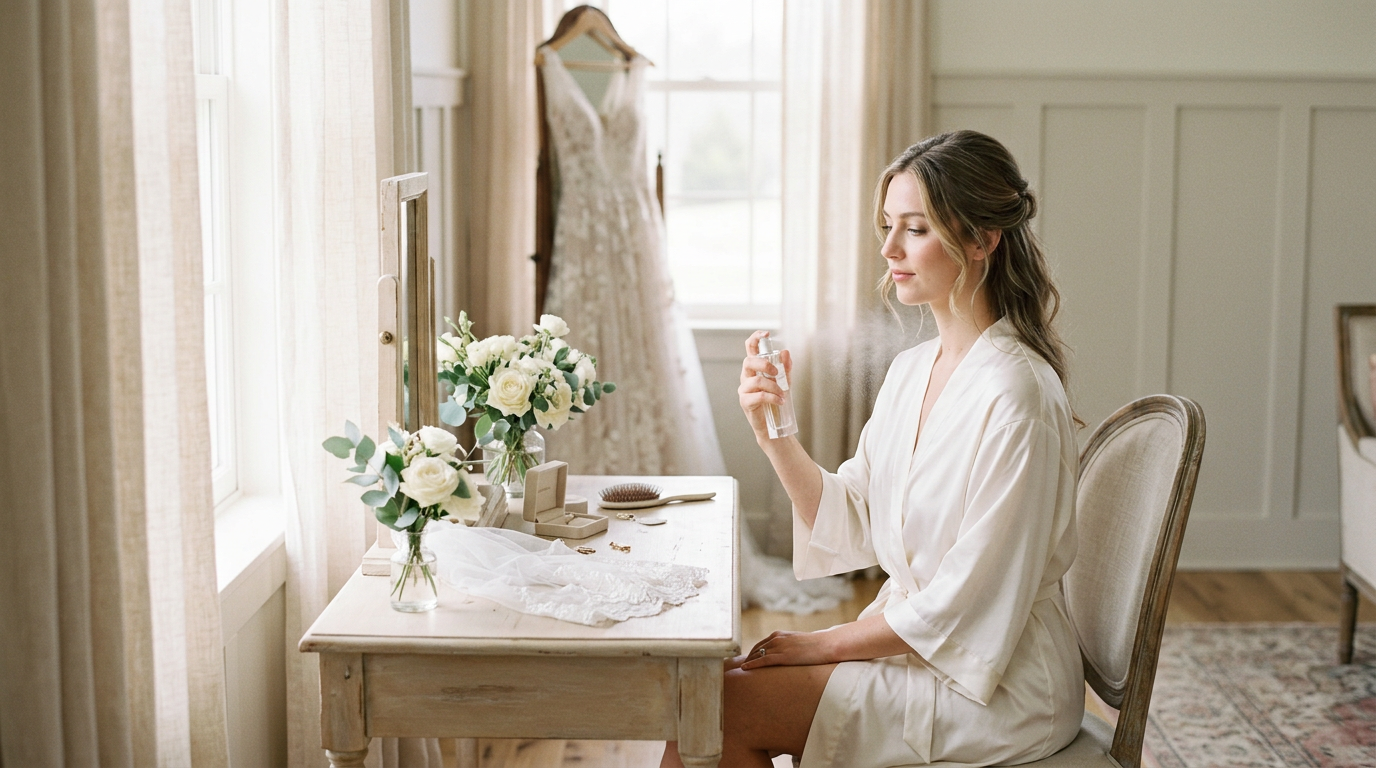
A bride who wants a warm finish for her evening look might choose a light amber or musk, so it stays close without turning heavy.
Sweet gourmand and fruity scents
Vanilla, caramel, chocolate, and coffee make up the gourmand group, which smells like dessert with an edible sweetness. Fruity here means apple, pear, berries, and peach, since citrus belongs to the zesty family above.
Gourmands should feel like a treat you’re wearing, not a dessert you’re eating. A sister heading to a casual brunch might choose a light pear scent that stays friendly and sweet without overwhelming the table. Sweet, not sticky.

Less common specialty scent families
These families are less common, so you’ll find them less often on the shelf:
- Fougère (fern): green, herbal blends.
- Chypre: a moss-based structure that gives a scent its mossy backbone.
- Leather and tobacco: deep, smoky scents with a bold edge.
- Libation: drink-inspired notes like rum, whiskey, and champagne.
- Seasonal: cinnamon, pumpkin, and pine, for cooler months.
Start with the family you already love, then wander to its neighbor.
How Fragrance Notes Unfold in Layers
A fragrance doesn’t smell the same from the first spritz to the last hour you wear it. Each stage has a job, and knowing them helps you choose the right scent for the moment.
How top, middle and base notes work
Perfumers build scents in three layers, and you’ll meet them in order. Here’s how we’d break them down:
- Top notes: the first impression, the bright scents you catch right after you spritz.
- Middle (heart) notes: the core character, emerging as the top fades.
- Base (dry down) notes: the lasting foundation, arriving last and staying longest.
The order comes down to volatility, which describes how readily a scent’s molecules evaporate off your skin. Each layer has its own evaporation rate. Top notes leave fast, while heavier base notes hang around for hours.
A fragrance is less about the first spritz and more about the whole day. Top notes open the door, and base notes stay in the room.
Notes you’ll smell at each stage
- Citrus and herbs on top: bright, sparkling openings like lemon or basil that give the opening its lift.
- Florals and spices in the heart: notes like rose, jasmine or cardamom that round out the scent once the top settles.
- Woods, vanilla, musk and amber in the base: warm, close-to-the-skin notes that linger long after the brightness is gone.
Consider a bride who spritzes her wrists at 7am. By the ceremony, the citrus has faded, and the soft woods and musk are what stay with her through the photos and the reception.
Layered this way, a light scent stays close to her skin and never crowds the guests seated beside her.
How Perfume Strength Varies by Type
Concentration decides how long a scent lasts, how far it reaches, and when it’s the right pick.
Parfum, EDP, EDT and cologne types
Strength comes down to how much fragrance oil is in the bottle:
- Parfum or extrait: the most concentrated form, with the richest scent.
- Eau de Parfum (EDP): a strong concentration that sits just below parfum.
- Eau de Toilette (EDT): a lighter concentration that feels airy on warm days.
- Cologne: the lightest of the group, made for a quick lift.
- Perfume oils: oil-based and worn in small amounts close to the skin.
Formats go beyond the bottle too: mists are light sprays, oils stay close to the skin, and solids are compact enough for a clutch.
How strength affects wear and projection
More fragrance oil means longer wear. Longevity is how long a scent lasts, and projection is how far it reaches around you. The two don’t always move together, so ask yourself how long a scent lasts rather than how far it reaches.
Oils stay intimate, close to your skin, while EDP projects a little further. A light hand works best.
Expect about 4 to 10 hours of wear. Price follows strength too, since more fragrance oil usually costs more.
Picking a strength for each occasion
- EDT for spring and summer: its airy feel suits warm weather.
- Parfum for winter and special occasions: a richer scent suits cold air and evenings out.
- EDP for all-day wear: the everyday pick from morning to night.
Consider a bride who needs her scent to last from getting ready through the last dance. An EDP covers the whole day, so she skips the reapply in the bridal suite.
How to Pick, Layer and Wear Scents
Choosing a scent is less about finding one perfect bottle and more about building a signature you’ll actually reach for.
Finding a scent that feels like you
Start with a fragrance profile: a short list of the scents you already love, from your candles to the smells that bring back a memory. It’s about how a scent makes you feel, not just what it’s called.
A scent can also span families, and fragrance reflects personality and mood. Consider a flight attendant who keeps a crisp citrus roller in her bag for long shifts. Her profile tells her which scent to grab when she needs a lift.
Mixing scent families for more depth
Layering adds depth without more bottles. Try these pairings:
- Floral plus oriental: a bright flower over something warm and spiced.
- Citrus plus woody: a fresh opening that settles into something grounded.
- Aquatic plus fruity: a clean, airy note with a touch of sweetness.
Two families together add complexity a single note can’t match. The goal is depth, not volume: layer a light scent over your body lotion, not heavy perfume on top.
How to use fragrance oil?
Dab a little on your pulse points, like your wrists and behind your ears, then reapply lightly through the day rather than doubling up in the morning. Small and steady wins.
If your skin is sensitive, do a patch test first: dab a little on the inside of your arm and wait to see how it feels. New to a scent? Discovery minis and a scent quiz let you try a few profiles before committing to a full bottle.
Picking Scents by Season and Occasion
Your favorite bottle can feel perfect in July and heavy in January. Here’s how we choose by season and occasion.
Light, fresh picks for spring and summer
Spring calls for floral and fresh notes. Summer leans toward citrus and light gourmands (sweet scents kept airy). Heat intensifies perfume, so wear it close to your skin rather than across the room.
Consider a bridesmaid at a June wedding who wants to stay fresh through the toasts. She dabs an airy citrus mist on her wrists and the back of her neck, and she’s still smelling bright at the last dance. Less is safer.
Richer, cozier scents for fall and winter
Autumn suits earthy and spicy notes. Winter brings oud (a dark, resinous wood), amber (a warm, glowing base) and tobacco (dry and slightly sweet).
Warm gourmands suit cold air, and bold, enveloping fragrances belong in deep winter, the kind that wrap around you like a wool coat.
Scents for holidays and evenings out
Festive blends mix sweet and spicy notes. Oriental scents, warm and resinous, suit evenings out, while woody scents, dry and grounded, suit cozy moments at home. Keep layering simple: let one scent lead and the other stay soft, so they don’t compete.
Picture a new mom heading to a December dinner with a festive blend on her collarbone and a quiet woody layer on her wrists. She’s noticed when she hugs someone, not before she walks in the door.

Perfume Picks Sorted by Scent Type
Knowing which family a bottle belongs to makes shopping far easier. Here’s how to read the labels, seasons, and ingredient lists so you can choose with confidence.
Named perfumes worth trying
Designer perfumes sort neatly by family. Pick a citrus or fresh bottle for bright daytime wear, a floral for a soft, romantic feel, or a woody or amber scent for cooler evenings. Choose the mood first and the brand second.
Men’s, women’s, and unisex labels are shorthand more than rules. The notes and concentration matter more, so a woody bottle sold as men’s can suit a bride just as well as a floral sold as women’s.
Seasonal editions are built for the weather they’re meant for: lighter bottles for warm months, deeper ones for cold. Check the product description to confirm which season a release targets.
Every bottle lists its notes, the ingredients you’ll smell over time. Top notes hit first and fade fastest, heart notes arrive after a few minutes, and base notes linger longest.
Read the list and ask which stage you’d want to smell at the end of a long day.
Consider a bride who needs something light enough to sit under her veil without fighting her bouquet. She tests two bottles on her wrists in the morning and wears each through the day.
The winner is the one still pleasant at the reception. Wear it, don’t just sniff it.
What is a niche perfume? A niche perfume comes from a smaller, independent house rather than a large designer label, and it’s usually sold in fewer stores.
Those houses lean toward distinctive compositions, so the niche world runs on craft rather than volume.
Natural Perfumes Compared with Mainstream Ones
Natural and mainstream perfumes can smell alike on the shelf, so it helps you know what’s actually in the bottle before you spend. Here’s how the two really differ, and where they don’t.
How natural and mainstream ingredients differ
The real difference is where the scent comes from, not how strong it is. Here’s the basic split:
- Natural perfumes lean on plant extracts and resins, the sap-like materials that trees produce.
- Mainstream perfumes are built mostly from synthetic molecules, lab-made building blocks designed to smell a specific way.
Concentration works the same on both sides. It’s the amount of scent material in the mix, and natural and mainstream perfumes follow the same concentration standards.
A natural blend and a mainstream blend with the same strength label mean the same thing. Same label, same meaning.
Ingredient lists are where the two can look most alike. Many fragrance formulas are protected as trade secrets, so the brand keeps the exact recipe private and the full list isn’t always printed on the box.
A short list doesn’t prove a simple scent, and a long one doesn’t prove a complicated one.
Consider a bridesmaid who wants something light that won’t fight with the bouquet. She spritzes one natural and one mainstream blend on each wrist, wears both through the afternoon, and keeps the one that still feels soft on her skin.
By evening, she knows which bottle earned a spot in her clutch.
Once you know the main scent types, the fragrance shelf stops feeling like a guessing game. You’ll know which families you enjoy, how notes shift over the day, and which strength suits a busy workday.
Start small: pick one light, skin-close scent for your mornings, then add a second for evenings once you see how it wears.
A good scent is meant to be noticed up close, not announced from across the room. The best one is the one that still feels like you by lunchtime.
Questions
What is a niche perfume?
A niche perfume is made by a smaller, independent perfume house rather than a large designer label and is usually sold in fewer stores. Niche houses often focus on distinctive compositions and craftsmanship rather than mass-market volume.
What is a chypre fragrance?
A chypre fragrance is built around a mossy structure that gives it an earthy, moss-based backbone. It is one of the less common fragrance families.
What are the scent notes?
Scent notes are the individual aromas that make up a fragrance and unfold in stages. Top notes are smelled first, heart notes form the core as the top fades, and base notes linger the longest.
What are the 7 basic smells?
There is no single universally accepted list of seven basic smells. One commonly cited scientific classification includes sweet, sour, salty, bitter, umami, cooling, and pungent sensations, though some classifications differ.
What are the 10 basic scents?
There is no universally agreed list of ten basic scents. The ten-scent lists used in some fragrance contexts are informal, while perfumes are more commonly organized into scent families such as floral, citrus, woody, and amber.
How many types of fragrances are there?
There is no single fixed number because fragrances can be classified by family, note, strength, or format. A fragrance wheel commonly groups scents into six broad families, with additional specialty families also recognized.
How to use fragrance oil?
Dab a small amount of fragrance oil on pulse points such as your wrists or behind your ears. Reapply lightly as needed, and patch-test it on the inside of your arm first if your skin is sensitive.