How to make perfume last longer on skin and hair
Make your perfume last through the day: moisturize first, pick the right concentration, spray warm spots without rubbing, and keep the bottle cool and dark.

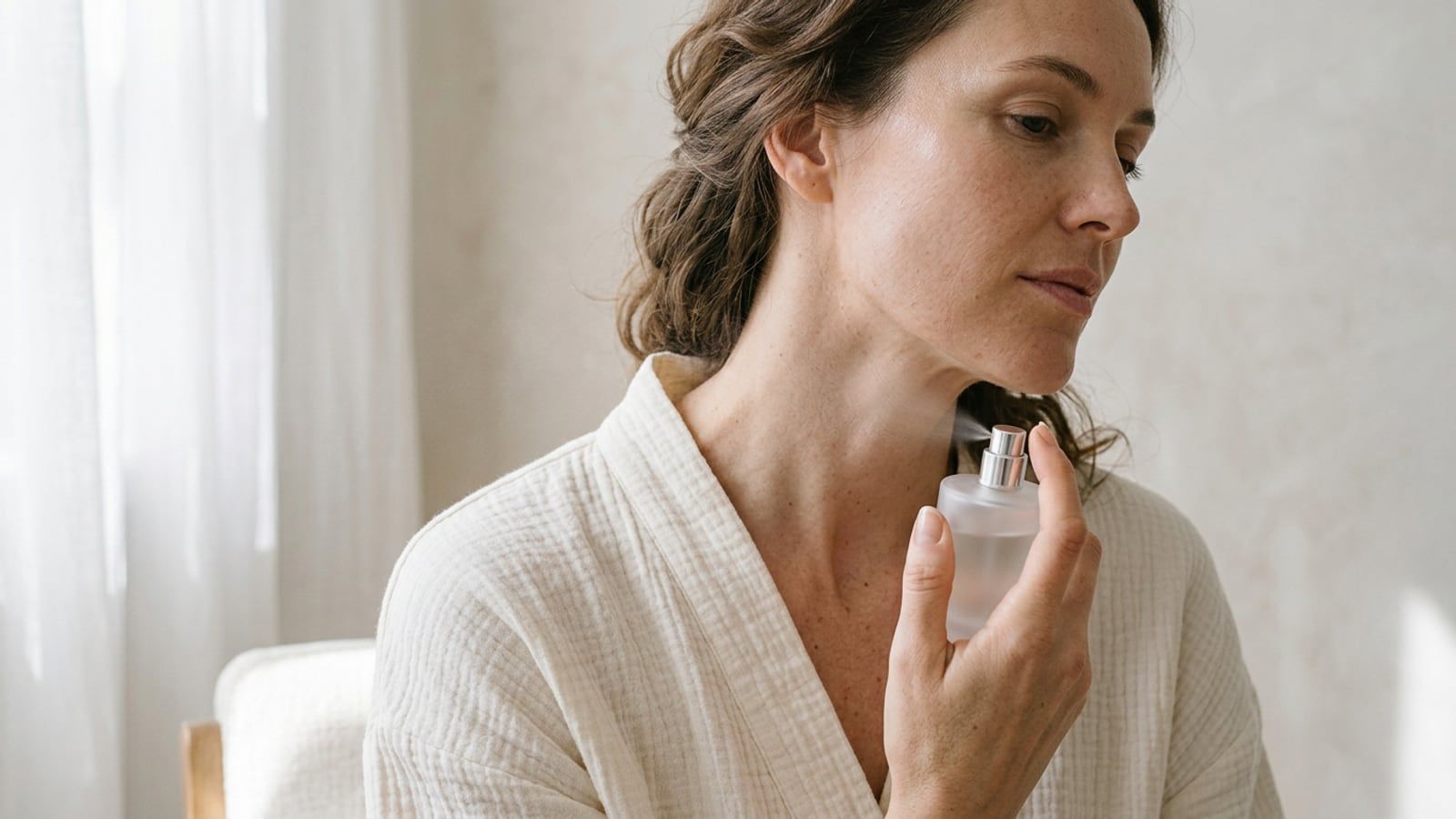
Spray from a few inches away, then leave it alone to dry.
The quickest way to make perfume last is to put it on moisturized skin straight after the shower, choose the strongest concentration you enjoy, spray a few warm spots, and leave it to dry without rubbing. Add a light mist to your hair ends or a cotton sweater if you want it to stay with you longer. Then look after the bottle: closed, cool and out of the light. Below, each of those steps in order of how much difference it makes, why it works, and the myths you can stop following.
Start with moisturized skin
This is the step most people skip, and it matters most. Perfume is fragrance oils dissolved in alcohol. The alcohol evaporates within minutes and leaves the oils on your skin, and dry skin lets them go faster. The Grasse perfume house Galimard puts it plainly in its advice on wearing and keeping perfume: fragrance fades more quickly on dry skin, so moisturize first.
- Shower, then pat your skin until it is just damp.
- Smooth on an unscented lotion or body oil, or one in the same scent as your perfume.
- Give it a few minutes to sink in, so the perfume lands on skin rather than on a wet film.
- Spray.
Moisturizer spreads more evenly on smooth skin. If your arms and legs feel rough, our guide to exfoliating your body safely covers the gentle way to do it, but keep scrubbing and perfume on different days: alcohol stings on freshly exfoliated or shaved skin.
Where to apply: skin, hair and clothes
Skin
Choose warm spots, where the skin gives off a little more heat and lifts the scent toward you: the sides of the neck, the nape, behind the ears, the inner elbows, the wrists. One spray on each spot you choose is enough. Hold the bottle a few inches away so the mist spreads instead of pooling.
Wrists are the classic choice, but you wash your hands all day and the scent goes with the soap. The neck and inner elbows keep it longer.
Keep perfume off broken, irritated or sunburned skin, and away from your eyes. The American Academy of Dermatology (AAD) names fragrance as one of the most common causes of contact dermatitis, an itchy rash where a product touches the skin. If a rash appears where you spray, stop using that perfume. If it does not clear or keeps coming back, see a board-certified dermatologist.
Hair
Hair carries scent around you as you move, but most perfume is largely alcohol, which can dry the lengths. Mist from arm’s length over the lengths and ends, never into the roots or onto the scalp, or spray your brush and run it through. If your ends are already dry, smooth them first with a few drops of oil; our guide on how to use hair oil gives the amounts by texture. A mist made for hair is the gentler choice for every day.
Clothes
Natural fibers such as cotton, wool and linen hold fragrance longer than synthetics, Galimard notes, and a scarf or sweater will often smell of your perfume the next day. Perfume can mark silk and other delicate fabrics, so test a hidden seam first, and keep it off jewelry. For a softer veil of scent, spray the air in front of you and walk through it.
Concentration: parfum, eau de parfum, eau de toilette, mists
The name on the bottle tells you roughly how much fragrance concentrate is dissolved in the alcohol. The more concentrate, the longer it usually lasts and the fewer sprays you need. There is no official standard, so the figures vary by brand; these are the orders of magnitude Galimard gives in its guide to parfum, eau de parfum and eau de toilette.
| Type | Fragrance concentrate, roughly | How it wears |
|---|---|---|
| Parfum (extrait) | 20 to 30 percent | The richest and longest-lasting; a dab is enough |
| Eau de parfum (EDP) | 15 to 20 percent | Lasts longer than an eau de toilette |
| Eau de toilette (EDT) | 8 to 15 percent | Lighter and brighter; fades sooner |
| Eau de cologne | 2 to 5 percent | A fresh splash, meant to be topped up |
| Body mist and hair mist | The lightest | Soft and close; made to be reapplied |
If you love a scent in eau de toilette and wish it lasted longer, look for the same fragrance as an eau de parfum. It may not smell exactly the same, since some houses adjust the formula between concentrations, so try it on your skin before you buy.
Don’t rub, and other myths
- Rubbing your wrists together. Many perfumers advise against it: the friction heats the skin and hurries the lightest top notes away. Spray, then leave it alone to dry.
- More sprays last longer. They mostly make it louder for the first hour. Moisturized skin and a stronger concentration do more for staying power than a fifth spray.
- Shake the bottle first. There is no need, and Galimard says not to.
- Keep perfume in the fridge. Galimard advises against it: taking a bottle in and out means frequent swings in temperature. A steady room temperature is better.
- If you can’t smell it, it’s gone. Usually not; see the last section.
Layering scent from the shower up
Layering means building one scent in a few light coats, each made for its part of you, rather than one heavy one. It starts in the shower.
- Wash with an unscented or matching shower gel.
- Moisturize with a matching lotion or body oil, or an unscented one.
- Spray your perfume on two or three warm spots.
- Finish with a light mist on your hair ends or the clothes closest to your skin.
If you want to wear two different fragrances together, try them on your skin on a quiet day first. Start with the richer one, let it dry, and add the lighter one on top.
Tip: if you use a scented body product, match it to your perfume or keep it unscented. Two strong, unrelated scents on top of each other rarely blend the way you hope.
Our Scent Veil, a light mist for body and hair that we are developing, is meant to be worn this way: misted from arm’s length once you are dressed, and kept close to the skin. You will find more on scent families, mists and layering in the Fragrance section.
Store the bottle cool and dark
A perfume that has turned will not last, however you apply it. Light, heat and air break fragrance down. The US Food and Drug Administration notes that heat, sunlight, air and changes in temperature can alter a cosmetic’s color and texture, and that cosmetics in the US are not required to carry an expiration date. Galimard gives its own perfumes an optimal use period of three years after opening. If your box carries a small open-jar symbol, the number beside it is the maker’s suggestion in months.
- Keep the bottle in its box, or in a drawer or closet, out of direct light, especially if the glass is clear.
- Choose a room at a steady temperature, such as a bedroom. Not the bathroom, with its steam and heat, and never a hot car.
- Close the cap tightly after every use, so air stays out.
- For travel, decant into a small atomizer rather than carrying the full bottle.
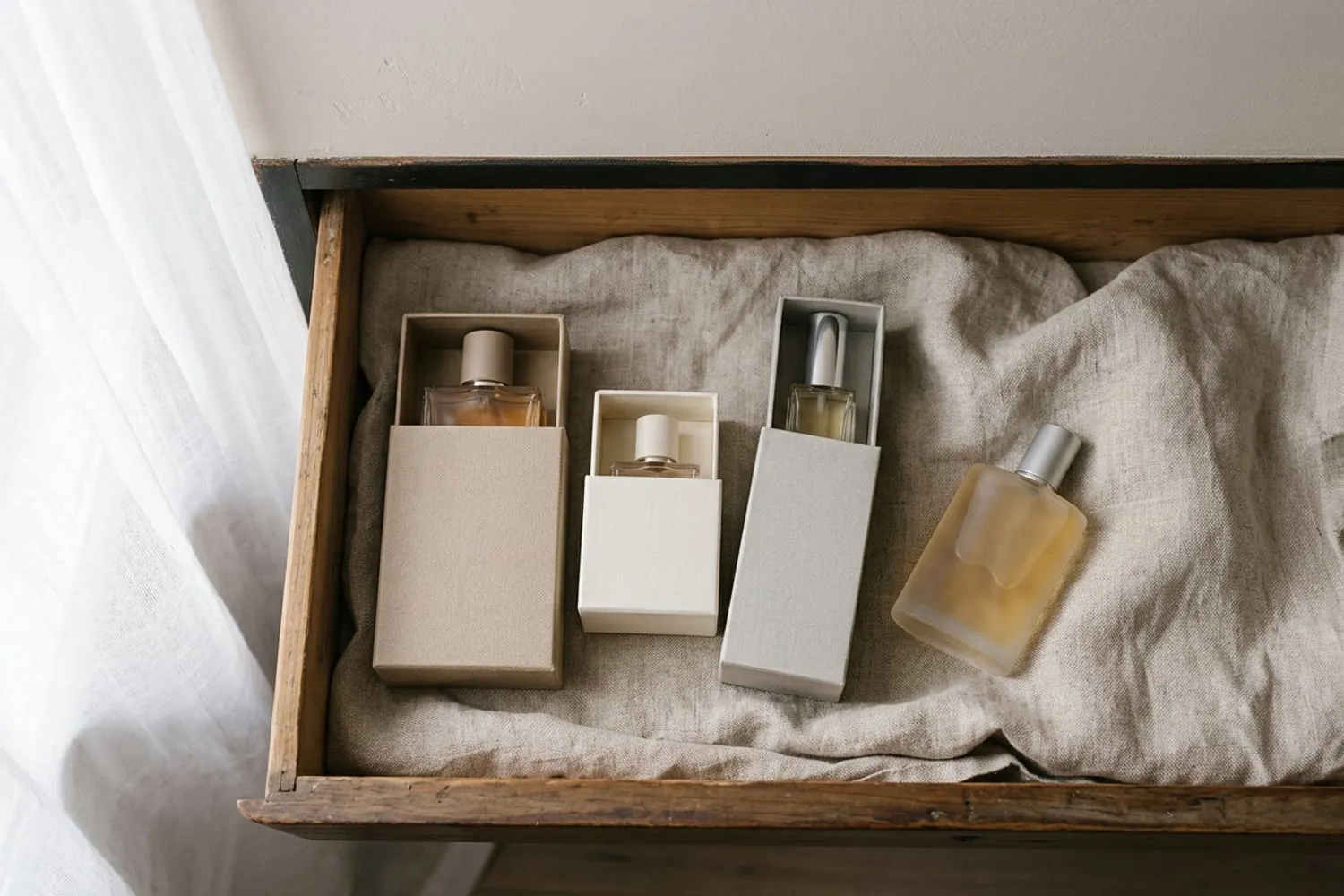
If the scent smells sour, sharp or flat when you first spray it, or the color has darkened, it has likely turned.
When you stop smelling your own perfume
Within a short time of putting perfume on, you may stop noticing it, while someone who walks past you still does. That is olfactory adaptation: your nose and brain turn down their response to a smell that does not change, so new smells stand out. A 2017 review in Physiology & Behavior, Habituation and adaptation to odors in humans, describes it as relatively fast, and faster in the brain’s processing than in the nose itself.
So the moment you stop smelling your perfume is not the moment to spray again. Reapplying on top of a scent you can’t smell is how a light fragrance becomes a heavy one. Instead:
- Step outside or into another room for a few minutes, then smell your wrist or collar.
- Ask someone close to you whether they can still smell it.
- If it has really faded by the afternoon, add one spray to a fresh spot or to your clothes, not to the same place.
When a scent fades fast for everyone, not just for you, go back to the start: moisturize first, try a stronger concentration, and add a mist to your hair or clothes.
Questions
Why can’t I smell my own perfume after a while?
Your nose and brain turn down their response to a smell that stays the same, a process called olfactory adaptation, and it happens quickly. The scent is usually still there for the people around you. Before you spray again, step outside for a few minutes or ask someone close to you.
Should I spray perfume on my wrists or neck?
Both work, because both are warm, but the neck, nape and inner elbows tend to hold it longer since you wash your hands and wrists all day. One spray on each spot is enough. Whichever you choose, let it dry without rubbing.
Is it safe to spray perfume in my hair?
A light mist on the lengths is fine for most hair, but most perfume is largely alcohol, which can dry hair that is already dry, so keep it off the roots and scalp. Spray from arm’s length or onto your brush, or use a mist made for hair. Keep it away from your eyes.
Does perfume go bad?
It can. Heat, light and air change a fragrance over time, and in the US cosmetics do not have to carry an expiration date. If the scent turns sour or flat, or the color changes, it has turned; stored cool, dark and closed, a bottle usually keeps for years.
Sources
- How to preserve properly your perfume at home and on you, Galimard
- Parfum, eau de parfum, eau de toilette: what are the differences?, Galimard
- Habituation and adaptation to odors in humans, Physiology & Behavior (Pellegrino et al., 2017)
- Itchy rash could be contact dermatitis, American Academy of Dermatology
- Shelf life and expiration dating of cosmetics, US Food and Drug Administration