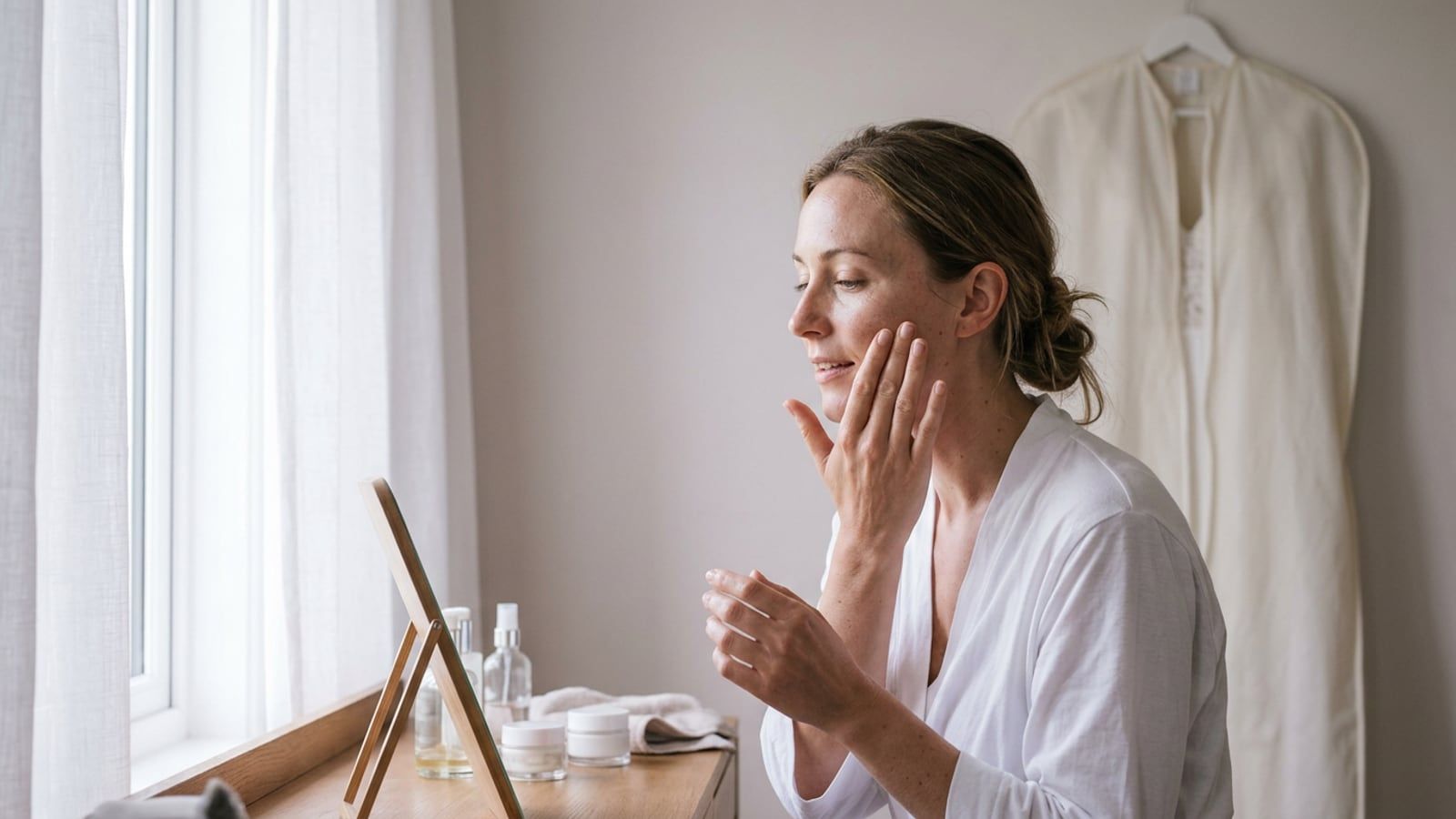
Wedding skincare timeline: 12 months to the morning of
A month-by-month skin, body and scent checklist for your wedding: what to start early, which treatments need recovery time, and why nothing new goes on late.

Start simple and early, and stop changing things in the final month.
Start simple, start early and stop changing things late. Build a short routine nine to 12 months before the wedding, see a board-certified dermatologist early if you want any treatment, and finish anything that needs recovery time well before the last two months. Have your makeup trial about two months out. In the final month, add nothing new. On the morning of, cleanse, moisturize and put on sunscreen, then makeup. The rest of this checklist fills in each step, with the recovery times that decide when things can happen.
12 to 9 months: a routine and a dermatologist
The most useful thing you can do this early is the least exciting: a short routine your skin is used to by the time the photographs are taken.
- Build three steps. A gentle cleanser, a moisturizer that suits your skin type and a broad-spectrum sunscreen with an SPF of 30 or higher every morning. Our guide to building a skincare routine for your skin type takes you from a half-hour test at the sink to the products that suit you.
- Add new products one at a time. Test each on your inner arm first, and give it weeks before you judge it. If you start two things in the same week and your skin objects, you will not know which to drop.
- See a dermatologist about anything that bothers you. Breakouts, dark spots, redness or a treatment you are curious about all take time. The American Academy of Dermatology (AAD) says an acne product needs six to eight weeks to show results and that skin generally takes three to four months to clear, which is why its guide to habits that can worsen acne warns against switching products every week. The AAD’s Find a Dermatologist directory lists board-certified dermatologists by zip code.
- Book your makeup artist if you are hiring one, and decide whether you want a trial.
Tip: take a photo of your bare skin by a window on the first of each month. Changes are easier to judge side by side than in the mirror.
6 months: treatments that need recovery time
If you and your dermatologist decide on an in-office treatment, plan it now, working backward from the wedding. Many treatments come as a series, and each session needs time to heal. Your dermatologist decides what suits your skin and sets the dates; the table shows why the calendar matters.
The AAD’s chemical peel FAQ gives these healing times:
| Peel depth | Healing time | Makeup | What else to know |
|---|---|---|---|
| Light | 1 to 7 days, with flaking for 3 to 7 days | Usually right away or the next day | Often a series of 3 to 5 peels, 2 to 5 weeks apart |
| Medium | 7 to 14 days | After 5 to 7 days | Stay out of the sun until the skin heals |
| Deep | 14 to 21 days, with 2 to 3 weeks at home | Not for at least 14 days | Total sun avoidance for 3 to 6 months |
A series of light peels 2 to 5 weeks apart can fill several months on its own, so start it early or not at all. A deep peel, with months of sun avoidance afterward, is not a wedding-year decision to make lightly. If you have a darker skin tone, the AAD advises choosing a dermatologist with experience peeling darker skin, because peels can cause lasting changes in pigment. Whatever you have done, plan to be fully healed, with a margin to spare, by the time you are two months out.
3 months: the makeup trial and the body routine
Three months out, the plan moves from skin to the whole look.
The makeup trial
WeddingWire’s guide to the hair and makeup trial puts trials within a couple of months of the wedding and advises postponing yours until your dress and accessories are settled. Book it now for about two months out, which still leaves time for a second trial. Bring photos of the dress and of looks you like and dislike, and go with bare, moisturized skin. If you are doing your own makeup, this is when your practice runs start: how to do your own wedding makeup plans them step by step.
The body routine
If your dress shows your shoulders, back or arms, start looking after that skin now, so it is a habit by the wedding.
- Exfoliate gently, about once a week to start, and moisturize straight after. Our guide to exfoliating your body safely covers the tools, the frequency and when to skip it.
- Moisturize daily after the shower, while your skin is still damp.
- Test your hair removal. If you plan to wax for the first time, try it now to see how your skin reacts. The AAD’s guide to waxing at home says never to wax sunburned or very sensitive skin, not to wax if you have taken isotretinoin in the last six months, to stop retinol and prescription retinoids two to five days before waxing your face, and to see a dermatologist if redness or swelling lasts more than two days.
- Test any self-tan on the same schedule, so you know the shade and how it wears off.
Your wedding scent
Choose your scent now and wear it on ordinary days, so you know how it smells on your skin by evening. Our guide to making perfume last longer covers where to put it and why moisturized skin holds it best.
1 month: nothing new
The rule for the final month is simple: nothing new on your face or body. That means no new serum, acid or retinoid, no first facial with a new esthetician, no new peel, no first wax and no new self-tan. A new product can take weeks to show whether it suits you, and a reaction a week before the wedding has no time to settle.
If a breakout appears, do not squeeze it: the AAD warns that squeezing pushes material deeper and makes inflammation worse. Keep to your routine, and call your dermatologist if something flares that your usual products cannot handle.
The final week
- Keep the routine you already have. Same cleanser, same moisturizer, same sunscreen.
- Wax several days before, not the day before, and only if your skin has waxed before without trouble.
- Exfoliate your body once, gently, no later than a few days before, and moisturize after.
- Pack your touch-up bag and your skincare for the morning, so nothing has to be found on the day.
- Rest when you can, and eat and drink as you usually do. Nothing dramatic.
The morning of
- Wash your face with your usual gentle cleanser and pat it dry.
- Moisturize, then put on a broad-spectrum sunscreen with an SPF of 30 or higher, especially for an outdoor ceremony, and give it a few minutes to set before makeup.
- Put on makeup, or hand over to your artist, on skin that is comfortable and calm.
- For bare shoulders, smooth a little body oil with a soft sheen over skin that is still slightly damp from the shower, only where the dress leaves skin bare, and let it sink in fully before you dress. Oil can mark silk and pale fabrics, so try it against a hidden seam or a swatch of the fabric well before the day. Body Veil, the glow oil we are making for The Veils, is meant for this step.
- Put on your scent once you are dressed, on skin rather than on the fabric of the dress.
A printable checklist
| When | What to do |
|---|---|
| 12 to 9 months | Start a three-step routine with daily sunscreen. See a board-certified dermatologist about any concern. Book a makeup artist. |
| 6 months | Plan any treatment with your dermatologist, working backward from the wedding. Start any series of light peels now or not at all. |
| 3 months | Book the makeup trial for about two months out, or start practice runs. Start the body routine. Test waxing and self-tan. Choose your scent. |
| 2 months | Makeup trial. Every treatment finished and fully healed. |
| 1 month | Nothing new. Keep the routine. Call your dermatologist if something flares. |
| Final week | Last wax several days out. One gentle body exfoliation. Pack the touch-up bag. Rest. |
| Morning of | Cleanse, moisturize, sunscreen, makeup. Body oil, then dress. Scent last. |
For the rest of the wedding year, from the trial to the morning-of kit, see the Bridal Beauty section.
Questions
When should I start a skincare routine before my wedding?
Nine to 12 months out is ideal, because it gives you time to settle into a routine and to see a dermatologist about anything that needs treating. The American Academy of Dermatology, for example, says to give an acne product six to eight weeks before you judge it, and that clearing skin generally takes three to four months. A simple routine started six months out is still well worth doing.
When should I get my last facial before the wedding?
Make your last facial a gentle one you have had before, with the same esthetician, a week or two before the wedding, and skip peels and extractions at that visit. Anything stronger belongs months earlier, on the schedule your dermatologist sets. If a facial has ever left your skin red or broken out, leave it out of the final month entirely.
Is it too late to start a skincare routine a month before?
No, as long as you keep it simple: a gentle cleanser, a moisturizer that suits your skin type and sunscreen every morning. What it is too late for is anything new and strong, such as a retinoid, an acid or a first-time treatment. If your skin is giving you trouble a month out, call a dermatologist rather than trying a new product.
When should I book my bridal makeup trial?
WeddingWire puts the trial within a couple of months of the wedding, once your dress and accessories are settled. About two months out still leaves time for a second trial if the first look is not right. Book the artist well before that, since good ones fill their wedding dates early.
Sources
- Chemical peels: FAQs, American Academy of Dermatology
- 10 skin care habits that can worsen acne, American Academy of Dermatology
- Hair removal: How to wax, American Academy of Dermatology
- Your Wedding Makeup & Hair Trial: What to Expect, WeddingWire