How to exfoliate your body safely, and how often
Choose a mitt, dry brush, scrub or acid lotion for your skin, use it with light pressure and the right frequency, and moisturize straight after.

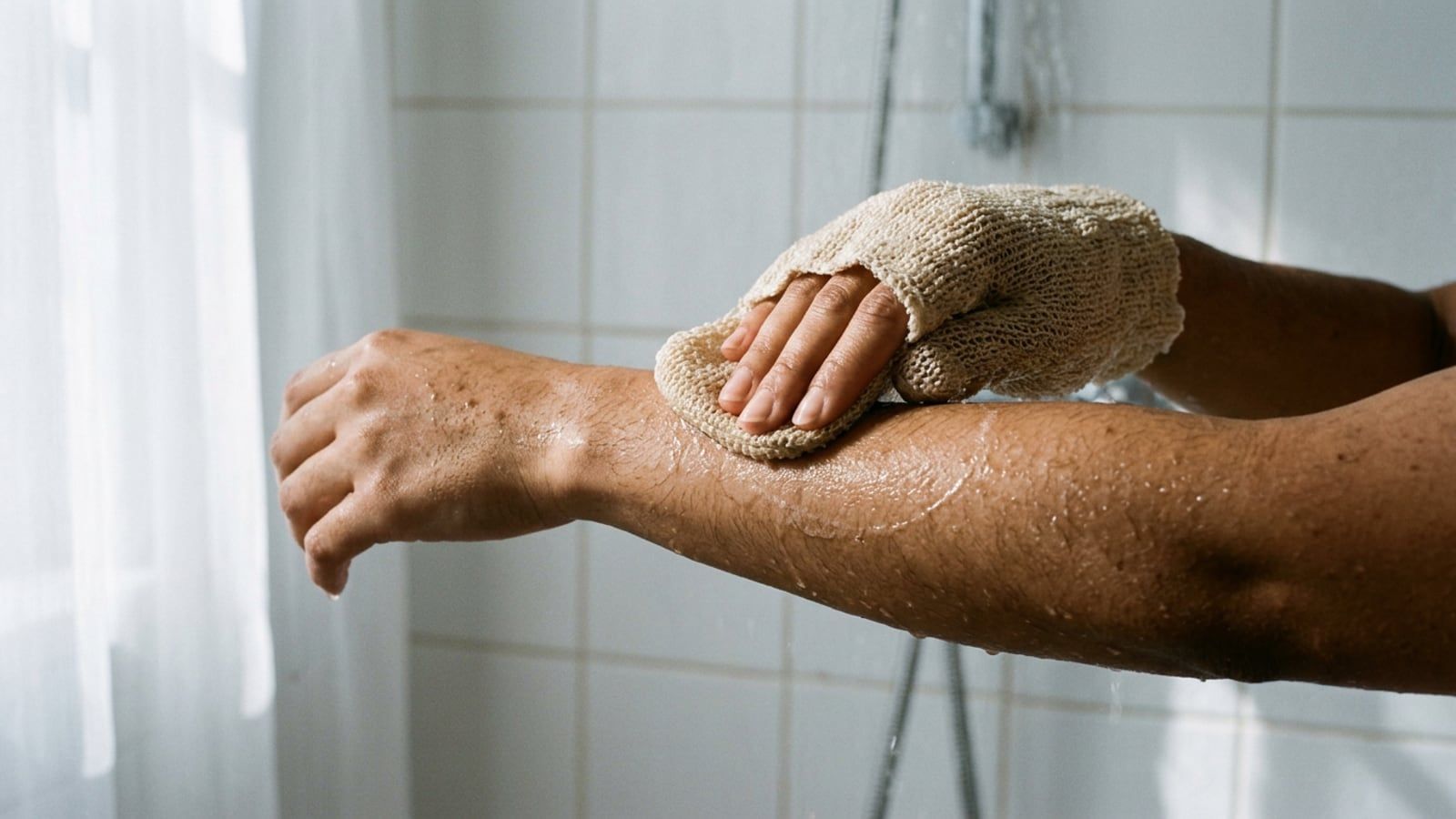
Light pressure and small circles: the mitt does the work, not your arm.
The safest way to exfoliate your body is one gentle method, used with light pressure, about once a week to start, followed straight away by moisturizer. In the shower, work a damp mitt or a scrub over your skin in small circles for about 30 seconds an area, rinse with lukewarm water and pat dry. If your skin is dry or sensitive, use a soft washcloth and a body lotion with lactic or glycolic acid instead. Never exfoliate over cuts, sunburn or irritated skin. The rest of this guide helps you choose a method, set a frequency and know when the bumps on your arms or back need a dermatologist rather than a scrub.
Physical or chemical: which to choose
Exfoliating means taking off dead skin cells from the surface. The American Academy of Dermatology (AAD), in its guide to exfoliating safely at home, describes two ways to do it. Physical exfoliation lifts the cells away with a tool or a scrub. Chemical exfoliation dissolves them with acids, such as alpha hydroxy acids (glycolic and lactic acid) and beta hydroxy acid (salicylic acid).
Choose by your skin, not by the strongest product on the shelf:
- Dry, sensitive or breakout-prone skin: the AAD suggests a washcloth and a mild chemical exfoliator. A body lotion with lactic acid exfoliates while it moisturizes, with no rubbing at all.
- Oily or thicker skin: can usually take a mitt, a brush or a scrub, or a stronger acid.
- Darker skin, or dark marks left by acne, burns or bites: the AAD advises avoiding strong physical or chemical exfoliation, which can leave darker spots behind. Choose the gentlest option and go slowly.
Here is how the four common methods compare.
| Method | What it is | Suits | How to use it | How often to start |
|---|---|---|---|---|
| Exfoliating mitt | A textured cloth glove, used damp in the shower | Normal, oily or thicker skin | After a few minutes in warm water, light circles | Once every week or two |
| Dry brush | A soft-bristled brush used on dry skin | Normal or oily skin without conditions | Before the shower, short light strokes | Once a week |
| Body scrub | A cream or oil with fine grains | Normal or oily skin | On wet skin, small circles for about 30 seconds | Once a week |
| Body lotion with acid | A lotion with lactic or glycolic acid | Dry, rough or sensitive skin; bumps | On clean skin, like any lotion | As the label says; less if it stings |
Use one method at a time. A scrub on the same day as an acid lotion is two exfoliants, and your skin feels it.
Before you start: check your other products
The AAD asks you to look at what else you use first. Prescription retinoids, retinol and benzoyl peroxide can make skin more sensitive or make it peel, and exfoliating on top of them can dry skin further or set off breakouts. If you use any of them on your body, for example a benzoyl peroxide wash for your back, skip the scrub and the acid lotion on those areas, or ask the doctor who prescribed them.
Step by step in the shower
- Soak first. Spend a few minutes under warm water, not hot, so the top layer of skin softens.
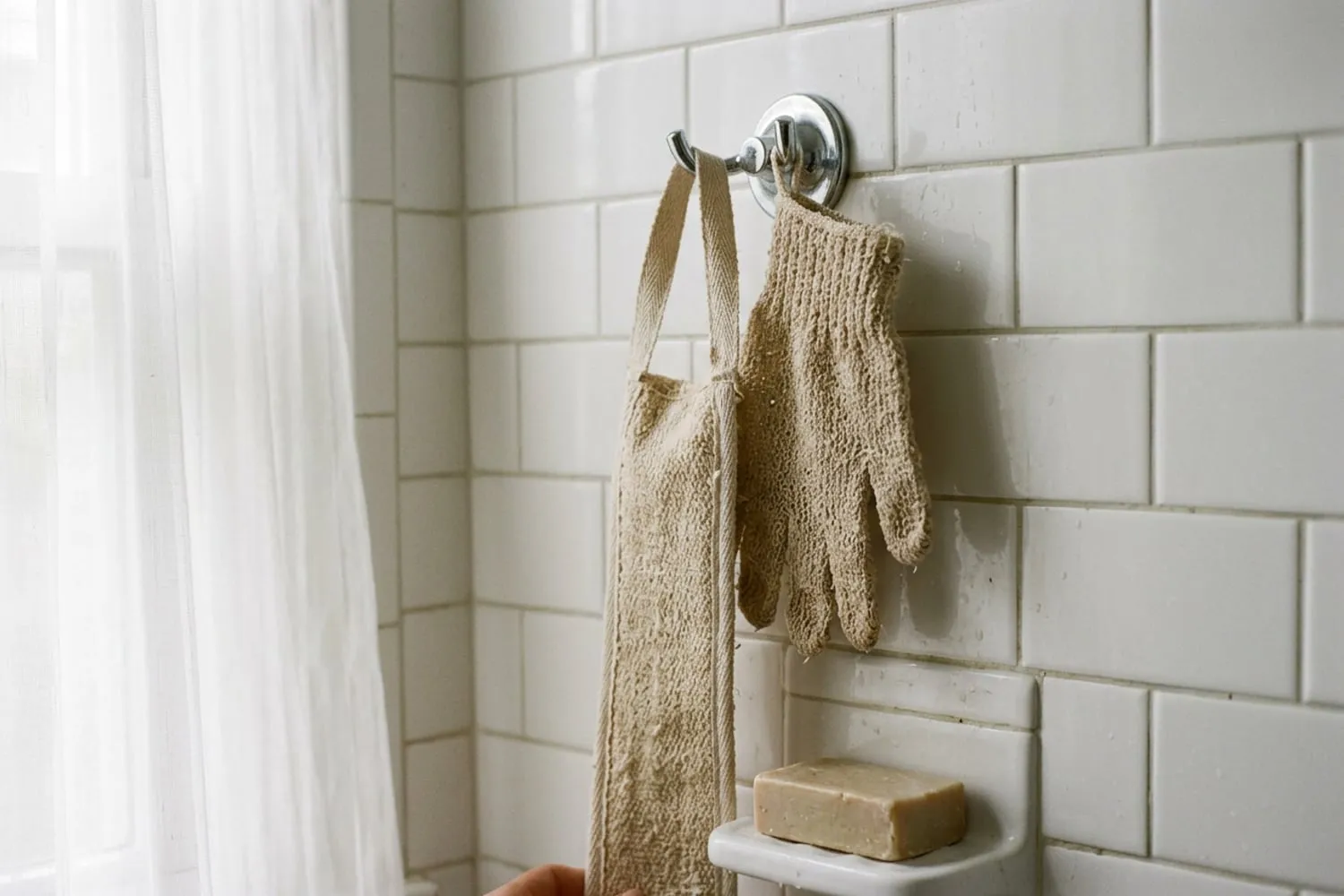
- Choose your tool. A damp mitt, a scrub or a soft washcloth. For the middle of your back, a long scrub strap reaches where your hands cannot; the Kit page lists a mitt and a back strap, with the makers’ own instructions.
- Work one area at a time. Use small circles or short strokes with light pressure, about 30 seconds per area: forearms, upper arms, thighs, shins, then the back. The AAD’s guidance is gentle circles for scrubs and short, light strokes for brushes and sponges.
- Go lighter on thin skin. The inner arms, chest and backs of the knees need less pressure than heels, elbows and knees.
- Rinse with lukewarm water.
- Pat dry, leaving your skin a little damp.
- Moisturize straight away. More on that below.
Stop if your skin turns red, stings or burns: that means too much pressure or too long.
Dry brushing before a shower
Dry brushing is physical exfoliation done on dry skin, before you get in the shower. It leaves rough patches feeling smoother. Much of what is said about it beyond that, such as detox or cellulite, does not hold up, so treat it as what it is: a brush instead of a mitt.
- Use a soft brush on dry skin. Firm natural bristles can scratch; soft bristles or silicone are kinder.
- Start at your feet and work up the legs, then the arms, in short, light strokes.
- Skip the face, the chest if it is sensitive, and any broken, sunburned or irritated skin. Do not dry brush if you have eczema or psoriasis.
- Shower, then moisturize.
- Rinse the brush and let it air-dry between uses.
How often, by skin and method
There is no single right number. The AAD’s rule is that the more aggressive the method, the less often you use it, and that overdoing it leads to redness and irritation. Use these as starting points:
- Dry or sensitive skin: a soft washcloth in the shower, or an acid lotion a few times a week, building up only if your skin is comfortable.
- Normal skin: a mitt, brush or scrub once a week.
- Oily or thicker skin: once or twice a week with a mitt, brush or scrub.
- Acid body lotion: as the label directs. AmLactin’s Daily Nourish Lotion with 12% Lactic Acid, for example, says to apply twice a day and warns that it may sting on sensitive or broken skin; if your skin stings, use it less often.
If your skin looks shiny and tight, feels raw, or stings when you put lotion on, stop for a week and come back at a lower frequency.
Tip: plan around the calendar. Don’t try a new exfoliant in the week before a big event. If one is coming, our wedding skincare timeline sets out when to start new body steps so your skin has settled by the day.
Rough bumps, body breakouts and when to see a dermatologist
Keratosis pilaris
The small, rough bumps many people have on the backs of the upper arms and the thighs are often keratosis pilaris. The AAD’s self-care advice for keratosis pilaris is to exfoliate gently with a loofah, buff puff or rough washcloth, and not to scrub, since scrubbing can irritate the skin and make the bumps worse. It suggests a moisturizer with lactic acid or urea, put on damp skin within five minutes of bathing and at least two or three times a day, and warns that self-tanners tend to make the bumps more noticeable. Follow any exfoliating product’s label exactly, and pause for a few days if your skin gets too dry or irritated.
Body breakouts
Breakouts on your back, chest or shoulders are not a sign that you need to scrub harder. Rubbing inflamed spots irritates them. Wash gently and skip physical exfoliants over active breakouts.
When to see a dermatologist
- Bumps that stay despite weeks of steady, gentle care.
- Painful, deep or spreading breakouts.
- An itchy, scaly or cracked rash, which may be eczema or psoriasis rather than dryness.
- You are not sure what your skin type is or whether exfoliating suits you.
A board-certified dermatologist can tell you what the bumps are and treat them; no scrub or lotion can.
After: moisturize and protect
Exfoliating dries skin, so the AAD’s last step is to moisturize straight afterward. Do it while your skin is still a little damp from the shower: a lotion or cream for most skin, a thicker cream for very dry patches, or a light body oil smoothed over damp skin if you prefer the slip. The Body Veil, the glow oil we are making as part of The Veils, is meant for that moment.
Protect the skin you have exfoliated from the sun. Acid lotions in particular can make skin more sensitive to it: AmLactin’s label advises sunscreen, covering up and limiting sun exposure while you use it and for a week afterward. Put sunscreen on any exfoliated skin your clothes leave bare.
Freshly moisturized skin is also the best base for scent. If you wear perfume on your arms or neck, it stays longer on skin that is not dry; our guide on how to make perfume last longer picks up from here. For more on body skin, from glow to hands and feet, see the Body section.
Questions
How often should I exfoliate my body?
It depends on your skin and the method: the stronger the method, the less often. Start once a week with a mitt, brush or scrub and go up only while your skin stays comfortable; an acid body lotion can be used as often as its label says. Redness, stinging or a tight, shiny look means you are doing too much.
Should I exfoliate before or after shaving?
Before, gently, either earlier in the same shower or the day before, so the razor glides over smoother skin. Do not scrub or put an acid lotion on freshly shaved skin, which can sting and irritate; wait a day.
Is dry brushing good for your skin?
It is a form of physical exfoliation: soft bristles on dry skin lift away dead cells and leave rough patches feeling smoother. Treat it like any other scrub, with light strokes, never on broken or irritated skin, and not if you have eczema or psoriasis.
Can I exfoliate if I have keratosis pilaris?
Yes, gently. The AAD suggests a loofah, buff puff or rough washcloth rather than scrubbing, which can make the bumps worse, and a cream with lactic acid or urea. If the bumps stay despite steady care, see a dermatologist.
Sources
- How to safely exfoliate at home, American Academy of Dermatology
- Keratosis pilaris: Self-care, American Academy of Dermatology
- Daily Nourish Lotion with 12% Lactic Acid, AmLactin