How to wear sunscreen under makeup without pilling
Keep a full teaspoon of SPF 30 under your tint or foundation: the order, the wait, pressing makeup on without pilling, and topping up during the day.

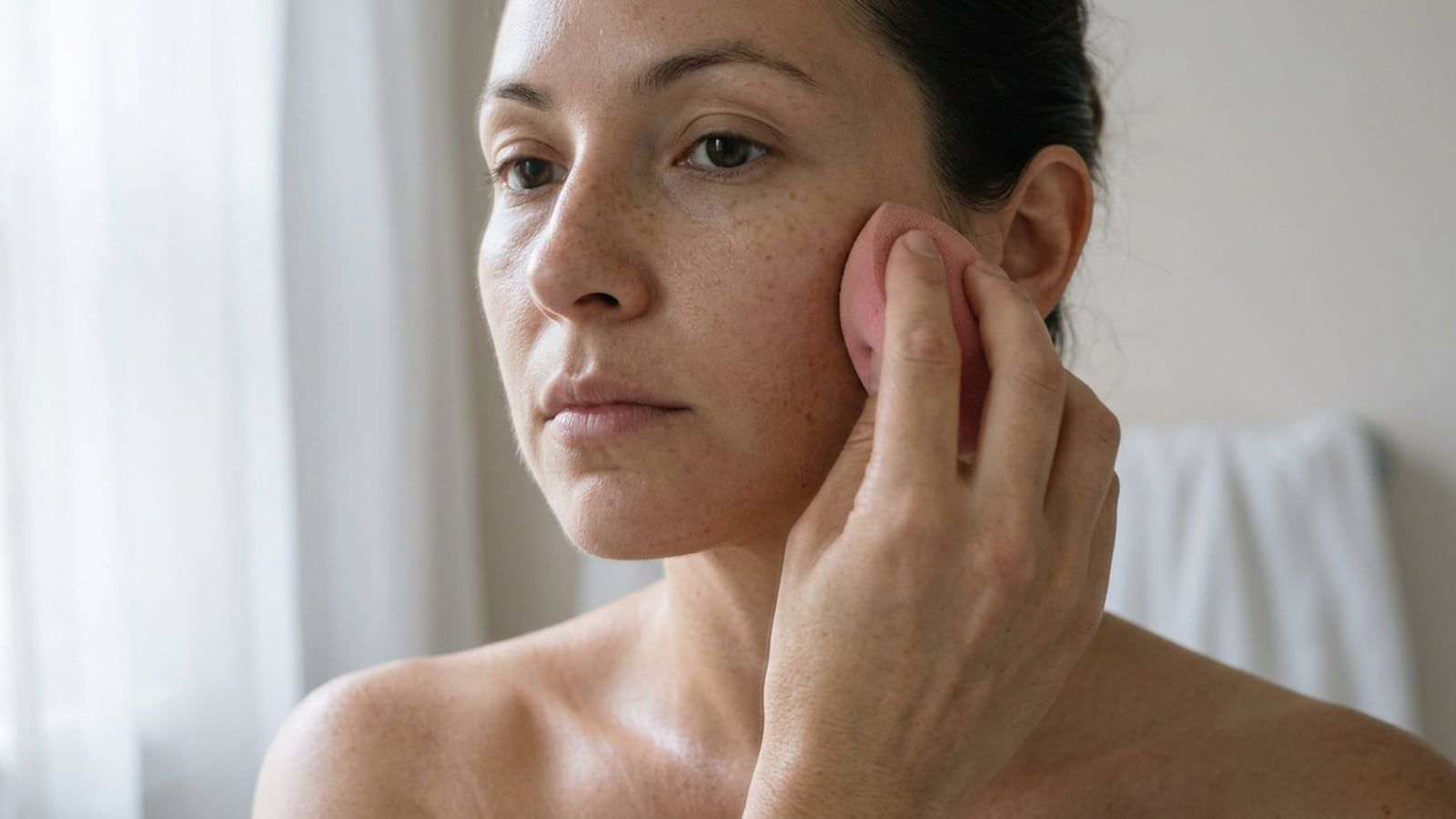
Press makeup onto set sunscreen with a damp sponge, so the layer underneath stays where you put it.
Sunscreen is the last step of your skincare and the first thing your makeup sits on. Put on a full teaspoon of broad-spectrum SPF 30 or higher, let it set until it no longer feels wet, then press a sheer base on top with your fingertips or a damp sponge. Don’t rub. Keep the base light, and when you are outdoors, top up the sunscreen over your makeup every two hours. That is the whole method. The rest of this guide covers the details that stop it pilling, sliding or wiping off.
Sunscreen last in skincare, makeup pressed on top
Sunscreen protects you as an even film over your skin. Anything you rub over it can move it, thin it out or roll it up into little flakes, which is what pilling is. So the order is fixed: cleanser, any serum, moisturizer, then sunscreen. Makeup comes after all of it and goes on by pressing, so the film underneath stays where you put it.
If you are building your routine from the start, the guide to a skincare routine for your skin type covers the steps before sunscreen. Everything here starts once your moisturizer has settled.
How much sunscreen, and which kind
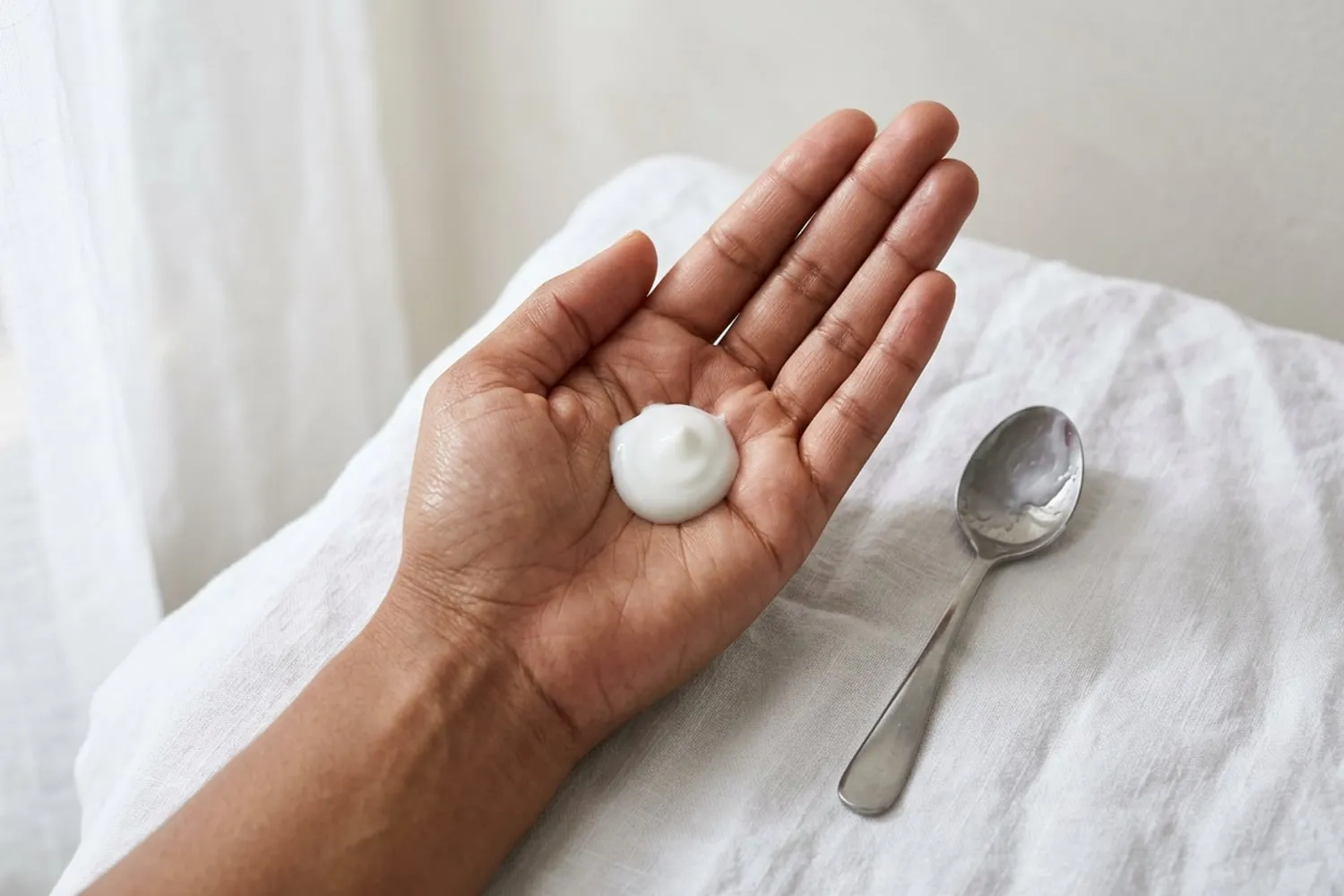
The amount matters more than the brand. The American Academy of Dermatology (AAD) guide to applying sunscreen recommends a broad-spectrum, water-resistant sunscreen with an SPF of 30 or higher, and at least a teaspoon of it for your face alone. Measure it once with a real teaspoon so you know what that looks like in your palm. It is more than most of us use. Broad spectrum means it protects against both UVA and UVB rays, and the FDA’s consumer guide to sunscreen explains what the SPF number and the water-resistance label mean.
Choose the kind by how it feels on your skin, because the one you like wearing is the one you will put on in full every day:
| Kind of sunscreen | Texture | Often suits | Under makeup |
|---|---|---|---|
| Gel or fluid | Thin and watery, dries quickly | Oily and combination skin | Sets fast with little slip; an easy base for a tint |
| Lotion or cream | Richer, slower to sink in | Dry skin | Needs a longer wait; can stand in for your moisturizer |
| Mineral | Thicker, can leave a white cast | Anyone who prefers zinc oxide or titanium dioxide | Press it in; a tint on top softens any cast |
| Tinted mineral | Thicker, with a sheer tint of its own | Skin you want evened a little | Can be your only base on bare-faced days |
The AAD notes that a tinted sunscreen made with iron oxide may protect better against dark spots, because iron oxide blocks visible light as well. Dermstore sorts its face sunscreens into mineral, chemical and tinted, which makes it a quick way to compare textures before you buy.
Step by step: moisturizer, sunscreen, wait, makeup
- Moisturize, then let it settle. Give your moisturizer a minute or two to sink in. If your skin is not dry and your sunscreen is a lotion, you may not need both: the Skin Cancer Foundation’s advice is to apply your moisturizer or your facial sunscreen after cleansing in the morning.
- Put on the full teaspoon. Dot it over your forehead, cheeks, nose and chin, then spread it with light, even strokes. Take it to the hairline, along the jaw, over the ears and down the neck.
- Wait until it sets. Touch your cheek lightly: if it still feels wet or tacky, wait. The AAD suggests applying sunscreen about 15 minutes before you go outside, which is about the time it takes to do your hair and get dressed. Do those now.
- Press your makeup on. Use your fingertips or a damp sponge and press or pat, working from the center of your face outward. A sheer layer moves the sunscreen less than a heavy one, so start with less than you think. A tinted moisturizer like Skin Veil or a skin tint is enough for most days.
- Conceal and set only where you need it. Dab concealer on the spots you want covered and powder only where you shine. Every extra layer is one more thing pushing on the sunscreen.
If you are choosing what goes on top, skin tint vs tinted moisturizer vs foundation sets the three side by side, from coverage to finish.
Why sunscreen pills, and how to stop it
Pilling is when a layer rolls up into little flakes or crumbs as you work over it. It nearly always comes down to one of these:
- Not enough wait. Makeup rubbed over wet sunscreen drags it around. Wait until the surface no longer feels tacky.
- Rubbing and buffing. Circular buffing with a brush is the quickest way to roll a layer up. Press instead, with fingertips or a damp sponge.
- Too many layers. Serum, moisturizer, primer, sunscreen, foundation and concealer is a lot to stack. Take one out: let your sunscreen double as your moisturizer, or skip the primer.
- Too much of the wrong layer. A thick moisturizer under sunscreen leaves it nothing to grip. Use a lighter one in the morning and keep the rich cream for night.
- Formulas that don’t get on. If the same two products pill every time, however you apply them, they may simply not sit well together. Swap one, usually the makeup, and try again.
- Dry patches underneath. Flaky skin catches makeup. Moisturize those spots well the night before.
Tip: if your base pills, change the wait, the way you apply or the makeup. Never fix it by using less sunscreen.
Does SPF in makeup count?
It counts as a bonus, not as your sunscreen. The SPF on a label is measured on a thick, even layer, and nobody wears a teaspoon of foundation or tinted moisturizer. In the Skin Cancer Foundation’s guide to making sunscreen work with your makeup, a dermatologist points out that most cosmetic formulas lack enough protection against UVA rays. The same guide notes that SPFs do not add up: wear an SPF 30 sunscreen under an SPF 15 foundation and you get the benefit of the higher one, not 45.
In the US, the FDA’s rules for makeup treat a product sold as both makeup and sun protection as a drug as well as a cosmetic, so it is labeled like any other sunscreen, with its SPF and active ingredients in a Drug Facts box. The number on that box comes from a test done with a thick, measured layer. It doesn’t tell you how much you’d need to wear to get it. Skin Veil has no SPF for this reason: your sunscreen does that job, and the tint on top only has to look like skin.
Topping up over makeup during the day
When you are outdoors, the AAD advises reapplying every two hours, and straight away after swimming or sweating. The FDA notes that water resistance lasts 40 or 80 minutes, depending on the label, and that all sunscreen eventually comes off. Your morning layer has also been touched, blotted and worn for hours by midday. These are the ways to top up without starting over:
- Pat sunscreen over makeup with a damp sponge. Blot any shine with a tissue or blotting paper first, then press a fluid or tinted sunscreen on in thin layers. This gets the most sunscreen back on your face. The Kit lists two sponges for it: the e.l.f. Total Face Sponge is the budget pick, the Beautyblender Original the splurge.
- A sunscreen powder over foundation. The Skin Cancer Foundation suggests powdered sunscreen for reapplying through the day. It is quick and travels well, but it is hard to see how much you have put on.
- A setting spray with sunscreen ingredients. Easy to carry, though a mist is hard to put down evenly and generously. Count sprays and powders as top-ups, not as the layer you rely on.
- Start again for a long day outside. At the beach, in the garden all afternoon or at an outdoor wedding, take the makeup off, put on a fresh teaspoon and press a little base back on. Shade and a wide-brimmed hat do a lot of the work, too.
If you have had skin cancer, take medication that makes you sensitive to the sun or have a skin condition the sun makes worse, ask your dermatologist which sunscreen and reapplying routine suits you. For more on the steps before and after sunscreen, the Skincare section has the rest of the routine.
Questions
How long should I wait after sunscreen before makeup?
Wait until the sunscreen no longer feels wet or tacky when you touch it lightly, which usually takes a few minutes. The AAD suggests putting sunscreen on about 15 minutes before you go outside, so put it on first, do your hair and get dressed, and finish with makeup.
Can I skip sunscreen if my foundation has SPF?
No. The SPF on the label assumes a thick, even layer, and nobody wears a teaspoon of foundation on their face. Wear your sunscreen underneath and count the SPF in your makeup as a little extra.
Why does my sunscreen pill under makeup?
Usually because the sunscreen has not set yet, because the makeup is being rubbed or buffed over it, or because there are too many layers underneath. Sometimes two formulas simply do not sit well together. Change the wait, the way you apply, or one of the products, but keep the full amount of sunscreen.
How do I reapply sunscreen over makeup?
Blot any shine first, then pat a fluid or tinted sunscreen over your makeup with a damp sponge, pressing rather than wiping. A sunscreen powder or a setting spray with sunscreen ingredients is easier to carry, but it is hard to tell how much you have put on, so treat those as top-ups for a day mostly indoors or in the shade.
Sources
- How to apply sunscreen, American Academy of Dermatology
- Sunscreen: How to Help Protect Your Skin from the Sun, US Food and Drug Administration
- Making Your Sunscreen Work With Your Makeup, The Skin Cancer Foundation
- Makeup, US Food and Drug Administration