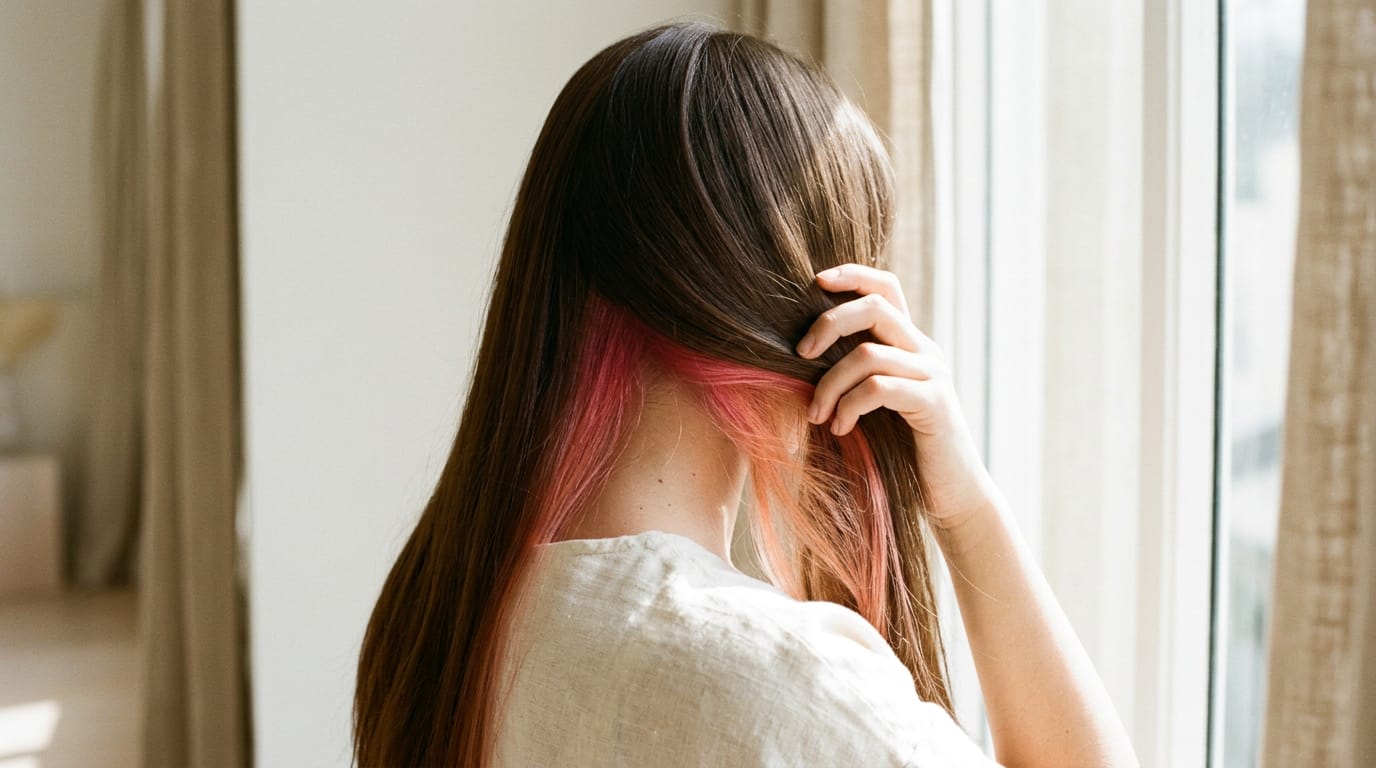
Peekaboo Hair Explained: Color Hidden Beneath the Top
Peekaboo hair shows hidden color beneath the top layer; find flattering shade pairings and what to ask your stylist for a low-damage refresh.
Think of the first time you tucked a scarf under your collar and let one bright corner peek out. It looked deliberate without trying too hard.
Peekaboo hair works the same way: a hidden band of color sits beneath the top layer and shows only when you move, tuck, or pull your hair back.
In this guide, we’ll cover what peekaboo hair really is, where stylists place the color, how to pick shades that suit your base, and how to keep it fresh with less damage and less product. You’ll also learn what to ask for when you book your salon visit.
What Peekaboo Hair Really Is
Ever wanted a little more color without a full commitment? That’s the idea behind peekaboo hair, and it’s easier to picture than the name lets on.
Where the color sits and when it shows
Peekaboo color sits under your top layer, so at first glance your hair looks like its natural shade. The color is hidden when your hair is down and visible when it’s pulled into a ponytail or set in waves.
Picture a bridesmaid with her hair down for the ceremony and the color out of sight. Later, she pulls it into a low ponytail for the dance floor, and the shade catches the light every time she turns. Same hair, two looks.
Its rock roots and staying power
The idea isn’t brand new. It borrows from the two-tone look of 1980s rock, and it has since become a social media trend. It’s expected to stick around.
Why people love this low-commitment look
Peekaboo color asks for less and gives back more:
- Low maintenance. With only some strands colored, there’s less to keep up day to day.
- Less damaging than all-over color. Fewer colored strands means less overall treatment, which helps if you’re protecting what you’ve got.
- Can make thin hair look thicker. According to Cosmopolitan, peekaboo color can make thin hair look thicker, which is exactly what many of us want from our locks.
- Playful pop of color. It adds a little fun that shows up when you choose to pull your hair up.
- No full commitment. If you’re not ready to go all in, you can try the look without changing your whole style.
How Stylists Place the Color
The real question is where the color goes, not just which shade. Placement decides how much you’ll actually see, and we’ll cover the main options below.
Placing color under the top layers
Stylists often paint color on lower layers, tucked under the top layers so your natural shade stays on top. Thin streaks hint at color, while chunky streaks read bolder.
For the lightest touch, try baby-fine strands (very narrow pieces) or color blocks (larger solid sections).
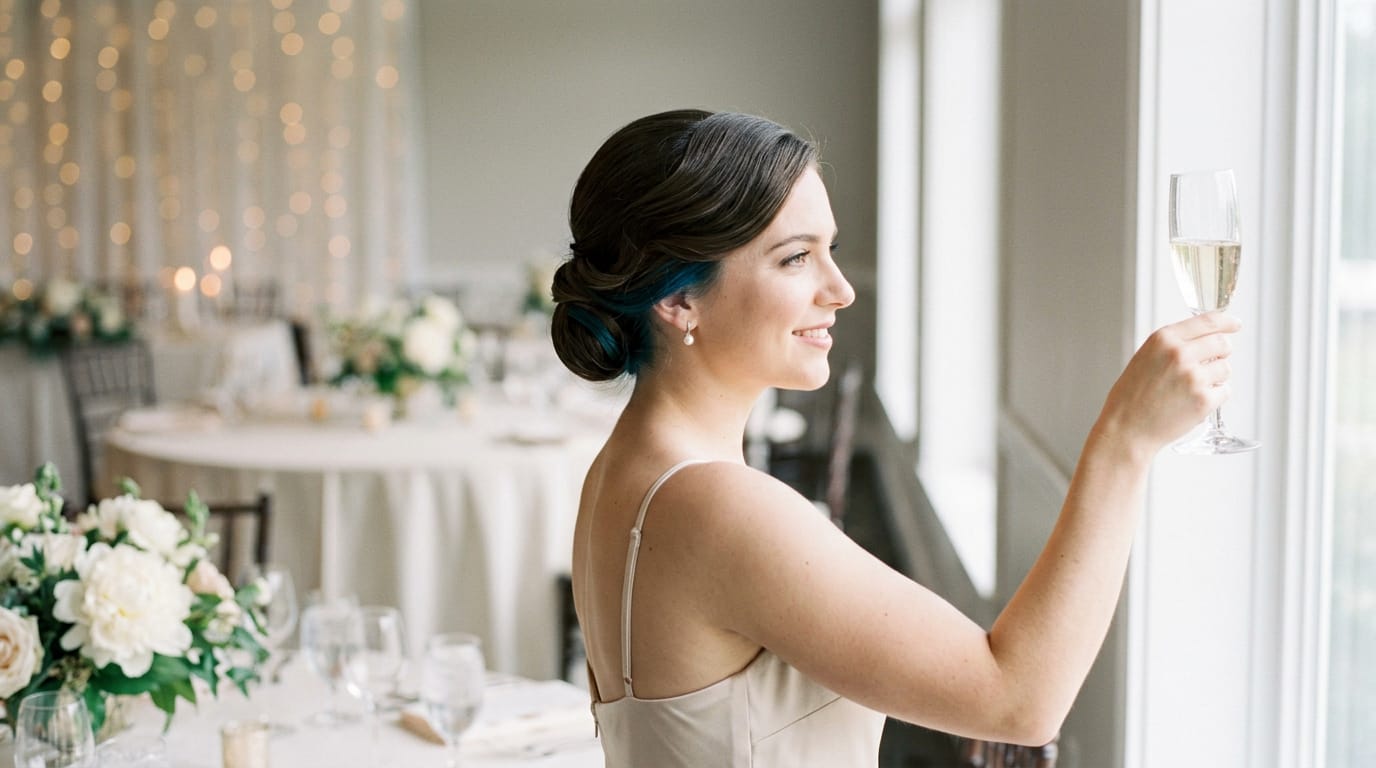
Think of a bride’s sister who wants a flash of color for the photos but a polished look at the reception. Tucked underneath, the color stays hidden while her hair is pinned, then flashes when she turns at the toast.
Her updo stays neat, and the photos still get a surprise.
Other places the color can go
Color can also go in other spots:
- Face-framing pieces. Strands near the face for a brighter frame.
- One side only. A bold, one-sided look.
- Roots weaving. Pieces placed near the root and woven in, so the grow-out line softens.
- Front-to-back tint. A soft tint running from front to back.
- Color at ends. Shade concentrated at the lengths.
- Front pop of color. A concentrated spot at the front that catches the eye.
How it compares to other color methods
Ombre (a gradient from darker roots to lighter ends) and balayage (hand-painted lightening) are meant to be visible. Peekaboo is the reverse: the color stays hidden until you move. Movement does the rest.
Dip dye puts a clear band of color on the ends. Peekaboo keeps your ends looking like your own.
Traditional highlights and lowlights are spread through the whole head for brightness and depth. Peekaboo keeps the change in the layers below the top.
Why a skilled colorist makes the difference
A skilled colorist handles four things that keep the reveal looking intentional:
- Uniform partings. Clean, even partings so each section gets the placement you planned.
- Avoiding color overlap and bleeding. Sections kept apart so shades don’t pool into muddy patches.
- Consistent tones. Every piece is matched, so both sides look the same when color peeks out.
- Professional to avoid damage. Dark hair often needs bleach to lift before a lighter shade shows. A pro knows how much your hair can take and when to stop.
A well-placed reveal looks effortless. That’s the skill showing.
Picking Colors and Pairing Them
Picking a color is the fun part, and most people overthink it. A few simple choices get you most of the way there, and we’ll walk through them below.
Color styles you can choose from
- Pastels: soft, playful shades that never shout.
- Bold shades: saturated colors, best tried in a small piece first.
- Natural hues: warm browns and honeys that blend right in.
- Jewel tones: deep sapphire, emerald, and amethyst.
- Icy and sun-kissed tones: cool platinum or warm golden highlights.
- Fiery reds: copper and auburn that glow in warm light.
- Gray and silver: a clean, modern look.
- Neon, rainbow, and metallic: the boldest options, for playful moments.
Shades from pink and purple to blonde
Pink and purple read playful without taking over, so they’re easy first steps. Green and blue are bolder, so start with a single strand. Red adds heat, and blonde is the gentlest choice if you’re new to color.
The question isn’t which shade is prettiest, but how much of it you want showing.
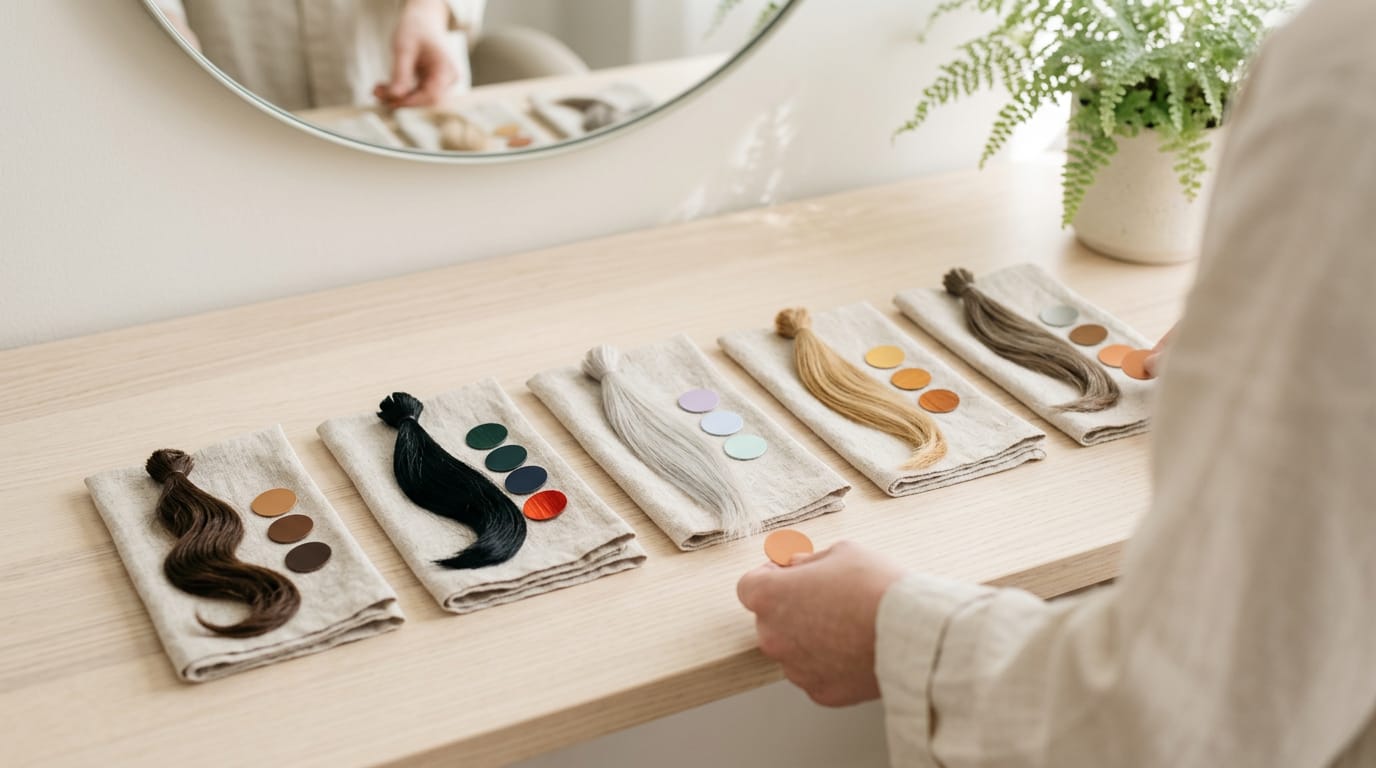
Matching the color to your base shade
Your base shade is your natural color, the one your hair grows out in. Use it as your starting point:
- Dark brown base: caramel and chocolate blend in, while cool shades show clearly.
- Black base: jewel tones and fiery reds show real contrast.
- Silver or icy blonde base: cool pastels and icy tones keep the look clean.
- Blonde or caramel base: honey, golden, and copper tones look natural.
- Ash brown: cool shades and gray-silver harmonize, while warm copper contrasts.
Match first, then play.
Choosing colors without strict rules
So what’s the trendiest hair color right now? No single shade owns that title, since trends shift quickly, so ask your colorist what they’re seeing in the chair.
There are no strict rules here, so let your base shade and mood guide you more than a rulebook.
Suits different textures and skin tones. Your hair’s texture and your skin’s undertone both change how a shade looks, so test a small section before you commit.
Subtle versus dramatic. Consider a bride with dark brown hair who wants a little glow in her photos but a calm look the rest of the week. A few caramel pieces tucked underneath deliver both looks from one color.
Start subtle, then go bigger once you know how it wears. You can always add more.
Who It Suits and Looks to Copy
Peekaboo hair flatters more heads than you’d expect, and shade and cut do most of the work.
What color makes older women look younger?
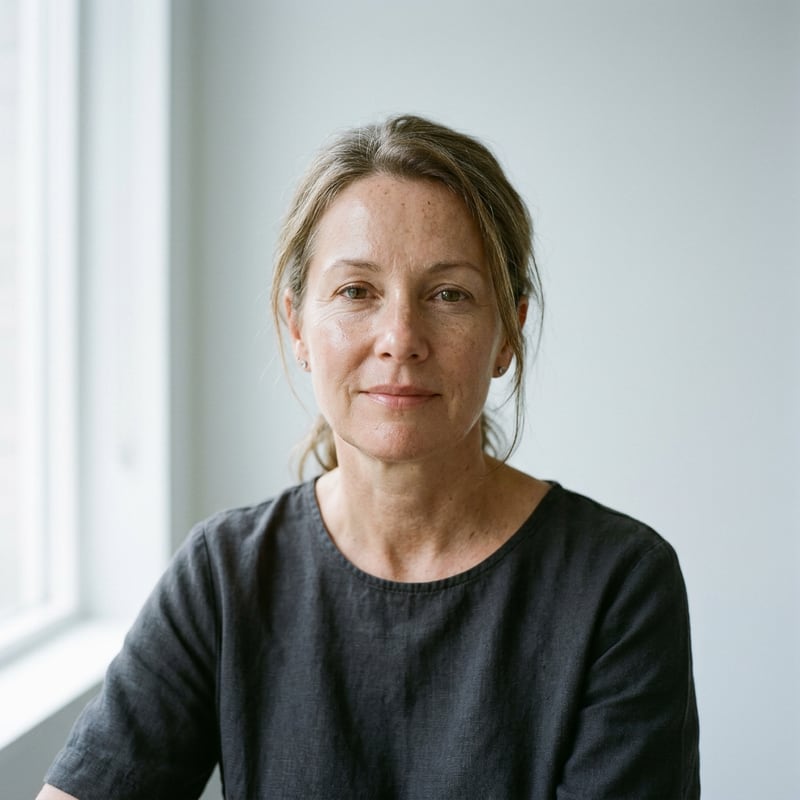
Shades close to your natural tone, like soft honey or caramel, tend to look fresher on mature hair than flat black or harsh platinum. Soft beats stark.
A bride with mature hair, for example, can add a few honey panels near her face for wedding photos and still look like herself at the office on Monday.
- Anyone can wear it. Panels close to the face, not a bold streak, work on most heads.
- Office-friendly neutrals. Mushroom brown and soft caramel blend into a workday look.
- Party-ready neon. Hot pink or teal peeking out under dark hair suits a night out.
- Teens and mature women. Teens can go bolder; mature women usually stay closer to their natural tone.
Cuts, lengths and textures that show it off
- Wavy and loose curls. Curls spread the color, so even a thin panel shows as you move.
- Straight sleek hair. A smooth finish makes a single panel look deliberate.
- Short bobs. The color sits right where the eye lands when you turn your head.
- Ponytail showcase. A sleek ponytail puts the hidden layer on display with almost no styling.
- Heat-free waves to reveal color. Overnight braids create waves without a hot tool, so the color shows and your hair takes less heat.
Photo gallery ideas by color
- Honey blonde: Warm panels near the face on a dark base, soft enough for a wedding guest.
- Cool chocolate: A quiet ribbon of ash brown through soft brown hair for the office.
- Electric pink: Bright strands under dark hair, worn in a high bun for a party.
- Neon teal: One thin teal panel at the side part for a night out.
Keeping the Color Looking Fresh
Your peekaboo is only as fresh as the routine behind it. These habits keep those hidden pops bright between salon visits.
Washing habits that protect the color
Your shower routine sets the pace:
- Color-safe, sulfate-free shampoo: Choose a gentle formula labeled for color-treated hair.
- Lukewarm or cool water: Hot water is harder on color.
- Wash less often: Fewer washes mean less fading.
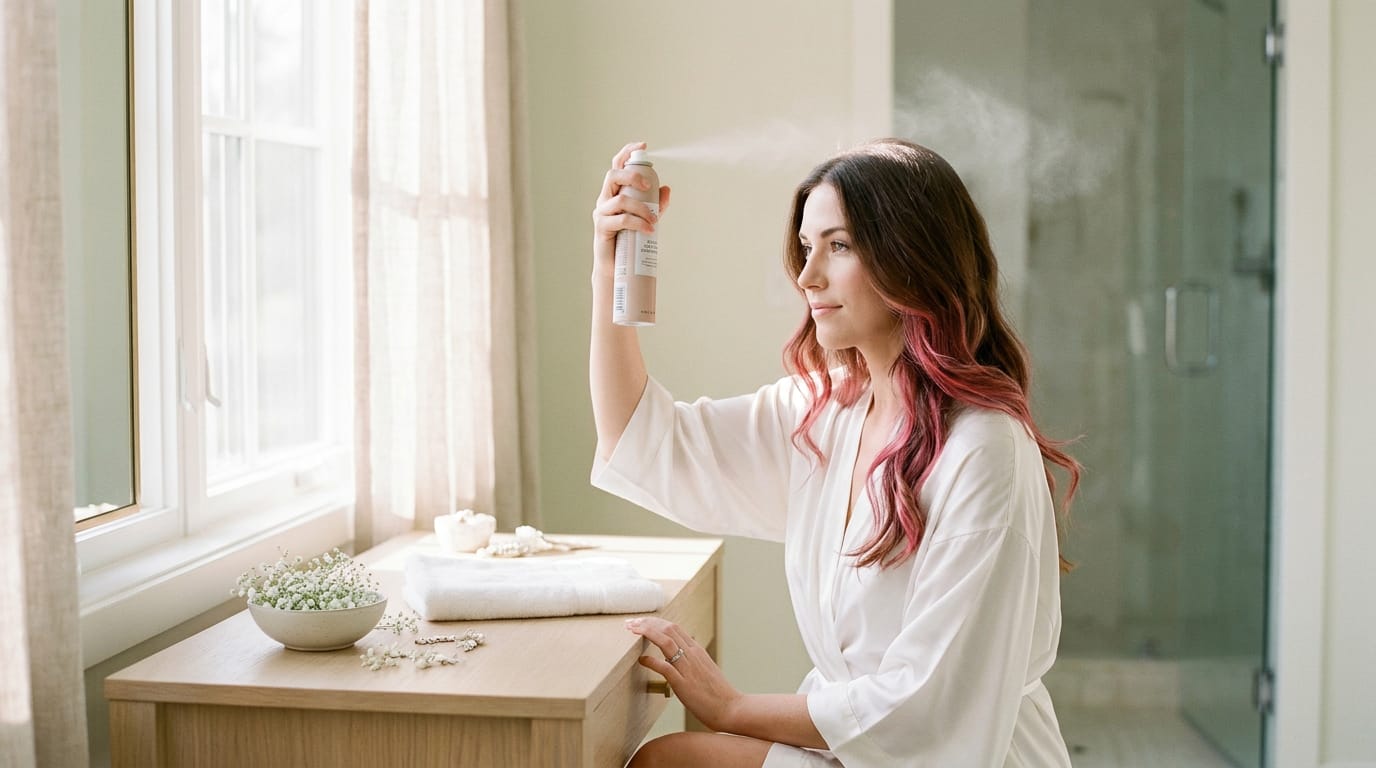
- Dry shampoo between washes: A spritz at the roots buys you another day.
- Light leave-in: It keeps shine up without weighing your peekaboo down.
Consider a bride who dry shampoos between washes. Her peekaboo stays bright all weekend because she’s washing less and refreshing more. Fewer washes, brighter strands.
Gloss treatments and protecting from heat
Ask your colorist about gloss treatments, which add shine and help your peekaboo look vibrant between visits.
Before the dryer or straightener, spray on a heat protectant. It’s your first line of defense.
Start with a lower heat setting and only go higher if your hair truly needs it.
Your bleached layer is the most fragile, so protect it from heat first, not last.
When to book touch-up appointments
Regular colorist appointments keep your peekaboo looking intentional. Frequency depends on how fast your color fades, so keep an eye on when your ends start looking dull.
Watch for brassiness, the warm orange or yellow cast that can creep into lighter strands. Mention it to your colorist and they can tone it back.
Ready to step back? Your colorist can help you grow it out or remove peekaboo so the change feels gradual, not sudden.
How to Book Your Salon Visit
Not every colorist has done many peekaboo highlights, the lighter strands hidden under your top layer, so how you book matters as much as the color. Here’s what we’d ask for before you sit down in the chair.
Ask for peekaboo highlights at the salon
Think of a bride booking her color a few weeks before the wedding. She wants the lightness to show when she turns on the dance floor and stay quiet the rest of the day. Three things make that happen:
- Book with a master colorist. Look for a stylist who lists color as a specialty, and ask to see photos of peekaboo work on hair similar to yours.
- Ask for peekaboo highlights by name. Say where you want the lightened strands, not just how light you want them, so your stylist doesn’t default to all-over color.
- Use professional, stylist-approved products. Ask which products they use during the process and which they’d suggest for home, so your color lasts without extra damage.
Plan for a longer appointment than a basic all-over color, and expect the price to reflect that extra time. Ask for a time and cost estimate when you book, so the number on the receipt doesn’t come as a surprise. No surprises at checkout.
Peekaboo hair works because it rewards small moments: a tucked strand, a ponytail, a breeze that lifts one bright section.
You get the lift of color without a full-head commitment, and the upkeep stays light when you plan placement and maintenance from the start.
Keep the routine simple: a stylist-placed color, a shade that suits your base, and a few gentle habits that protect your strands and save shelf space. The best peekaboo look is one you forget about until the light catches it just right.
References
- Why the Peekaboo Bob Is Best for Thinning Hair — cosmopolitan.com
Questions
What is a peek a boo hair style?
Peekaboo hair has a band or panel of color beneath the top layer of hair. It stays mostly hidden when your hair is down and shows when you move it, wear waves, or pull it back.
What is the trendiest hair color right now?
There is no single trendiest hair color right now because trends change quickly. Choose a shade that suits your natural base and personal style, and ask a colorist what they are seeing in salons.
How to comb out hair?
Start by gently separating your hair into manageable sections. Work from the ends upward with a wide-tooth comb or detangling brush, holding each section near the roots to reduce pulling; avoid forcing the comb through knots.
Why do hairdressers tease hair for highlights?
For highlights, hairdressers may tease sections by backcombing them toward the roots. This creates a softer, blended transition between lightened strands and the natural hair, helping avoid a sharp line at the roots.
What color hair makes an older woman look younger?
Soft shades close to your natural color, such as honey or caramel, can look fresh on mature hair. They tend to be less harsh than flat black or stark platinum.
What does teased hair look like?
Teased hair looks fuller and more lifted, often with a deliberately tousled or backcombed texture. The technique pushes some strands toward the roots to create volume.
Sources
- Why the Peekaboo Bob Is Best for Thinning Hair, cosmopolitan.com