Curly Mullets Explained: Cut, Style, Care and Grow-Out
Curly mullets keep the short-top, long-back shape while following your curl pattern. Compare modern and retro cuts to find your face-shape match.

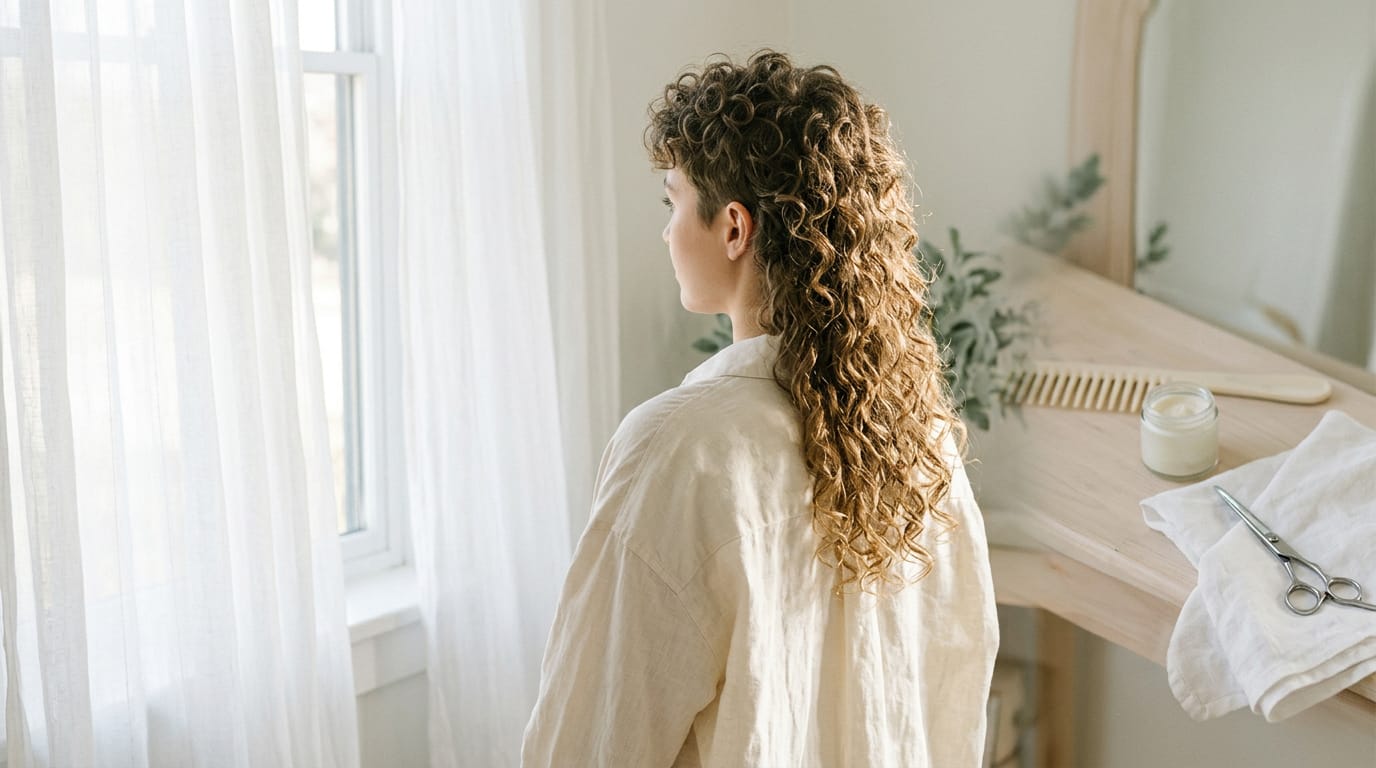
Think of a curly mullet as a favorite classic sweater knit in a new fabric. The shape is familiar, short on top and sides and longer in back, but your curls change how it moves and frames your face.
Put simply, a curly mullet is a mullet cut to work with your natural curl pattern, so the length and layers follow your curls instead of fighting them.
In this guide, you’ll find what the cut is, who it suits, how to ask for it, and how to style and grow it out, plus a light-layer routine that uses less product and causes less damage.
Modern and Retro Curly Mullets Compared
The mullet has changed a lot since its heyday, and the biggest shift is how much room you now get to make it yours.
From retro excess to modern tailoring
The mullet’s roots trace to the 1970s, and it boomed through the 1980s. Retro versions were exaggerated and uniform: big volume, the same shape on every head. Modern versions are tailored and customizable, adjusted to you.
The Gen Z mullet, the version favored by Generation Z (Gen Z), shows the shift: it’s less about copying a template and more about choosing your version. Less costume, more choice. Once you’ve picked your version, a wolf cut hair look is another option to explore.
Is the mullet for LGBTQ people? It carries cultural associations with the LGBTQ community (lesbian, gay, bisexual, transgender, and queer).
In Sho-Lo Showdown: The Do’s and Don’ts of Lesbian Chic, an essay on beauty standards in the lesbian community, the sho-lo (mullet) is described as nearly universally disliked yet frequently worn.
Do mullets look good with curly hair?
Yes, curls are a natural match, because texture meets individuality in the same cut. Natural curls do the talking: their pattern and volume give the mullet its shape, so you’re not fighting your hair.
Consider a reader with curly hair who wants a bit of edge but has five minutes before work. A tailored curly mullet lets her keep the length she likes and lets her curls handle the volume, so she’s out the door with no blowout.
Contemporary refinement means shaped curls, not wild ones, so the cut looks chosen rather than accidental. Curls, styled on purpose.
Matching the Cut to Your Face Shape
A curly mullet works best when the volume sits where your face needs it. Here’s how to match the cut to your face shape, your hair texture, and the lengths that suit you.
Softening round and square face shapes
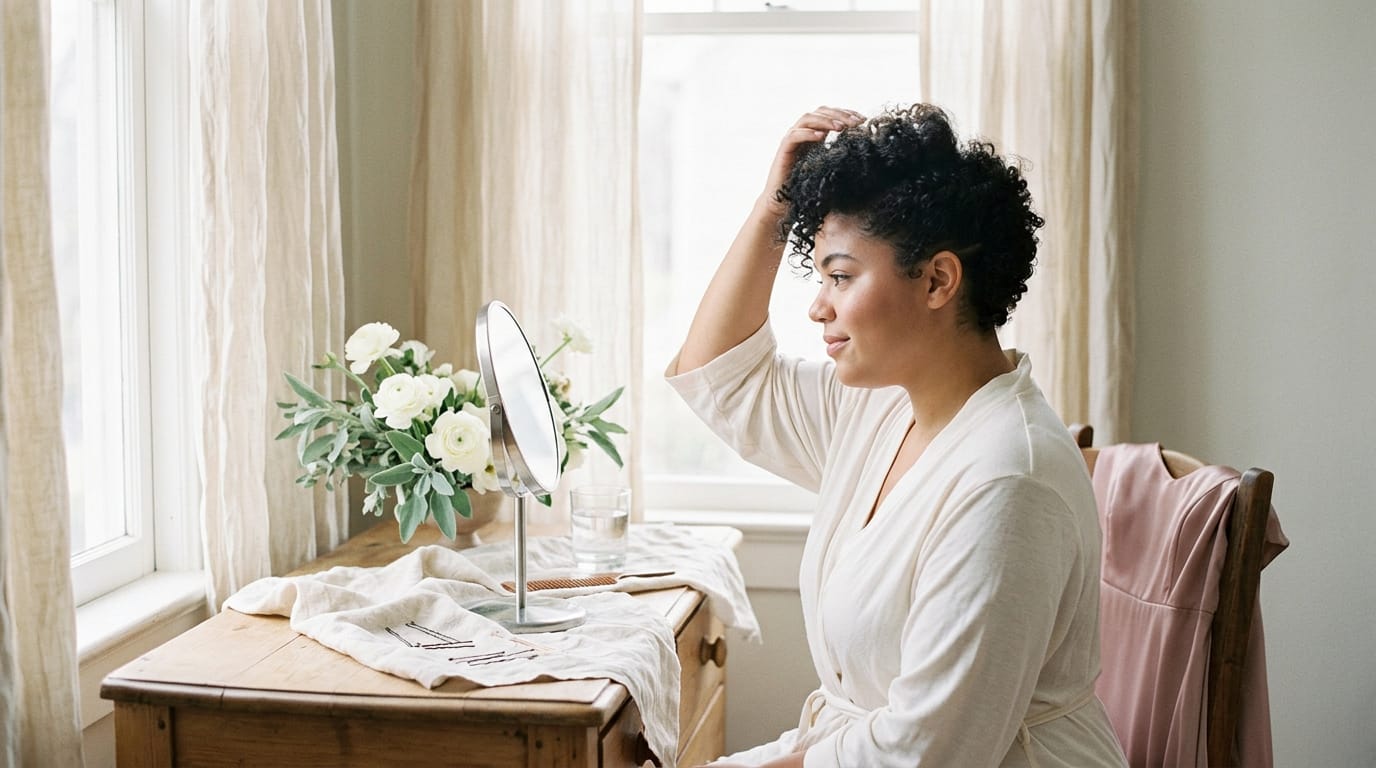
If your face is round or square, crown volume is your best tool. Height on top draws the eye upward, which elongates a round face. Pair it with tapered sides (or faded ones), and the width at your jaw stops competing with your curls.
That softens the angles of a square face, too.
Think of a bridesmaid with a round face who wants her look to hold up in every photo. A little lift at the crown and tapered sides give her a longer line and a style she can finish in the five minutes before the car arrives.
The goal is volume on top, not width at the sides.
Balancing diamond, oblong and oval faces
- Diamond faces are widest at the cheekbones, so the goal is to balance cheekbones and forehead. Let the top give your forehead a bit more presence, and the whole face reads more evenly.
- Oblong faces run longer than they’re wide, so add side width to balance the length.
- Oval faces are the most versatile, so almost any version of this cut works. Lucky you!
Hair textures that suit this cut
For curly hair, the best mullet keeps volume on top, tapers the sides, and lets the back run longer. This cut suits curl types 2C to 3B, the wavy-to-curly range in the common curl-type system, and wavy or thick straight hair works well with it too.
If your hair is fine, plan on volumising products at the roots so the crown has the lift it needs.
Ideal lengths for top, back and sides
Length does most of the shaping, so aim for these:
- Top: 3 to 6 inches
- Back: 4 to 8 inches or longer
- Sides: 1 to 3 inches, tapered
Those lengths give you a cut that’s longer in the back and shorter on the sides, with the curls on top doing most of the talking. That’s the whole shape.
Prepping Your Curls Before Styling
Good curls start long before the scissors come out. Here’s how to wash, detangle, and care for your scalp so your cut has the strongest base to work with.
Wash and detangle with care
Aim for two to three washes a week. That rhythm keeps your scalp clean without overdoing it. Pick a sulphate-free shampoo, a gentler cleanser that won’t strip out more moisture than your curls need.
When it’s time to detangle, start with your fingers and work through knots slowly, then follow up with a wide-tooth comb. The goal is working through tangles, not pulling them free.
Between washes, a water spray and scrunch refresh brings your definition back. Mist your curls with water, then scrunch them back into place. Think of a bride-to-be on the morning of her dress fitting, with no time for a full wash.
One quick spritz and scrunch, and her curls look ready for the photos.
Keeping your scalp healthy and moisturised
Your scalp is the foundation for every strand, so it’s worth keeping it comfortable. A moisturised scalp gives you three things:
- Stronger hair. A well-hydrated scalp supports the strength of every strand.
- Less breakage. According to a study on human hair absorption and retention, hair moisture prevents breakage, enhances elasticity, and reduces split ends.
- Support for a longer back. A healthy scalp helps the length at the back of your cut keep growing.
Healthy scalp, stronger curls.
The Best Products for Your Curls
Your curly mullet looks best when the products do less and the curls do more. Here’s how to choose a few that work together.
Shampoos and conditioners that enhance curls
Start with a curl-enhancing shampoo, a gentle wash that cleans without stripping the moisture curls depend on. Heavy-duty formulas can feel too rich for everyday curls.
Next, reach for a lightweight conditioner that adds slip without weighing down the crown, where a mullet’s volume lives.
Picture a bride who wants her curls fresh for a long photo day: one light rinse-out conditioner in the shower and she’s ready to walk out.
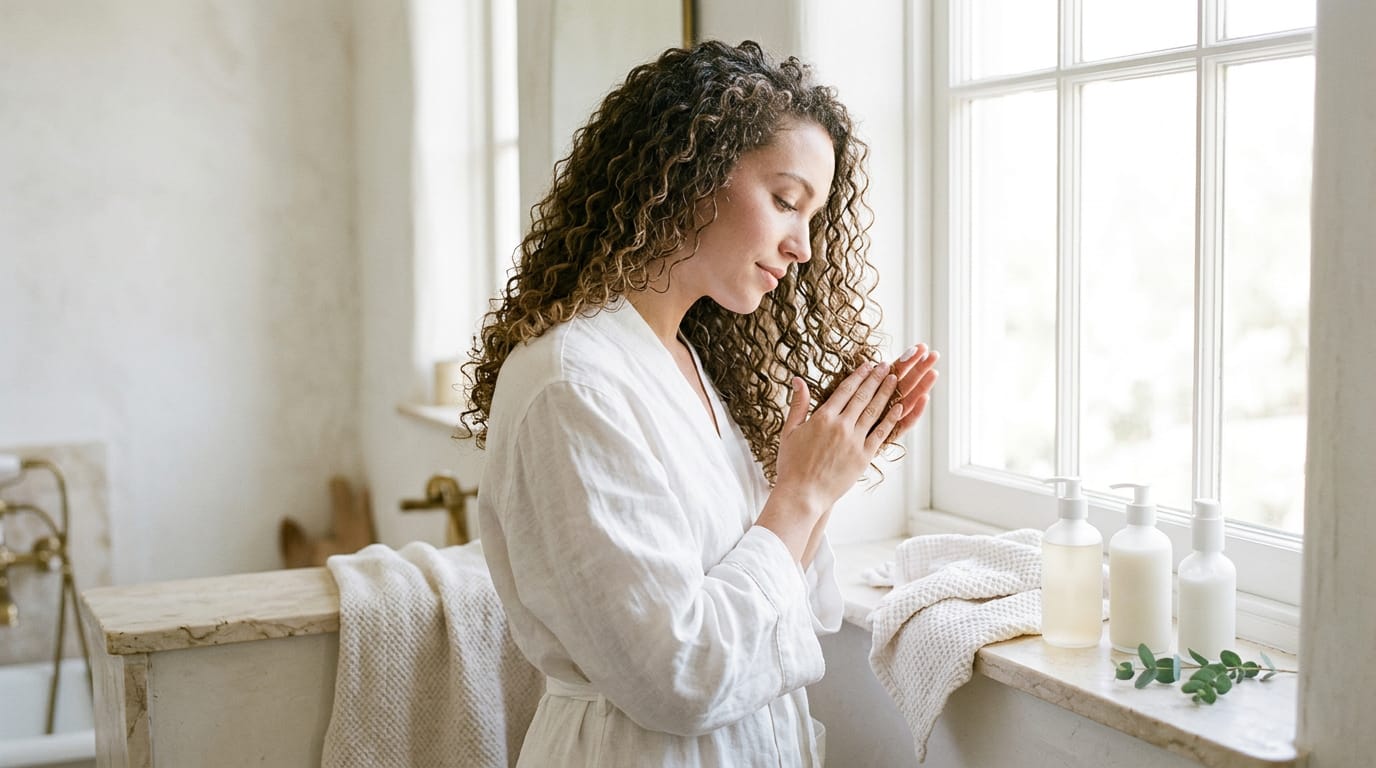
Finish with a leave-in conditioner on damp hair to keep curls hydrated between washes and frizz at bay.
Picking the right creams, gels and sprays
A curl cream is softer and more moisturizing, while a curl gel holds the shape. Think of a flight attendant who needs her curls to survive a long shift: cream for softness, then a little gel so the shape doesn’t slump by lunch.
A sea salt spray adds texture and a tousled, lived-in look at the back, where the length sits. Mist it onto damp hair, scrunch, and let it dry.
Matte or shine? A matte finish looks relaxed and natural, while a shine finish looks glossy and defined. Choose the one that fits the look you want.
Here’s the rule behind light layers: less product, not more. Heavy layers build up, look crunchy by afternoon, and make every wash harder. Start with a pea-sized amount of cream and add gel only where curls need hold. Fewer layers, better curls.
Styling Your Curls from Start to Finish
Styling is mostly about touching your curls less. Here’s the routine we’d suggest, then the tools that protect it.
Your routine from towel dry to finish
- Microfibre towel dry. Blot your hair with a microfibre towel instead of rubbing it, which keeps frizz down and your curls defined.
- Leave-in, then cream or spray. Work a leave-in through damp hair, then add a cream or spray for hold. One light layer of each is plenty.
- Scrunch or finger coil. Scrunch upward to encourage clumps, or finger coil sections for more definition.
- Diffuse low or air-dry. Diffuse on low heat and speed, or let your hair air-dry, and keep your hands off until it’s fully dry.
- Finishing scrunch. Once dry, give your hair one last gentle scrunch to bring the shape back. Then stop touching it.
Choosing tools and clippers wisely
Diffuser over blow dryer. A blow dryer’s hot, concentrated stream can blast curls apart and leave frizz behind, while a diffuser spreads warm air gently. Keep the heat low and let the curls settle into the bowl.
Clippers and fades. The short sides and nape are where the fade lives, and clippers keep that edge crisp between appointments. Ask your stylist how often you should book a touch-up.
Hands over combs. Use fingers rather than combs to separate and shape your curls, since a comb tends to drag through the pattern and pull definition out.
Take a bridesmaid who needs her curls to last from the ceremony to the dance floor. She runs this routine that morning, skips the hot tools, and her curls still look like hers at the last song.
Keeping the Cut Fresh Between Trims
A few simple habits help your curls hold their shape, so you maintain the cut instead of fixing it.
Everyday habits that keep curls healthy
- Refresh with water or a refresher spray. A light mist on day two revives bounce without extra product.
- Wash two to three times a week. Over-washing strips curls, so fewer washes often mean healthier curls.
- Use a leave-in for frizz control. Scrunch a small amount into damp hair.
- Sleep on a silk or satin pillowcase. Cotton roughs up curls by morning.
- Protect curls at night. Skip tight elastics, and wrap loosely in satin if you can.
How often each section needs a trim
Plan around these windows:
- Sides and top: every six to eight weeks
- Back: every eight to twelve weeks
Consider a bride who books a trim six weeks before the wedding for sharp sides in every photo. Trust your mirror over the calendar, though: puffy sides, a shape that’s lost its line, or thin, split ends mean it’s time.
Growing it out? The cut moves through a few in-between stages, and regular trims keep each one looking intentional.
Quick fixes for busy, active days
On hectic mornings, you need fixes that take minutes, not a full wash.
- Quick refresh: Mist, scrunch, and air-dry in under five minutes.
- Multi-use products: One leave-in that tames flyaways and styles curls does more work than three bottles.
- Pineapple method: Gather curls loosely on top of your head before bed, then sleep. This keeps volume at the crown.
- Gym, hat, and helmet care: Tie curls loosely before a workout, and pick a roomy hat so it doesn’t squash them.
Less product, better curls.
Common Questions and Salon Tips
Once you’ve picked a curly mullet, these practical questions come up fast.
Quick answers on frizz, products and fades
- Best products. Think light layer, not heavy coat. A leave-in or curl cream on damp hair is usually enough.
- Preventing frizz. Blot with a cotton t-shirt or microfiber towel instead of rubbing, and scrunch rather than brush as curls dry.
- Maintenance level. Plan on regular trims to keep the outline sharp, plus a quick water-and-product refresh in the morning.
- Growing out the back. Ask your stylist how to let the back grow without losing the shape at the crown.
- Fades and contrast. Keep the fade blended and the contrast clean, and the longer back looks planned, not accidental.
Booking a stylist and what to ask
Book a salon appointment. Pick a stylist whose portfolio includes curly cuts. Think of a bride booking her cut a few weeks before the wedding, wanting curls that look the same at the ceremony as they did at the trial, with one styler and no touch-ups.
Give the stylist time to hear that goal before the first snip.
Cut tailored to curls. Your curl pattern should shape the cut, not get forced into a straight-hair template. Ask whether they cut curly hair dry, so they can see where each curl lands.
Exact words to ask stylist. Try this at the start of your appointment:
“Could you cut this as a curly mullet for my curl pattern, with length at the back and a soft fade at the sides? Could you also show me how to refresh it at home?”
You’ll leave knowing exactly what to put on next. Speak up early.
A curly mullet works when the cut follows your curls instead of fighting them. Choose the version that suits you, ask for it clearly, and keep your routine light.
You’ll use less product, cause less damage, and keep more time for your morning coffee. Whether you go modern or retro, the best version is the one that feels like you.
Your curls already bring the personality, so give them a cut that lets them shine.
References
- Evaluation of Human Hair Absorption and Retention — pmc.ncbi.nlm.nih.gov (2025)
- Sho-Lo Showdown: The Do’s and Don’ts of Lesbian Chic — doi.org (2000)
Questions
What is the gen Z mullet?
The Gen Z mullet is a modern, customizable take on the classic mullet, favored by Generation Z. Rather than copying one exaggerated template, it lets you tailor the shape to your style and hair.
Do mullets look good with curly hair?
Yes. Curls naturally add texture and volume to a mullet, helping shape it without requiring a blowout. A tailored cut follows your curl pattern so the result looks intentional.
Is mullet for LGBTQ?
No. A mullet is not limited to any sexual orientation or gender identity. It has cultural associations with the LGBTQ community, but anyone can wear one.
Which mullet is best for curly hair?
For curly hair, a tailored mullet with volume on top, tapered sides, and a longer back is a strong choice. The stylist should shape the layers around your curl pattern; this style suits curl types 2C to 3B particularly well.
Sources
- Evaluation of Human Hair Absorption and Retention, pmc.ncbi.nlm.nih.gov,
- Sho-Lo Showdown: The Do's and Don'ts of Lesbian Chic, doi.org,
The Journal