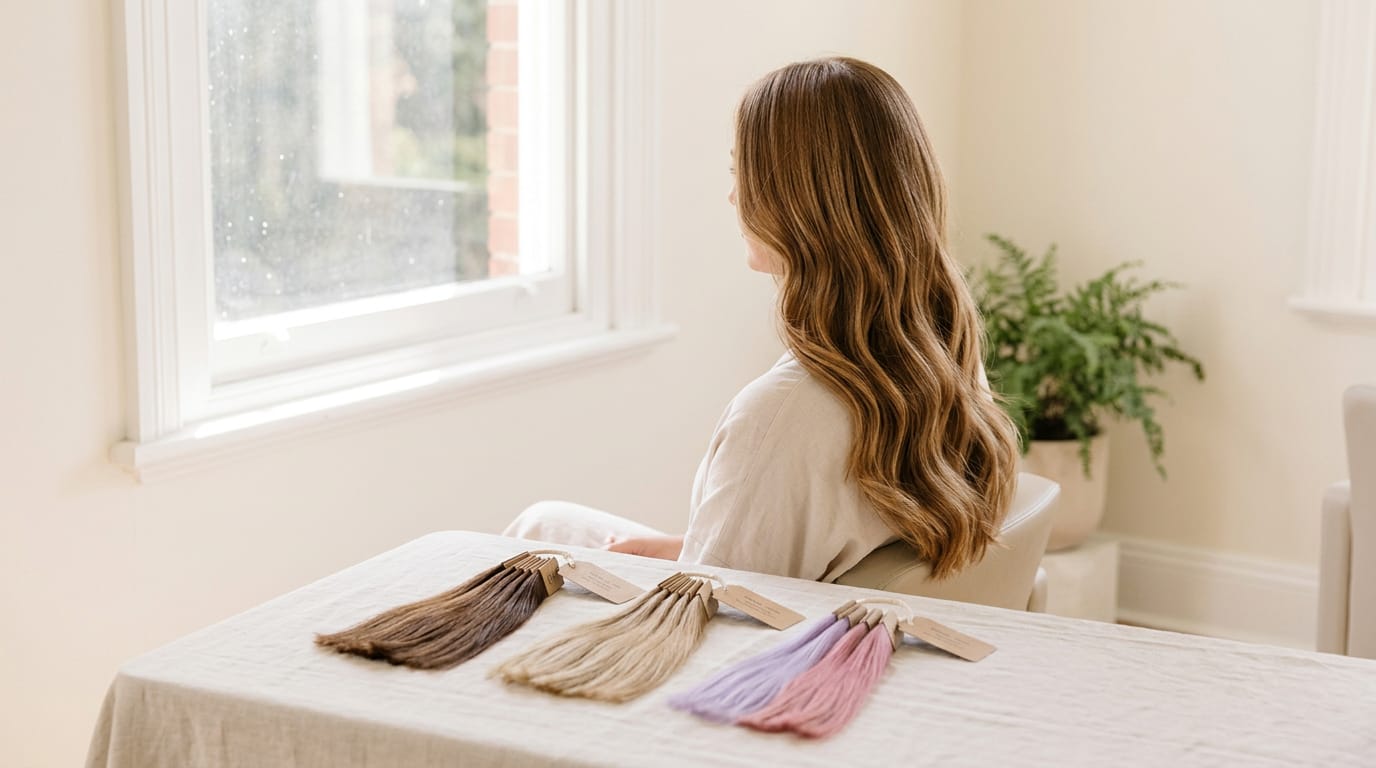
Hair Color Ideas: Classic, Easy-Care, and Fantasy Shades
Hair color ideas get easier when you match shades to your skin tone, upkeep needs, and current color, then choose salon or at-home care with less guesswork.
Picking a new hair color can feel like standing in front of a full closet with nothing to wear. Shades have names like “cool ash” and “honey balayage,” and suddenly a simple salon visit feels like a test.
The short answer is that the best color flatters your skin tone, starts from where your hair is now, and fits the time you actually have.
Here, we’ll cover classic shades that look natural, easy-care colors that grow out well, playful fantasy hues, and how to choose between salon and at-home color.
We’ll finish with a light-layer routine, a few gentle steps in the right order, to keep your color glossy and low-damage between appointments.
Picking Hair Color Ideas That Suit You
Check your hair’s health first, since dry or chemically treated strands change what’s safe. Then let skin tone, length, and starting shade narrow the field.
Matching color to your skin tone
Your undertone (the faint warm, cool, or neutral cast beneath your skin) guides color more than your surface shade does, so ask a colorist to read it.
Choose by undertone rather than by which shade looks prettiest on the swatch: fuchsia usually flatters cool undertones, while coral leans warm. Magenta suits deeper skin, and brown skin has its own range of warm caramels and espresso shades.
Cream blonde flatters just about everyone, so it’s a safe place to start.
Choosing by length, age and season
Take a new mom with shoulder-length hair who wants color she can live with for months. A soft, blended shade grows out without harsh lines, so she skips frequent touch-ups.
Short cuts show color clearly, so a bold shade stands out, while long hair has room for soft, hand-painted highlights. Women over 50 and 60 often find warm, glossy tones look softer than flat, stark ones. Seasonal palettes give you a starting point:
- Winter: icy and ash tones
- Summer: soft, sun-kissed lights
- Fall: warm copper, chestnut, and honey
- Spring: bright, fresh golden shades
When your starting shade needs bleach
Pastels on dark hair usually need lifting first. Lift means removing natural pigment, which is what lets a pastel show clearly. Brunettes who want to skip bleach can still add dimension with glosses, toners, or lowlights near their base.
A lighter base shows color brighter, so the same toner looks different on golden blonde than on light brown. Every lift takes a toll.
Classic Hair Color Ideas That Look Natural
Classic colors look like your hair on its best day, only more polished. Here’s how the main families break down.
Blonde shades from ice to honey
Blonde runs from cool to warm. Platinum and ice blonde sit at the pale, cool end, while ash and mushroom blonde tone the brightness down into a softer, muted look. For a warmer, gentler finish, try:
- cream, champagne, and beige blonde, which read golden without looking yellow.
- honey and strawberry blonde bring a sunny glow with a touch of rose.
Brunette and black tones to try
Dark doesn’t have to mean flat. Chocolate and mocha browns are the easiest everyday wear, and caramel brown adds a warmer, golden shine.
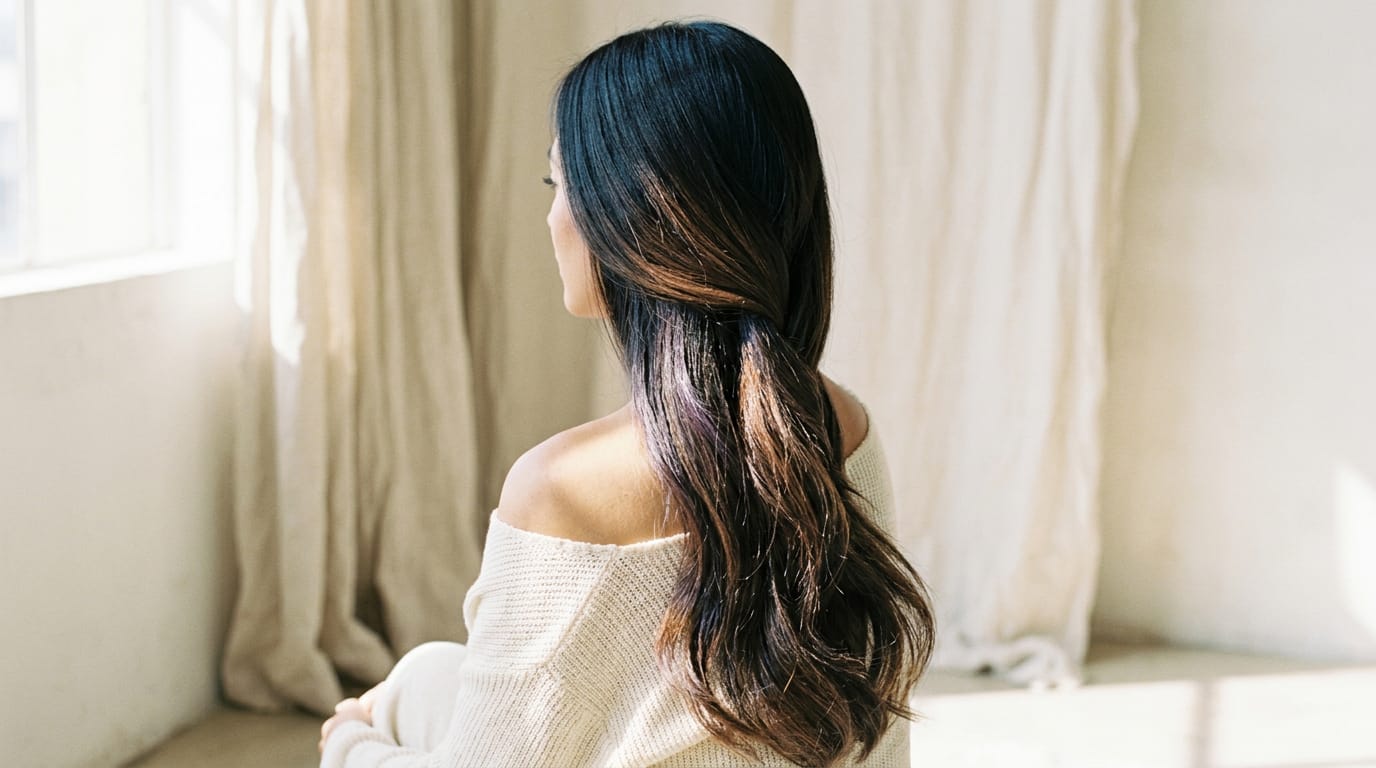
For a sleeker, bolder contrast, jet and blue-black look deep and polished, while violet black adds a cool, purple-tinged depth in the light. If you want more personality, chocolate cherry and chili chocolate blend rich brown with a red-toned warmth.
Warm reds from copper to burgundy
Red is where classic gets a little bolder. Copper and ginger sit in the warm, orange-gold family, and auburn is a deeper red-brown that still feels natural. For a richer, moodier look, burgundy, merlot, and wine read deep and jewel-toned.
Fire-engine red is the boldest of the bunch: a true, bright red that’s impossible to miss.
Highlight and balayage styles worth trying
Highlights add dimension rather than replacing your base color. Brown and blonde highlights weave lighter pieces through a darker base, and caramel highlights add warm, golden ribbons.
Ombre styles fade from darker roots into lighter ends, while balayage (hand-painted lightening that blends softly into your natural color) works on every base, from blonde to black.
Money pieces are the bright strands that frame your face. Consider a bride with dark hair who wants a little light around her face for the ceremony photos.
A few money pieces do the job, and the rest of her hair stays exactly as it is. Same hair, brighter face.
Easy Care Colors That Grow Out Well
Some colors grow out gracefully, so you can stretch time between appointments. Here’s how the most forgiving options break down.
Techniques like lowlights that grow out well
These methods blend into your natural color instead of stopping at a hard edge:
- Balayage is hand-painted highlights, placed so the color melts in.
- Baby lights are fine, soft-blended highlights.
- Root smudge, or blurred roots, softens the line at your scalp.
- Face-framing highlights brighten just around your face.
- Lily veil balayage is worth asking your stylist about by name.
Lowlights are darker strands placed through your hair to add depth. Highlights lift your color, while lowlights deepen it, which keeps regrowth softer. Less contrast means fewer touch-ups.
Picture a flight attendant on a rotating schedule who wants color that still looks put together between trips. A few lowlights give her that, and her roots read as part of the design.
Blondes that need fewer salon visits
These blondes soften as they grow, so you’ll wait longer between visits:
- Cozy blonde is a warm, soft blonde.
- Honey melt blonde blends honey tones for a seamless finish.
- Golden wheat blonde leans golden, like sun-dried wheat.
- Deep blonde retains pigment, so it fades more gently.
- Dark vanilla blonde is a deeper, creamy blonde.
Brunettes that stay fresh longer
Brunettes stay fresh longer when the shade stays near your natural color:
- Chestnut brown with highlights adds warmth and lift.
- Candlelit brunette is a warm, glowing brown.
- Deep and natural brown sits close to your base.
- Espresso martini brunette is a rich, deep brown.
- Charcoal brunette is a deep, smoky brown.
- Vintage brown is a classic, retro-inspired brown.
Why bronde splits the difference
Bronde is a blend of blonde and brunette. It isn’t fully light or fully dark; it sits between them. Because the two shades mix, bronde hides regrowth and grays. Honey and caramel bronde add warmth to that blend.
Celebrity popularity has also kept bronde in the spotlight.
Colors that are hardest to keep up
Some colors demand more salon time, so know what you’re signing up for:
- Red fades fastest, so expect more frequent refreshes.
- Solid single-process color shows regrowth sooner because there’s one even shade.
- All-over bleach and tone needs regular toning to stay fresh.
- All-over black on light hair shows roots quickly, since the contrast is strong.
- Platinum needs frequent visits to stay bright.
- Black-and-white color block makes every bit of regrowth obvious.
Playful Fantasy Colors Worth Trying
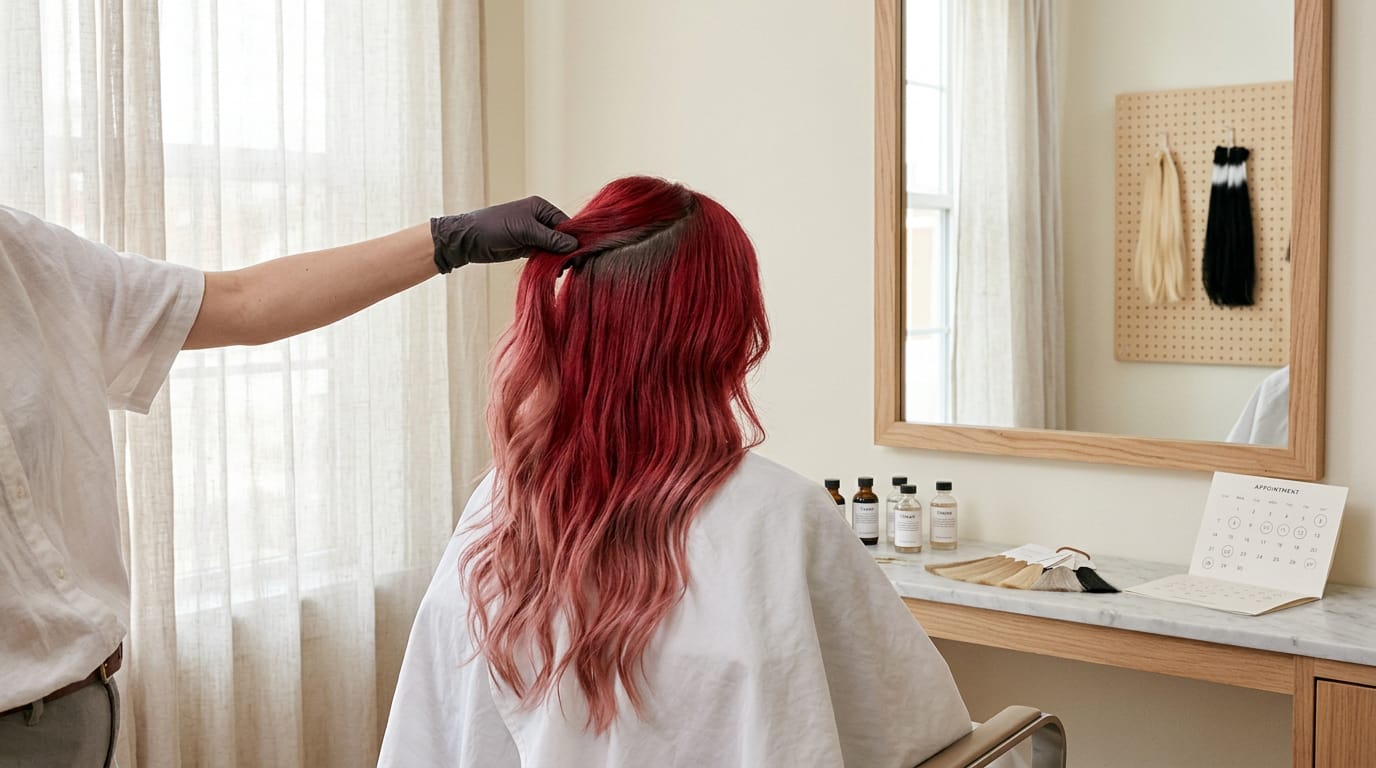
Fantasy shades are where hair color gets fun, and you don’t have to commit to a bold look to try one.
Dreamy purples from lavender to blackberry
Purple is a good place to start if you want something a little magical:
- Deep purple. Rich and saturated, with plenty of drama.
- Soft lavender. Airy and pale, for a dreamy finish.
- Vanilla lilac. A creamy lilac that stays soft.
- Purple balayage. Purple placed through the ends for subtle depth.
- Blackberry hair. A deep purple-red that looks almost black indoors.
Take a bride who wants romance in her photos. Vanilla lilac blends with pale florals and her veil, so it looks intentional, not loud.
Pretty pinks, pastels and peach
Pinks and peach run from whisper-soft to bright.
- Pastel and baby pink. Sweet and delicate, a gentle shift.
- Dusty rose and mauve. Muted, grown-up, and easy to wear.
- Rose gold. Pink with a metallic warmth.
- Neon pink and fuchsia. High-energy and hard to miss.
- Magenta. A deep, saturated pink with a punch.
- Peach and neon peach. Warm and sunny, with neon peach turned up.
Take a bridesmaid who wants to stand out in group photos. Dusty rose looks playful beside blush and ivory, so she stands out without stealing the spotlight from the bride.
Cool blues, greens and teals
Cool shades feel fresh and a little unexpected.
- Denim blue. A true blue with a worn-in feel.
- Pastel blue. Soft and dreamy, like a summer sky.
- Teal and turquoise. Blue-green shades with a bright lean.
- Emerald. A deep green with jewel-tone richness.
- Blue-black. Nearly black indoors, with blue showing in sunlight.
Pastel blue is the playful pick, and blue-black is the quiet one. A new mom who wants a change might try pastel blue for a few weekends, then return to her usual shade when she’s ready. Low stakes, high fun.
Multicolor looks that are trending
These are about expression rather than uniformity.
- Rainbow hair. A spectrum of bright colors, often in streaks.
- Holographic hair. Shades that shift with the angle and light.
- Calico hair. Patches of different colors in a patchwork effect.
- Color block hair. Clean, solid blocks of distinct shades.
- Peanut butter and jelly. A light, creamy tone paired with a deep one.
- Skunk stripe. A bold, contrasting streak that stands out.
Think of a coworker who wants personality without a daily styling routine. Peanut butter and jelly lets the richer tone peek out when she moves, yet it still looks polished at her desk.
Ways to wear silver and gray
Silver and gray can be a deliberate choice, not just something that happens over time.
- Smoky silver. A cool, soft silver with a hint of shadow.
- Transitioning to gray. A gradual move toward a natural gray.
- Gray balayage. Gray placed through the lengths for dimension.
- Gray blending. Gray woven into your current color for a softer change.
Consider a bride growing out her color who wants to look like herself on her big day. Gray blending keeps the shift soft, so her photos still look like her.
Salon or At-home: Which to Choose
Both routes can get you a great shade. Salon color costs more and takes a longer appointment, while at-home options are cheaper and quicker to start, so it’s really about how much you want to handle yourself.
Getting the most from your colorist
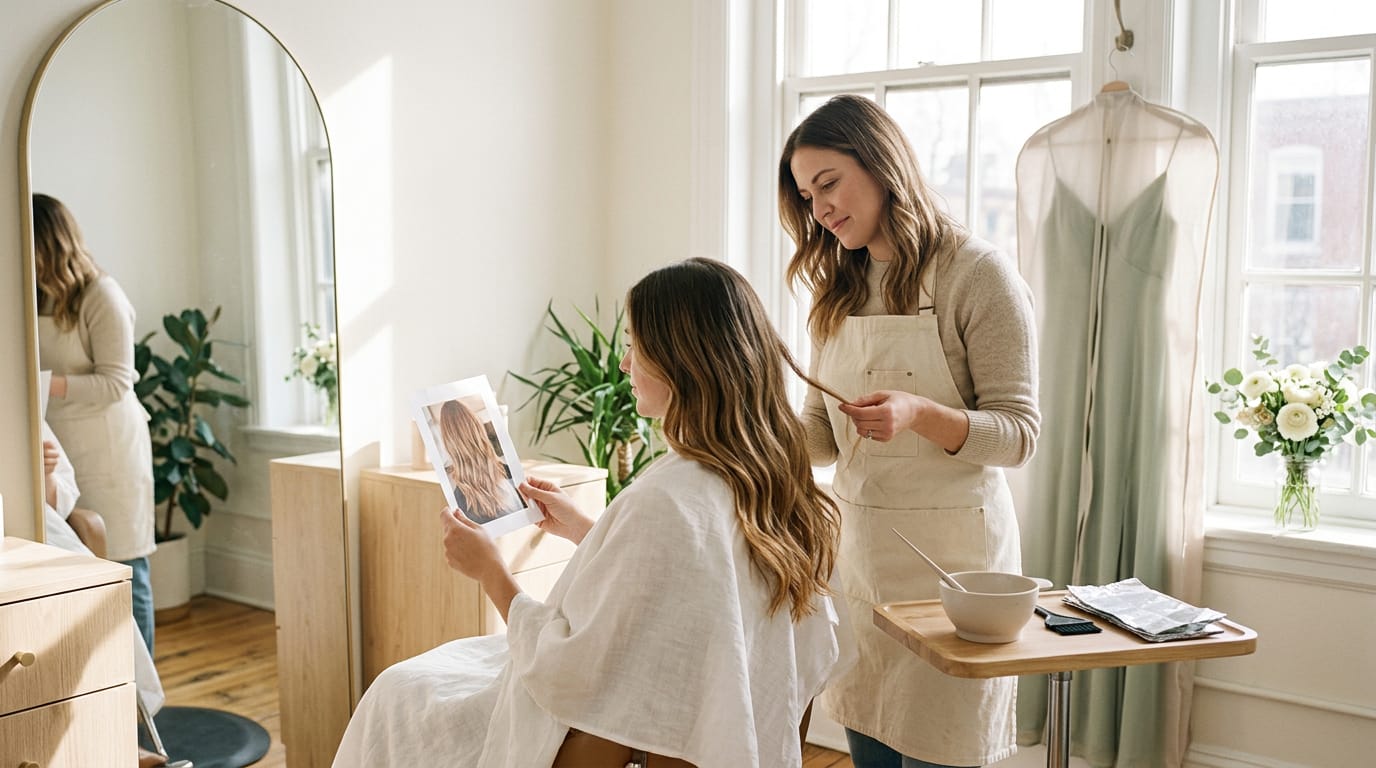
Your colorist can’t read your mind, so describe how you want to look, not just a shade name:
- Bring reference photos. Pick two or three that show your target shade and brightness.
- Discuss hair type and tone. Share your hair type and whether your tone runs warm or cool, since both shape the result.
- Complex looks need pros. Dimensional blends and big jumps from dark to light are best left to a colorist.
- Ask for root smudge. A soft blend at the roots keeps regrowth from showing sharply, so you can stretch visits.
Consider a bridesmaid booking her color before the wedding. She brings a photo of the caramel she wants and asks for a root smudge, so she leaves looking like herself with no touch-up needed. Speak up early.
Dyeing at home and temporary options
Here’s how we’d sort the at-home options, from least commitment to most:
- Temporary color sprays coat the hair and wash out within a few shampoos, which makes them ideal for a one-day look.
- Toning glosses add shine, cancel the warm, yellow cast some blondes get, and refresh color between visits.
- Semi-permanent dyes deposit color without lightening and fade over several weeks.
- Permanent box dyes last until your hair grows out, so test a strand first.
- Bleach kits for do-it-yourself work lift color fast, but mistakes show, so save big jumps for a pro.
Keeping Your Hair Color Looking Fresh
Fresh color depends on what you do between salon visits. Here’s how to protect your shade and know when to refresh it.
Washing habits and products that help
Your shower routine has more effect on your shade than you might expect. According to a PubMed study on fading artificial hair color, frequent washing and harsh shampoos can make color fade faster. Here’s what we’d focus on:
- Color-safe, sulfate-free shampoo: Choose one without sulfates, the strong cleansers many shampoos contain.
- Wash less often: Skipping a wash or two each week keeps your shade brighter. Less washing, more shine.
- Avoid chlorine and harsh shampoos: Rinse your hair after a chlorinated pool and skip formulas that feel too strong.
- Color-depositing conditioner or mask: Helps your tone stay true between visits.
Protecting color from heat and damage
Protection is about prevention rather than repair.
- Limit heat styling: Air-dry when you can.
- Heat protectant: Spray it on before any hot tool.
- Weekly hair mask: Use one each week for softer strands.
- Bond repair treatments: Use when strands feel fragile, and follow the label.
- Lightweight leave-in for colored hair: Moisturizes without weighing hair down.
How often should you refresh your color?
Think of a bride who wants her color looking fresh in the last photos, not just the first. A quick gloss between appointments can help her keep that glow.
How often can you dye your hair? There’s no single answer, since it depends on your product and how your strands are holding up, so ask your stylist before you book again. Ask, too, how long your specific color type should last.
- At-home glossing treatment: A quick shine boost between visits.
- Root cover-up products: Hide new growth before a big event.
- Toning gloss for fading: Refreshes dull or off-tone shades.
- Light gloss layer between salon visits: Keeps color glossy between appointments.
Choosing hair color comes down to a few simple questions: what flatters your skin tone, where your hair starts, and how much upkeep you want.
Classic shades look natural, easy-care colors grow out gracefully, and fantasy hues let you have fun when you’re ready. Whether you book the salon or mix it at home, you’re in charge of the result.
A light-layer routine keeps that color glossy between visits. The best color is the one that simply looks like you, and that’s a look you can keep.
References
- Fading of artificial hair color and its prevention by photofilters — pubmed.ncbi.nlm.nih.gov (2006)
Questions
What is the best low-maintenance hair color?
A blended color close to your natural shade is usually the easiest to maintain because it grows out softly and needs fewer touch-ups. Balayage, lowlights, and a root smudge can also soften regrowth.
What are lowlights?
Lowlights are darker strands added through the hair to create depth. Unlike highlights, which lighten strands, lowlights deepen the color and can help regrowth blend in more softly.
How often can you dye your hair?
There is no single schedule that suits everyone. How often you can dye your hair depends on the product, the service, and your hair’s condition, so ask your stylist before booking another treatment.
What hair color do men find least attractive?
There is no universal hair color that men find least attractive; preferences vary widely. Choose a shade that suits your skin tone, hair, and personal style rather than relying on a supposed consensus.
Sources
- Fading of artificial hair color and its prevention by photofilters - PubMed, pubmed.ncbi.nlm.nih.gov,